

Price of wollastonite superfine mills
Published: October 26, 2023
Selecting the optimal grinding equipment for wollastonite processing requires careful consideration of fineness requirements, production capacity, and operational efficiency. Shanghai SBM Machinery offers a comprehensive portfolio of grinding solutions—including the MTW European Trapezium Mill, LM Vertical Roller Mill, SCM Ultrafine Mill, LUM Ultrafine Vertical Mill, and Ball Mill—each engineered to address specific challenges in superfine wollastonite production. These mills incorporate advanced technologies such as intelligent control systems, energy-efficient designs, and specialized wear-resistant components to maximize output while minimizing operating costs and environmental impact.
Wollastonite, a calcium inosilicate mineral, demands precise grinding to preserve its acicular (needle-like) structure, which is critical for applications in plastics, ceramics, and paints. The MTW European Trapezium Mill excels in processing wollastonite to fineness levels between 30–400 mesh. Its cone gear transmission system and inner oil absorption lubrication ensure stable operation with reduced energy consumption. The curved shovel blade design minimizes wear on grinding rollers and rings, extending service intervals and lowering maintenance costs. Additionally, the arc air duct enhances airflow efficiency, contributing to consistent product quality.
_1764433573992.jpg)
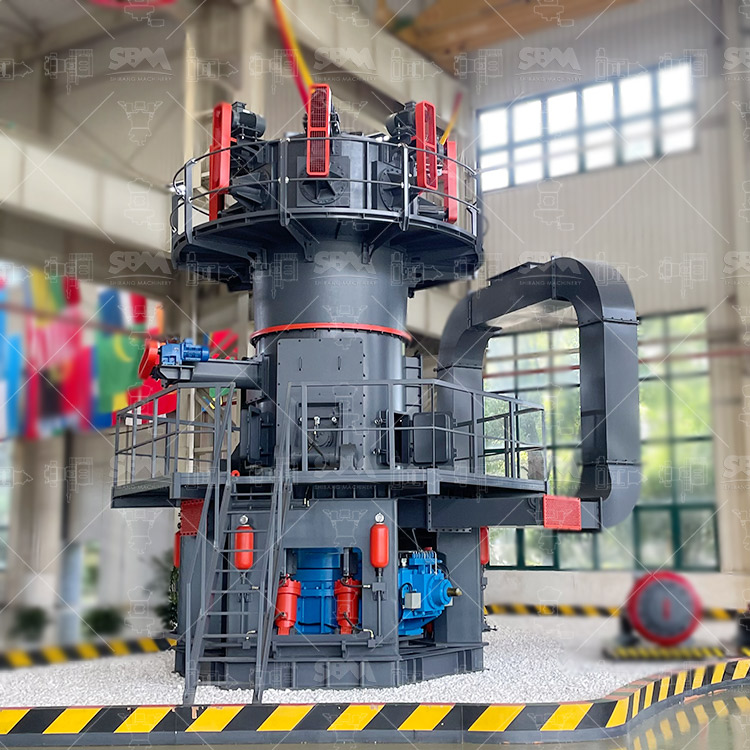
For larger-scale production, the LM Vertical Roller Mill integrates crushing, drying, grinding, and classification into a single unit. With an output range of 3–400 tph, it reduces floor space by up to 50% compared to traditional ball mills. The grinding rollers operate without direct contact with the grinding plate, leveraging high-quality materials to minimize wear. This design, combined with an expert automatic control system, allows for remote operation and real-time adjustments, ensuring optimal performance for wollastonite processing at 30–400 mesh fineness.
When ultrafine wollastonite powder (325–4,000 mesh) is required, the SCM Ultrafine Mill and LUM Ultrafine Vertical Mill offer distinct advantages. The SCM series achieves fineness up to D97 ≤5 μm through a heavy rotor design and efficient turbine powder classifier. Its automatic feedback system enables rapid adjustments to product specifications, while dual powder collection methods exceed international environmental standards. The LUM Ultrafine Vertical Mill, incorporating German powder separation technology, features multi-rotor classifiers for precise particle size distribution. Its grinding curves facilitate material bed formation, improving efficiency and yield in primary grinding stages.
Ball mills remain a viable option for coarser wollastonite applications (0.2–0.074 mm). Modern iterations from SBM address historical issues like high energy consumption and ball wear through structural optimizations and advanced materials. Dry ball mills are suitable for standard powder production, while wet ball mills excel in mineral dressing processes. However, for superfine wollastonite, vertical roller and ultrafine mills generally provide superior energy efficiency and finer control over particle morphology.
Key considerations when selecting a wollastonite mill include feed size (0–50 mm for most SBM mills), desired output fineness, and capacity requirements. Technologies such as PLC-based automation, negative-pressure sealing (preventing dust emissions), and frequency-conversion control empower operators to maintain consistency across batches. SBM’s global experience—serving over 180 countries—ensures that each mill is backed by practical insights into wollastonite processing challenges, from wear management to energy optimization.
Frequently Asked Questions
- How do I prevent excessive wear on grinding components when processing abrasive minerals like wollastonite?
SBM mills feature wear-resistant materials and designs such as curved shovel blades (MTW Mill) and non-contact grinding rollers (LM Vertical Mill) to extend component life and reduce maintenance frequency. - Can these mills achieve consistent fineness below 5 μm for specialized wollastonite applications?
Yes, the SCM Ultrafine Mill and LUM Ultrafine Vertical Mill are capable of producing powders with D97 ≤5 μm and customizable particle size distributions through advanced classifier systems. - What measures are in place to control energy consumption in high-capacity wollastonite grinding?
Vertical roller mills reduce energy use by 30–40% versus ball mills, while ultrafine mills employ efficient grinding chambers and frequency-conversion drives to optimize power usage. - How does the equipment handle variations in raw wollastonite moisture content?
Integrated drying functions in the LM Vertical Roller Mill and LUM Ultrafine Vertical Mill allow simultaneous grinding and drying, ensuring stable operation with moist feed materials. - Are these mills compliant with international environmental standards for dust and noise emissions?
All SBM mills feature sealed systems operating under negative pressure to eliminate dust spillage, and noise reduction technologies like sound insulation rooms meet stringent regulatory requirements.


