

Raymond mill: core equipment for desulfurization limestone powder
Published: October 2023
In the global drive toward cleaner emissions, flue gas desulfurization (FGD) has become a mandatory process for coal-fired power plants and industrial boilers. At the heart of an efficient FGD system lies the preparation of high-quality desulfurization limestone powder. Raymond mill, specifically engineered for limestone grinding, stands as the core equipment in this process, delivering consistent fineness, high throughput, and low energy consumption. Modern Raymond mill technology, such as the MTW European Trapezium Mill and LM Vertical Roller Mill from Shanghai SBM Machinery, has evolved far beyond traditional designs—integrating advanced wear protection, intelligent control, and environmental sealing to address the most pressing challenges faced by operators worldwide. Whether the requirement is 30-mesh coarse powder or 400-mesh fine powder, choosing the right Raymond mill configuration directly impacts scrubbing efficiency, operating costs, and regulatory compliance.
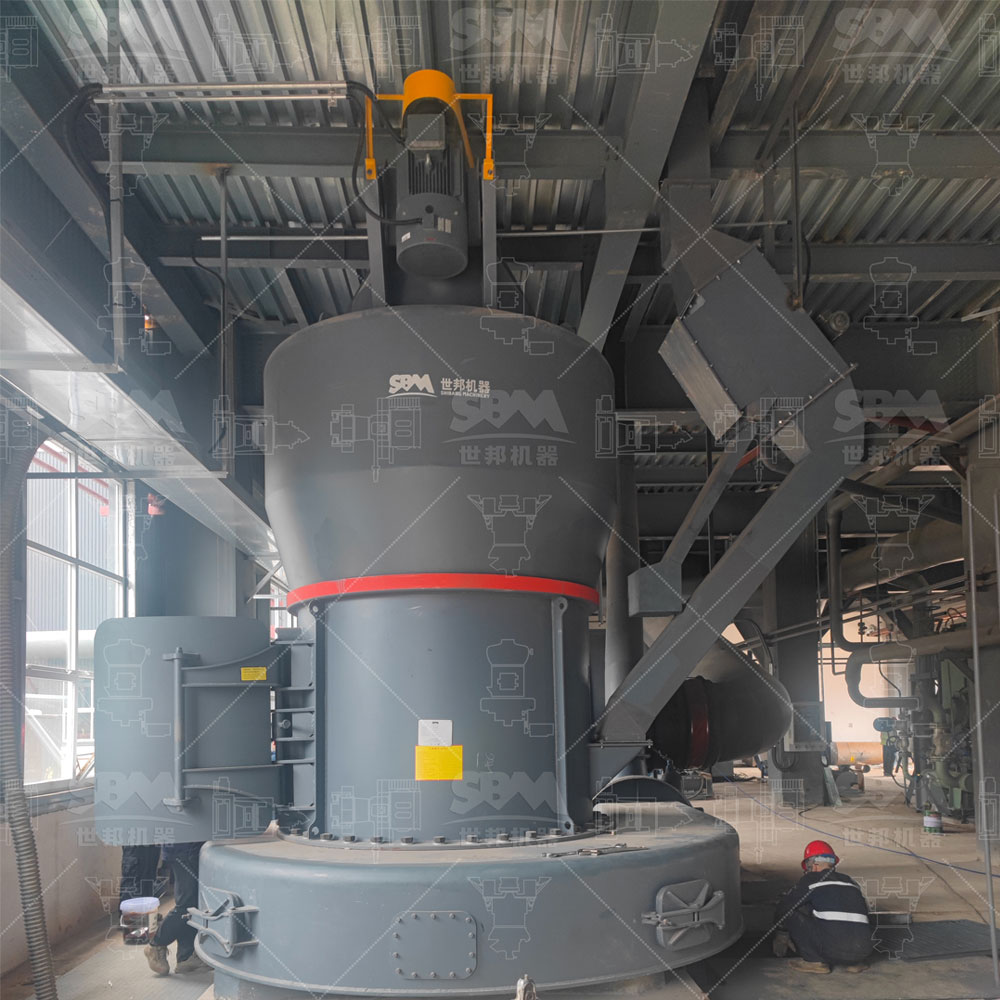
Understanding the Role of Raymond Mill in Desulfurization
Limestone-gypsum wet FGD is the most widely adopted technology, accounting for over 80% of global desulfurization systems. The process demands limestone powder with a specific particle size distribution—typically 250 mesh (90% passing) or 325 mesh (95% passing)—to ensure rapid dissolution and high reactivity in the absorber. Raymond mill excels in producing such powders with precision. Unlike traditional ball mills that suffer from high metal wear and energy waste, modern Raymond mills employ cone gear transmission, arc air ducts, and curved shovel blades to achieve 30–40% lower energy consumption while maintaining capacity ranges from 3 to 40 tph for single units. For larger plants, the LM vertical roller mill expands capacity up to 400 tph, integrating drying and grinding in one system—a decisive advantage when processing moist limestone.
Key Technical Advantages for Limestone Powder Production
1. Wear-Resistant Design Reduces Downtime
One of the most persistent pain points in limestone grinding is the rapid wear of rollers and grinding rings. SBM's MTW Raymond mill addresses this with a unique combined-type shovel blade system. Only the blade tip needs replacement during maintenance, lowering spare parts cost by up to 50%. The curved shovel changes the feeding angle, distributing material evenly and extending roller and ring life by hundreds of operating hours. For vertical roller mills, the grinding rollers and table are made of high-chrome alloy and do not contact directly—eliminating metal-to-metal wear and reducing maintenance frequency.
2. Energy Efficiency Through Mechanical Innovation
Energy costs represent over 60% of total grinding operational expenses. The cone gear integral transmission in MTW Raymond mill maximizes power transfer efficiency, saving floor space and reducing initial investment. The arc air duct design prevents airflow energy loss, ensuring that 95% of the pneumatic power reaches the classifier. In LM vertical roller mills, the grinding rollers apply direct pressure to the material bed, consuming 30–40% less energy than ball mill systems. For operators processing 50,000 tons of limestone annually, this translates into hundreds of thousands of dollars in electricity savings.
3. Intelligent Control for Consistent Quality
Fluctuations in limestone feed size and moisture content can destabilize product fineness, leading to downstream scrubbing inefficiency. Both the MTW and LM series come equipped with PLC/DCS automatic control systems. Through frequency conversion control of the classifier rotor and real-time adjustment of grinding pressure, the mill automatically compensates for material variations. Operators can switch between remote and local control, reducing manual intervention and labor costs. The result is a consistent 325-mesh product with less than 1% residue on a 45-micron sieve—meeting the strictest FGD specifications.
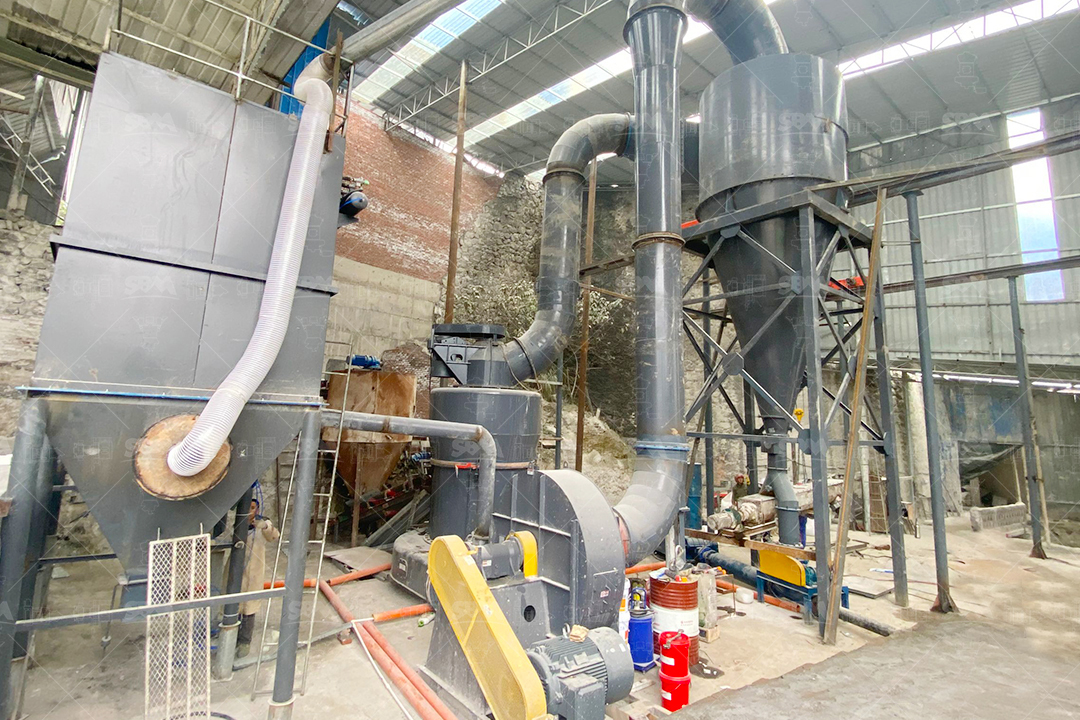
Solving Common Customer Pain Points
After equipping more than 1,800 limestone grinding stations across 180 countries, SBM has identified recurring challenges that Raymond mill technology directly resolves:
- High energy bills: Traditional ball mills waste up to 70% of input energy as heat and noise. Modern Raymond mills capture energy through efficient transmission and aerodynamic design, cutting kWh per ton by a third.
- Frequent roller/ring replacement: Inferior wear parts fail in under 2,000 hours. SBM's special alloy and perching knife design extend service life to 6,000–8,000 hours in limestone service.
- Product fineness instability: Manual adjustment of classifier speed leads to batch-to-batch variation. Closed-loop control in MTW and LM mills holds D90 within ±2% of set point.
- Dust and noise pollution: Open grinding circuits release fugitive dust. The negative-pressure sealed system in vertical roller mills and double pulse dust collectors in ultrafine mills achieve emissions below 20 mg/Nm³.
- Large footprint for high capacity: Ball mill systems require 200 m² for 40 tph. The LM vertical roller mill accomplishes the same in 100 m², with outdoor installation capability.
Choosing the Right Raymond Mill for Your Application
Selection depends on three factors: required capacity, target fineness, and material moisture. For medium-scale operations (3–40 tph, 30–400 mesh), the MTW European Trapezium Mill offers the best balance of cost and performance. Its cone gear transmission and arc air duct are optimized for limestone with up to 8% moisture. For large-scale FGD plants requiring 40–400 tph, the LM vertical roller mill integrates drying and grinding, handling feed moisture up to 15% without a separate dryer. When ultra-fine limestone powder (325–2500 mesh) is needed for applications like synthetic gypsum or paper filler, the LUM ultrafine vertical mill or SCM ultrafine mill achieves D97 ≤ 5µm with throughput up to 70 tph—performance that traditional Raymond mills cannot match.
Total Solution Provider Approach
SBM Machinery operates as more than a mill manufacturer. From feasibility study and site layout to installation, commissioning, and after-sales service, the company provides complete grinding systems including feeders, conveyors, dust collectors, and control panels. Over the past three decades, SBM Raymond mills have been deployed in power plants across China, India, Southeast Asia, and Africa, consistently achieving limestone preparation costs below industry averages. Every mill is backed by a global spare parts network and remote diagnostic support, ensuring that production stoppages are measured in minutes, not days.
Frequently Asked Questions
Q1: My limestone has 12% moisture. Can a Raymond mill handle it without pre-drying?
A: For moist limestone, we recommend the LM vertical roller mill, which integrates hot air drying within the grinding chamber. It can handle feed moisture up to 15% while maintaining stable operation. The MTW mill is suitable for moisture below 8%.
Q2: We need 325-mesh powder for FGD, but our current mill shows 5% residue on 325 mesh. How can we improve?
A: Upgrade to a mill with a high-efficiency rotor classifier. Both the MTW and LM series use vertical turbine classifiers with frequency control, enabling D95 below 45 microns. Ensure your mill is set to the correct air volume and classifier speed—our engineers can optimize the parameters remotely.
Q3: Grinding roller life in our mill is only 1,500 hours. What causes this?
A: Premature wear often results from improper feeding angle or low-quality roller material. The SBM MTW mill's curved shovel blade distributes material evenly, reducing concentrated wear. Combined with high-chrome roller alloy, service life extends to 6,000+ hours. We also recommend checking iron removal before grinding.
Q4: Is it possible to switch between producing 30-mesh coarse powder and 400-mesh fine powder on the same machine?
A: Yes. Both the MTW and LM mills allow fineness adjustment via frequency converter on the classifier. Changing from 30 mesh to 400 mesh takes under 30 minutes of adjustment time. No mechanical modification is needed—just recalibrate the classifier speed and air flow.
Q5: How do you control dust emissions from the mill system?
A: Our systems operate under negative pressure with full sealing. The MTW mill includes an arc air duct that minimizes leakage, while the LM mill uses a baghouse pulse dust collector achieving outlet dust concentration below 20 mg/Nm³. For ultrafine grinding, we add a secondary pulse collector and soundproof enclosure to meet the strictest environmental standards.


