

What are the factors that affect the output of grinding mills?
In the mining, building materials, chemical and other industries, grinding mills are the core equipment for material processing, but their output fluctuations often put enterprises into the dilemma of "high energy consumption and low output". Are you also facing the following problems?
Unstable output: The output of different batches of materials of the same equipment varies greatly;
High energy consumption: The electricity cost accounts for a high proportion, but it cannot match the ideal production capacity;
Frequent shutdowns for maintenance: The equipment wears quickly and production continuity is difficult to guarantee.
1. Material characteristics-innate conditions determine the output ceiling
Hardness and wear resistance
Materials with Mohs hardness > 7 (such as quartz stone) have large grinding resistance, accelerated wear of grinding rollers/grinding discs, and a 30%-50% drop in output.
Solution: Use high-pressure suspension roller mills or vertical mills, with high-chromium alloy wear-resistant parts to extend service life.
Moisture content and viscosity
Materials with a moisture content of > 8% are prone to adhere to the grinding chamber, blocking the air duct, resulting in a sharp drop in production capacity.
Solution: Configure a drying system (such as vertical mill integrated drying), or pre-dehydrate to a moisture content of ≤5%.
Uniformity of feed particle size
If the raw material particle size is too different (such as mixed large pieces and fine powder), the grinding efficiency will be reduced by 15%-25%.
Solution: Pre-install a multi-stage crushing and screening system to ensure that the feed particle size is ≤ the equipment requirements (such as Raymond mill needs ≤30mm).
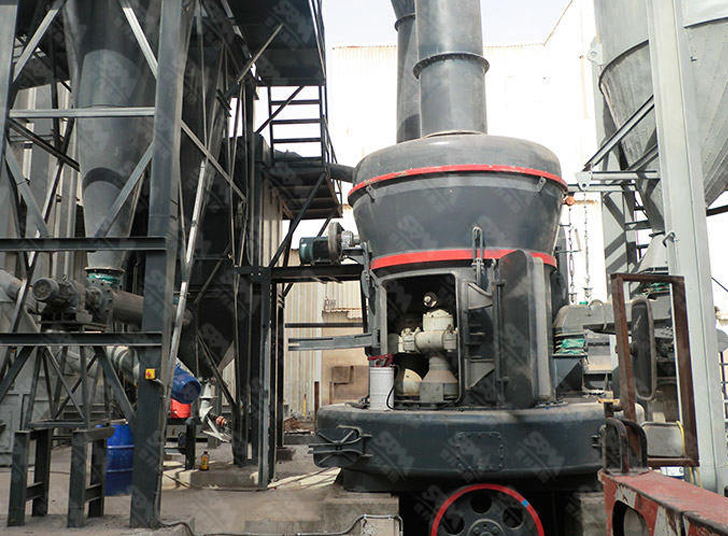
2. Equipment selection - only by matching the needs can the maximum potential be released
Insufficient power and grinding force
Low-power equipment forcibly processes high-hardness materials, which is easy to "pull a big cart with a small horse" and the output does not meet the standard.
Selection suggestions:
Medium and low hardness materials below 200 mesh: Raymond mill is preferred, which is cost-effective;
High hardness/ultrafine powder (above 800 mesh): Choose a vertical mill or ultrafine grinding mill + classification system.
Classification accuracy and efficiency
Unreasonable classifier speed will lead to increased coarse powder reflux and reduced effective output.
Optimization plan:
Use variable frequency speed classifier to adjust fineness in real time;
With airflow classifier, the target particle size ratio in the finished product is increased to more than 90%.


