

What are the machines that can process calcium carbonate above 400 mesh?
In the non-metallic mineral processing industry, calcium carbonate stands as one of the most widely used fillers, where its fineness directly determines product performance and added value. To meet the processing demands for ultra-fine calcium carbonate above 400 mesh, SBM Machinery leverages over 30 years of technological expertise to deliver high-efficiency grinding solutions covering all fineness ranges, empowering clients to achieve a quantum leap from standard ground calcium carbonate (GCC) to high-end nano calcium carbonate.
I. Technology Matrix: Comprehensive Grinding Systems for Full-Scene Coverage
SBM Machinery has established three core technological pathways centered on Vertical Mills, Ultra-fine Vertical Mills, and Ring Roller Mills, precisely tailored to diverse application scenarios:
LM Series Vertical Roller Mill
Core Advantages: Employs roller-disc material-bed grinding technology. Single-unit hourly output: 3–340 tons. Capable of stable production of 325–800 mesh GCC. Through a secondary classification system, partial products achieve up to 1250 mesh after fine classification, meeting mid-range market demands in papermaking, coatings, etc.
Case Study: A Zhejiang enterprise adopted the LM2600 Vertical Mill to produce 1,100 tons/day of GCC using calcite. Achieved 98% passing rate at 400 mesh with 35% lower power consumption per ton of powder compared to traditional ball mills.
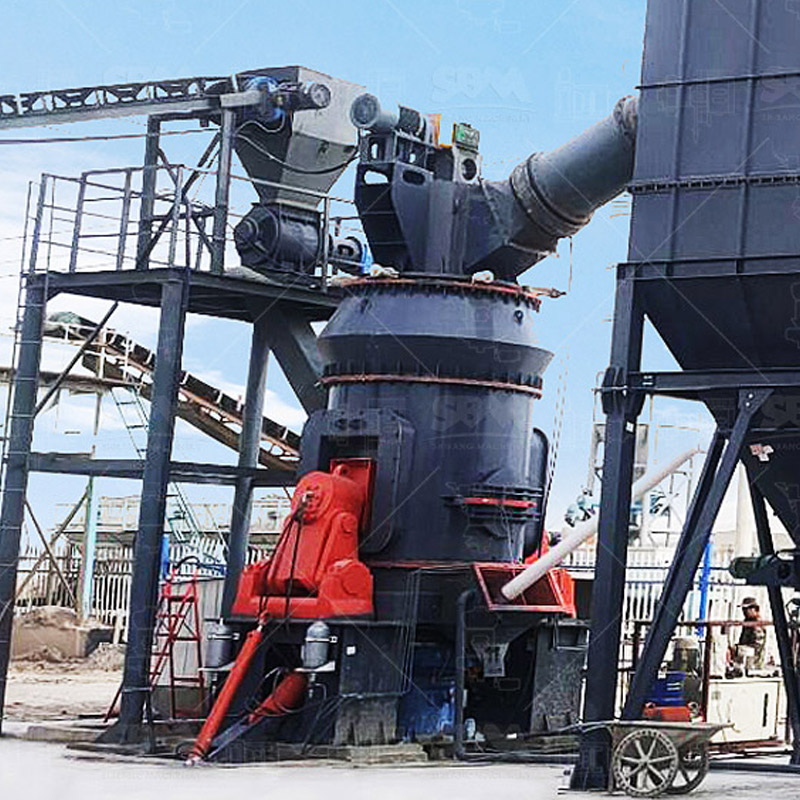
Core Advantages: Integrates high-pressure suspension roller and airflow classification technologies. Adjustable product fineness: 5–18 μm (800–2500 mesh), with >90% of products at D97 ≤ 10 μm. Equipped with pulse dust collection for full-process negative-pressure production; dust emission concentration <10 mg/m³.
Industry Breakthrough: A customized LUM1250 Ultra-fine Mill for a rubber enterprise increased GCC specific surface area to 18 m²/g, significantly enhancing tire tear resistance and achieving 25% product premium.
MTW European Trapezium Mill
Core Advantages: Features integral gear transmission and curved air duct design, increasing screening rate by 15% versus traditional Raymond mills. Enables stepless adjustment from 80–400 mesh via variable-frequency classifier. One unit replaces three traditional mills, reducing footprint by 50%.
Economic Analysis: At a Guangxi calcium production base, the MTW215 mill produced 325 mesh GCC from limestone, lowering per-ton powder cost by RMB 18 compared to ball mill + classification processes, saving >RMB 5 million annually.
II. Process Innovation: Iterative Upgrades in Dry Technology
SBM Machinery breaks through traditional dry-process limitations by developing integrated "grinding-classification-modification" technology:
Precise Particle Size Control
Multi-stage vortex classifiers linked with online particle monitoring ensure D50 tolerance < ±1 μm. At a Shandong nano-calcium carbonate production line, this technology increased product qualification rate at 2,500 mesh from 72% to 95%, breaking foreign technology monopolies.
Surface Activation & Modification
Integrated powder surface coating device enables simultaneous treatment with coupling agents (e.g., stearic acid, titanate) during grinding. Modified GCC exhibits 40% improved dispersibility in PVC products and 15 MPa higher tensile strength.
Energy-Saving Design
Hydraulic loading system with dynamic compensation technology restricts roller pressure fluctuation to < ±2%, reducing unit power consumption to 38 kW·h/t. Compared to traditional mills, this saves 12,000 tons of standard coal annually (based on 100,000-ton capacity), delivering significant carbon reduction benefits.


