

What grinding mills are commonly used for gravel grinding?
Common equipment types for gravel grinding include:
Vertical grinding mill: Highly efficient and energy-efficient, suitable for large-scale production (10-100 tons per hour), with an adjustable finished particle size of 80-325 mesh.
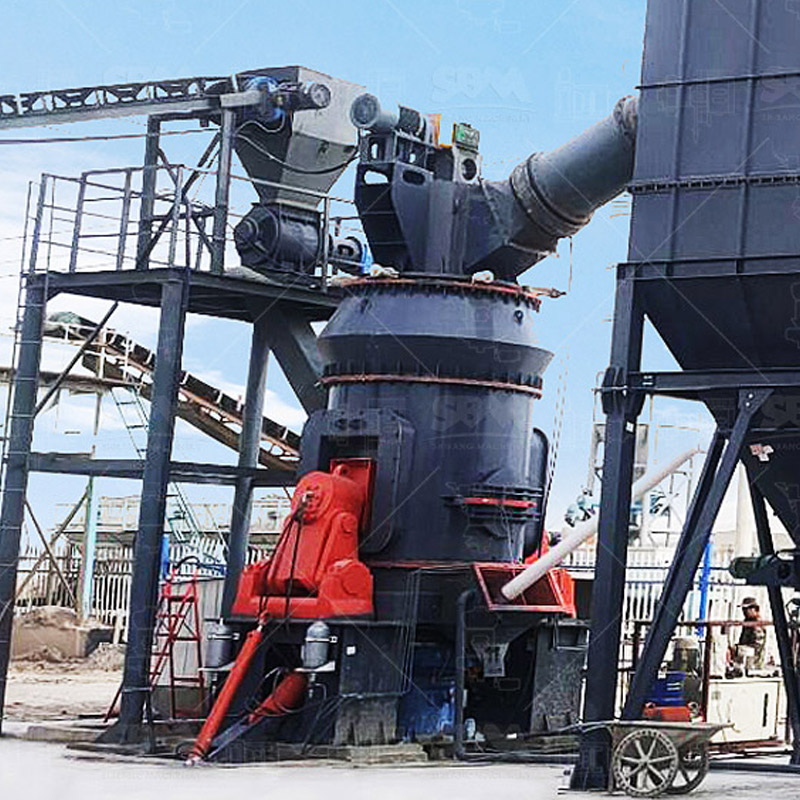
Raymond mill: The preferred choice for small and medium-sized production lines, offering simple operation and low maintenance costs, with a particle size range of 80-325 mesh.
High-pressure suspension roller mill: Uses hydraulic pressure to increase fineness, suitable for hard materials (such as river pebbles and basalt), with a 30% increase in output compared to traditional Raymond mills.
Ultrafine grinding mill: Targeted for high-fineness requirements (e.g., coatings and papermaking), with a finished particle size of up to 3000 mesh and equipped with a classifier for precise powder control.
Gravel Powder Grinding is Mainly Applied in the Following Industries:
Construction Industry: Used as fine aggregate or admixture in concrete and mortar to enhance strength and durability.
Chemical Industry: Serves as a filler for rubber and plastics, or as a thickening agent in coatings and putty.
Metallurgical Industry: Applied as a smelting auxiliary material (such as for iron ore sintering and furnace lining), or in metal surface treatment.
Environmental Protection: Used in soil improvement (adjusting pH levels) and wastewater treatment (as a filtration medium).
Note: Ground gravel features fine particle size and high hardness, making it suitable for a wide range of applications. Specific usage should be adjusted according to the raw material composition.


