

Material requirements for superfine mills
Published: October 26, 2023
Selecting the optimal grinding equipment requires careful consideration of material characteristics, fineness requirements, and operational efficiency. Shanghai SBM Machinery Equipment Co., Ltd. offers a comprehensive portfolio of superfine mills—including the MTW European Trapezium Mill, LM Vertical Roller Mill, SCM Ultrafine Mill, LUM Ultrafine Vertical Mill, and Ball Mill—each engineered to address specific material challenges. Key factors such as input size, desired output fineness, capacity, and energy consumption dictate the ideal mill selection. This article explores the technical specifications and advantages of these mills, providing guidance to maximize productivity while minimizing operational costs in superfine grinding applications.
Understanding material properties is the first step in selecting the right superfine mill. The hardness, moisture content, abrasiveness, and desired particle size distribution of the raw material significantly influence the choice of grinding technology. For instance, materials with high moisture content benefit from mills with integrated drying capabilities, while highly abrasive substances require wear-resistant components to ensure longevity.
_1762672833047.jpg)
The MTW Series European Trapezium Grinding Mill represents a significant advancement in traditional grinding technology. With an input size capability of 0-50mm and output fineness ranging from 30-400 mesh, this mill handles capacities from 3-40tph. Its innovative design incorporates several proprietary features that address common grinding challenges. The cone gear whole transmission system ensures higher efficiency while saving space and reducing investment costs. The unique wear-proof perching knife design features combined-type shovel blades that can be replaced individually, significantly reducing maintenance costs and downtime. The curved shovel blade design optimizes the feeding angle, extending the service life of critical components like rollers and rings.
Another notable feature of the MTW mill is its arc air duct design, which minimizes air energy loss and ensures efficient material transportation. The high-strength guard plate protects the working face of the air duct from wear, while the unobstructed wear-resistant volute improves wind-driven transmission efficiency within the mill. These design elements collectively contribute to lower operating costs and enhanced reliability, making the MTW European Trapezium Mill suitable for various industrial applications including power generation, building materials, and chemical processing.
For operations requiring higher capacity and integrated processing, the LM Vertical Roller Mill offers a comprehensive solution. With the same input size range of 0-50mm but significantly higher capacity (3-400tph), this mill integrates crushing, drying, grinding, powder separation, and transportation into a single compact system. The vertical design reduces floor space requirements by approximately 50% compared to traditional ball-milling systems, and its outdoor installation capability further reduces infrastructure costs.
The LM Vertical Roller Mill addresses energy consumption concerns through its efficient grinding mechanism where rollers directly grind materials on the grinding plate without direct contact, resulting in 30-40% lower energy consumption than ball-milling systems. The rollers and grinding plates utilize high-quality materials that provide extended service life with minimal wear. An expert automatic control system enables remote and local operation, reducing labor requirements while ensuring consistent performance. From an environmental perspective, the system operates under negative pressure with complete sealing, preventing dust spillage and maintaining noise levels well within regulatory standards.
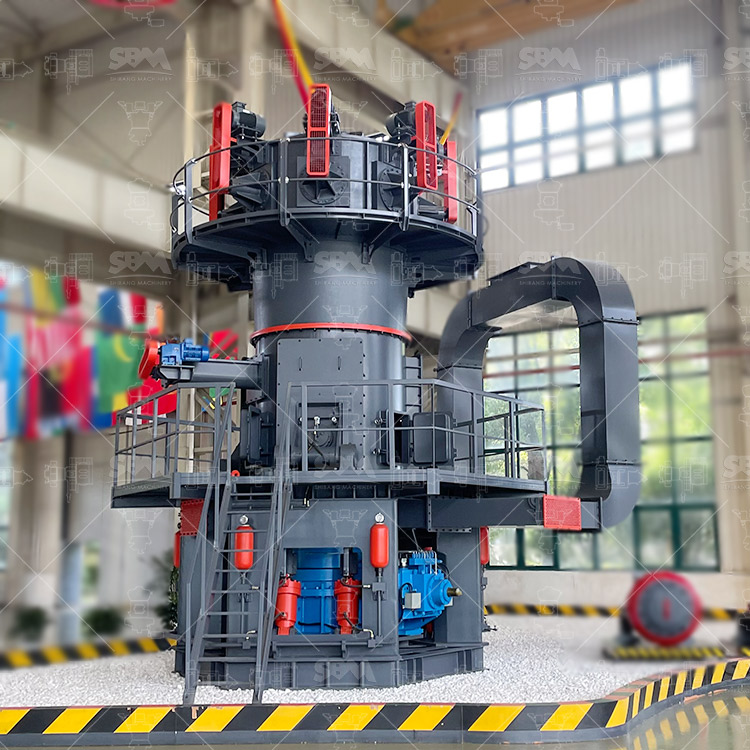
When ultra-fine grinding is the primary requirement, the SCM Series Ultrafine Grinding Mill and LUM Ultrafine Vertical Mill provide specialized solutions. The SCM mill achieves remarkable fineness levels from 325 to 4000 mesh, with disposable fineness reaching D97≤5μm. This exceptional performance is made possible through advanced features including frequency-conversion control for precise adjustment, an efficient vertical turbine powder classifier for accurate particle size distribution, and heavy rotor design with special materials that extend component durability several times over.
The SCM mill demonstrates high output with low energy consumption, delivering more than twice the capacity of jet mills while consuming 30% less energy. Its intelligent control system enables automatic feedback and stable conversion of finished products, directly saving labor costs. Environmental considerations are addressed through efficient double powder collection using powder collectors and pulse dust collectors, achieving dust collection efficiency far exceeding international standards. Optimized sound insulation and muffler systems effectively contain equipment noise.
The LUM Ultrafine Vertical Mill builds upon this technology with additional refinements, particularly for medium and high-end processing applications in industries such as plastic master batch, PVC, artificial stone, and non-woven fabrics. With capacity ranging from 10-70tph and output fineness matching the SCM mill (325-4000 mesh), the LUM mill incorporates grinding roller technology from Taiwan and German powder separating technology. The unique grinding curves of the roller shell and lining plate facilitate easier material bed formation, improving grinding efficiency and increasing the proportion of finished products from primary grinding.
The LUM mill's multi-rotor powder classifiers enable customized fineness ranges without low-grade material contamination. A PLC control system manages critical parameters including grinding pressure, grinding disc rotation speed, and classifier speed. The grinding roller pressure adjustment utilizes PLC/DCS automatic control for precise pressure management, ensuring high efficiency and stable operation. Frequency-conversion speed regulation allows adaptation to various materials, while the mill's structural design minimizes vibration and noise. Like other SBM mills, the LUM operates under negative pressure with complete sealing, preventing powder and dust escape while meeting stringent environmental standards.
For traditional grinding applications, SBM's optimized Ball Mill solutions address historical challenges of high wear and energy consumption. With input size up to 25mm and output fineness between 0.2-0.074mm (approximately 75-200 mesh), ball mills remain relevant for many applications. SBM has improved structural design and incorporated new materials to reduce spare parts costs significantly. The availability of both dry and wet ball mills accommodates different processing requirements—dry mills for common powder production and wet mills for mineral dressing applications.
Each mill in SBM's portfolio serves distinct purposes within the superfine grinding spectrum. The selection process should consider not only immediate production requirements but also long-term operational costs, maintenance needs, and environmental compliance. With equipment serving over 180 countries and regions worldwide, SBM's expertise spans the entire mineral processing workflow, providing clients with comprehensive solutions from individual units to complete grinding systems.
Frequently Asked Questions
What is the main advantage of vertical roller mills over traditional ball mills for superfine grinding?
Vertical roller mills like the LM and LUM series integrate multiple functions including drying, grinding, and separation in a single compact system, reducing floor space by up to 50% and lowering energy consumption by 30-40% compared to ball mills. They also offer better control over particle size distribution and operate with less noise and dust emission.
How does SBM address the problem of high wear part replacement costs in superfine mills?
SBM incorporates specialized designs like the combined-type shovel blade in MTW mills where only the blade needs replacement, and uses high-quality special materials for rollers and rings that extend service life several times. The heavy rotor design in ultrafine mills further reduces maintenance frequency and costs.
Can your ultrafine mills handle materials with high moisture content effectively?
Yes, vertical roller mills like the LM series integrate drying functionality directly into the grinding process. The system's design allows simultaneous drying and grinding, making them suitable for materials with significant moisture content without requiring separate drying equipment.
What level of automation do SBM superfine mills offer for operational efficiency?
Our mills feature advanced PLC/DCS automatic control systems that enable remote operation, precise parameter adjustment, and expert automation. This includes control of grinding pressure, rotation speeds, and classifier settings, reducing labor requirements while ensuring consistent product quality.
How do your mills ensure environmental compliance regarding dust and noise pollution?
All SBM mills operate under negative pressure with complete sealing to prevent dust escape. They incorporate efficient powder collection systems, including double powder collectors and pulse dust collectors that exceed international standards. Noise reduction is achieved through optimized sound insulation, mufflers, and vibration-minimizing designs.


