

Price of small grinding mills
Published on October 26, 2023
Small grinding mills represent a critical investment for operations requiring efficient particle size reduction across numerous industries. These compact yet powerful machines bridge the gap between laboratory-scale equipment and full-scale industrial milling systems, offering versatility for specialized applications, pilot plants, and smaller production lines. The selection of an appropriate small mill hinges on understanding the interplay between material characteristics, desired fineness, capacity requirements, and total operational costs. Modern small grinding mills, such as advanced vertical roller mills, European-style trapezium mills, and ultrafine grinding systems, incorporate sophisticated engineering to maximize energy efficiency, minimize wear part consumption, and ensure consistent product quality. This article examines the technological landscape of small grinding equipment, focusing on design innovations that address common operational challenges without compromising performance.
The evolution of small grinding technology has been driven by the need for greater efficiency in mineral processing, chemical production, and advanced material manufacturing. Unlike traditional designs that often sacrificed performance for compactness, contemporary mills integrate features previously found only in larger industrial systems. The MTW Series European Trapezium Grinding Mill exemplifies this trend with its cone gear whole transmission system, which eliminates redundant components to create a more direct power transfer path. This engineering approach reduces energy losses while maintaining the robust construction necessary for continuous operation. Additionally, the mill's inner oil absorption lubrication system ensures consistent protection of moving parts without external pumping mechanisms, simplifying maintenance procedures in confined spaces where small mills are typically deployed.
_1763828576994.jpg)
Operating cost reduction remains a primary concern for businesses utilizing small grinding equipment. The unique wear-proof perching knife design found in advanced trapezium mills addresses this challenge through a combined-type shovel blade that can be replaced individually rather than requiring full assembly replacement. This targeted maintenance approach significantly reduces spare part inventory costs and downtime. Furthermore, the curved shovel blade design optimizes material feeding angles to distribute wear more evenly across grinding components, extending service intervals. For operations processing abrasive materials, this design innovation can reduce operating expenses by up to 30% compared to conventional mill configurations with flat shovel blades.
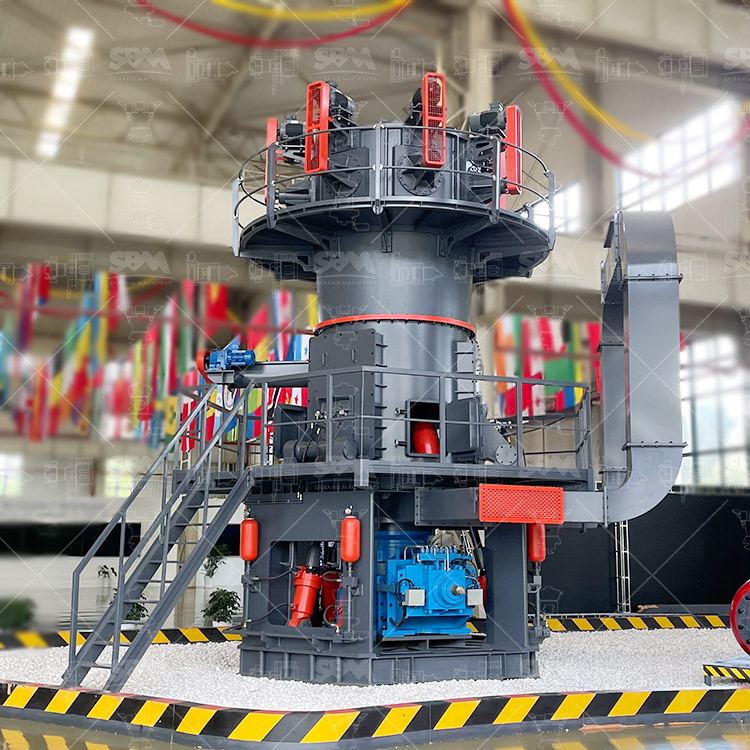
Vertical roller mills represent another technological leap for small-scale grinding applications. The LM Vertical Roller Mill integrates multiple processing stages—crushing, drying, grinding, and separation—within a single compact footprint. This integrated approach reduces the spatial requirements by approximately 50% compared to traditional ball mill systems, making vertical mills ideal for facilities with limited floor space. The grinding principle employed in vertical mills, where rollers compress material against a rotating table, creates a more efficient size reduction mechanism with lower specific energy consumption. Independent testing has demonstrated energy savings of 30-40% compared to equivalent capacity ball mills, a significant advantage in regions with high electricity costs.
Environmental considerations have become increasingly important in mill selection, particularly for operations located near urban areas or subject to stringent regulatory standards. Modern small grinding mills incorporate multiple features to minimize their environmental impact. The LM Vertical Roller Mill operates under negative pressure with complete sealing, preventing dust emissions without requiring additional containment systems. Similarly, the arc air duct design in European trapezium mills optimizes airflow patterns to reduce energy consumption while maintaining effective material transport. These environmental enhancements not only address regulatory compliance but also contribute to improved working conditions for operational staff through reduced noise levels and cleaner operating environments.
For applications requiring ultra-fine products, specialized mills like the SCM Ultrafine Mill and LUM Ultrafine Vertical Mill offer unique advantages. These systems can achieve fineness levels up to 4000 mesh while maintaining stable operation—a capability particularly valuable in industries such as advanced ceramics, pharmaceuticals, and high-performance plastics. The efficient vertical turbine powder classifiers in these mills provide precise particle size control, ensuring consistent product quality without coarse particle contamination. The heavy rotor design with special material construction withstands the intense mechanical stresses of ultrafine grinding, delivering durability that belies the compact dimensions of these specialized mills.
Automation represents another frontier in small grinding mill evolution. Modern systems incorporate PLC-based control systems that enable remote operation and automated adjustment of critical parameters such as grinding pressure, classifier speed, and feed rates. This level of control consistency translates to more uniform product quality with reduced operator intervention. The expert systems embedded in these controls can also predict maintenance requirements based on operational data, allowing planned downtime that minimizes production disruptions. For operations with limited technical staff, these automation features provide professional-grade results without requiring specialized milling expertise.
The versatility of contemporary small grinding mills extends to their ability to process diverse materials—from traditional minerals like limestone and calcite to specialized substances such as petroleum coke and lithium battery materials. This adaptability makes them valuable assets for businesses operating in multiple markets or developing new products. The modular design approach employed in many modern small mills further enhances this versatility, allowing configuration adjustments to accommodate different material characteristics and production requirements. As industries continue to evolve toward smaller batch sizes and more specialized products, the flexibility offered by advanced small grinding mills will become increasingly valuable.
Frequently Asked Questions
What is the typical energy consumption of small grinding mills compared to traditional equipment?
Modern small grinding mills incorporate advanced engineering features like cone gear transmission and optimized grinding geometries that typically reduce energy consumption by 30-40% compared to conventional ball mills of similar capacity. The specific savings depend on material characteristics and required fineness.
How often do wear parts need replacement in small grinding mills?
Replacement intervals vary significantly based on material abrasiveness and operating conditions, but advanced designs with special material formulations and optimized wear surfaces can operate for several thousand hours between major wear part replacements. Components like segmented grinding rings allow partial replacement to further extend service life.
Can small grinding mills achieve the same product fineness as larger industrial systems?
Yes, modern small mills utilizing advanced classification technology can produce powders with fineness up to 4000 mesh, matching or exceeding the capabilities of many larger systems. The key is proper selection of mill type and configuration for specific fineness requirements.
What level of technical expertise is required to operate these mills?
Contemporary small grinding mills feature comprehensive automation systems with intuitive interfaces that enable operation with minimal specialized training. Remote monitoring capabilities further reduce the need for on-site expertise while ensuring optimal performance.
How do small grinding mills address dust control and environmental compliance?
Advanced sealing systems, negative pressure operation, and integrated dust collection technologies ensure modern small mills meet stringent environmental standards without additional containment systems. Noise reduction features also address workplace safety requirements.


