

Calcium carbonate deep processing equipment
Published on: October 26, 2023
Calcium carbonate deep processing represents a critical stage in transforming raw mineral resources into high-value industrial materials. Shanghai SBM Machinery Equipment Co., Ltd. offers comprehensive solutions through its advanced grinding equipment portfolio, specifically engineered to address the evolving demands of calcium carbonate processing. Our technology enables precise control over particle size distribution, from coarse grinding to ultrafine powders, while optimizing energy efficiency and operational costs. With applications spanning plastics, paints, construction materials, and environmental desulfurization, SBM's equipment ensures consistent product quality and enhanced processing capabilities for operations of all scales.
The transformation of raw calcium carbonate into commercially viable products requires sophisticated processing equipment capable of delivering precise particle size control, consistent quality, and operational efficiency. As industries increasingly demand finer particle sizes and tighter specifications, the selection of appropriate grinding technology becomes paramount to maintaining competitive advantage.
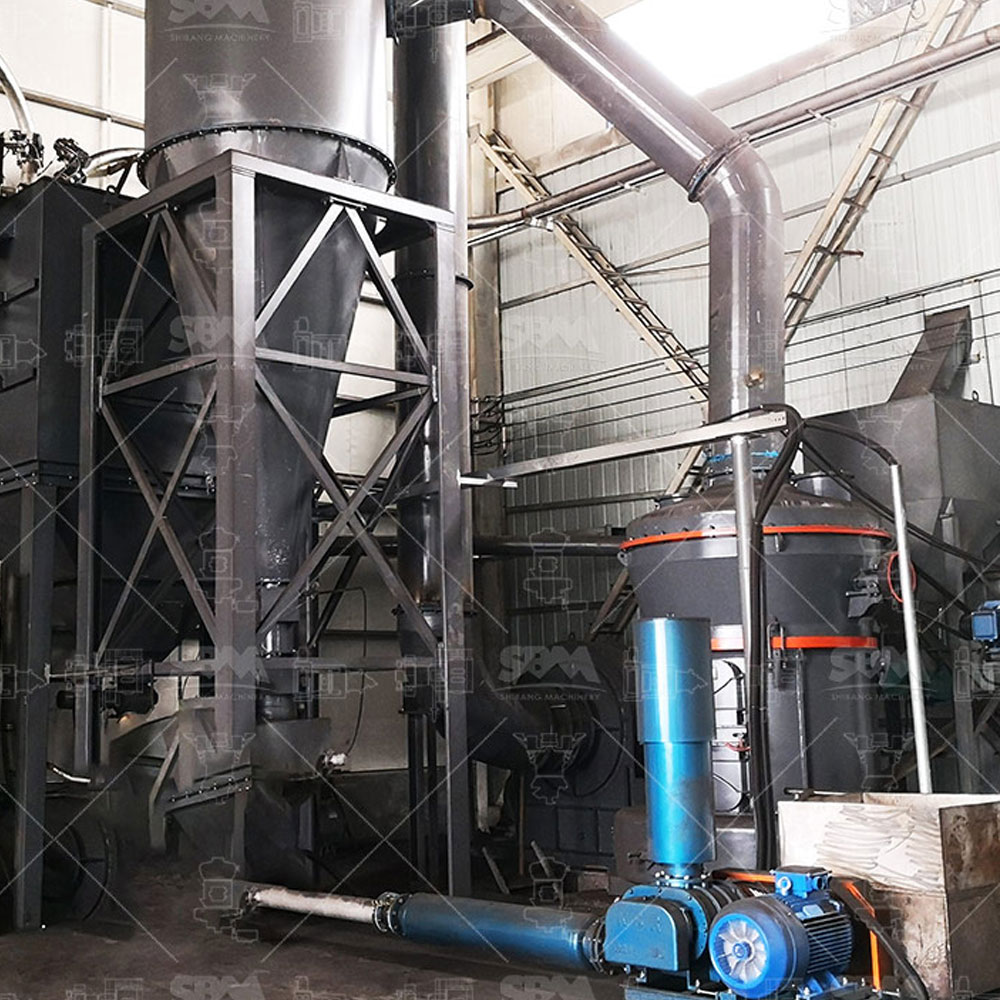
MTW Series European Trapezium Grinding Mill: Precision for Medium-Fine Applications
Our MTW Series European Trapezium Grinding Mill represents the evolution of traditional Raymond mill technology, incorporating advanced engineering solutions developed through extensive customer feedback and R&D innovation. Designed for processing calcium carbonate in the 30-400 mesh range, this mill integrates several proprietary technologies that significantly enhance performance and reliability.
The unique cone gear whole transmission system ensures higher mechanical efficiency while reducing space requirements and initial investment. This innovative transmission mechanism eliminates traditional limitations associated with gear alignment and maintenance complexity. The inner oil absorption lubrication system provides consistent protection for critical components, extending service intervals and reducing operational downtime.
Perhaps the most significant advancement lies in the combined-type shovel blade design, which allows for targeted replacement of wear components rather than complete assembly overhaul. This design philosophy reduces maintenance costs by up to 40% compared to conventional systems. The curved shovel blades optimize material feeding angles, promoting more efficient grinding action while extending the service life of grinding rollers and rings.
The arc air duct design represents another engineering breakthrough, minimizing air energy loss during material transport while protecting internal surfaces with high-strength guard plates. This systematic approach to energy conservation translates directly to reduced operating costs, particularly important in energy-intensive grinding operations.
LM Vertical Roller Mill: High-Capacity Processing Solution
For operations requiring higher throughput capacities ranging from 3-400tph, our LM Vertical Roller Mill provides an integrated solution that combines crushing, drying, grinding, and classification within a single compact unit. This vertical configuration offers distinct advantages for calcium carbonate processing, particularly in applications requiring simultaneous drying and grinding.
The fundamental design principle of the LM Vertical Roller Mill centers on direct material compression between grinding rollers and table, eliminating the inefficiencies associated with impact-based grinding systems. This mechanism delivers energy savings of 30-40% compared to traditional ball milling systems, while producing consistent particle size distribution across the 30-400 mesh range.
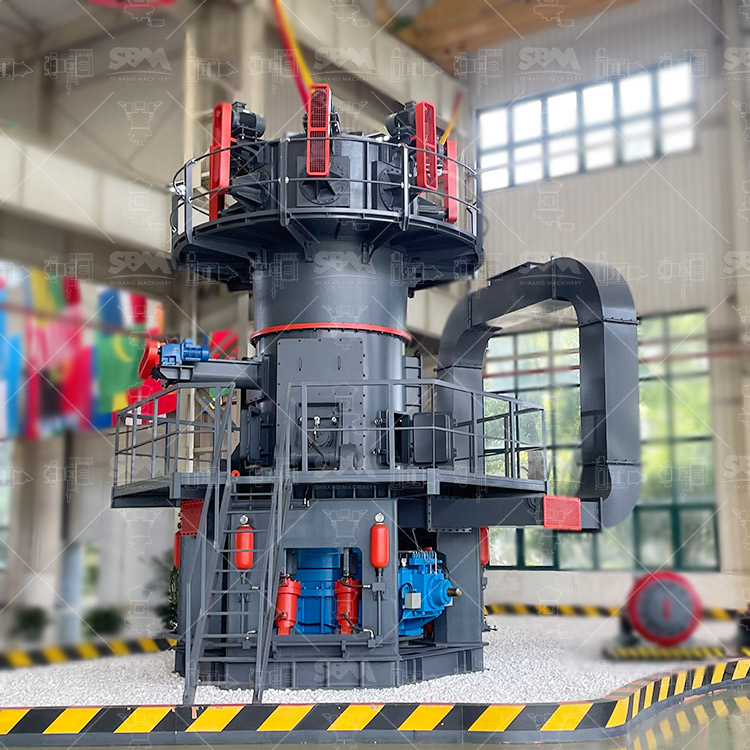
Space optimization represents another critical advantage, with the complete system occupying approximately 50% of the footprint required by equivalent ball mill installations. This compact design enables outdoor installation possibilities, further reducing civil construction costs and facility requirements.
Our proprietary automatic control system incorporates expert logic developed through decades of operational experience, enabling seamless transition between remote and local control modes. This intelligent automation not only reduces labor requirements but also ensures consistent product quality through precise control of operational parameters, regardless of operator experience level.
SCM Ultrafine Mill and LUM Ultrafine Vertical Mill: Advanced Fine Grinding Technologies
As market demands shift toward finer particle sizes and specialized surface properties, our SCM Ultrafine Mill and LUM Ultrafine Vertical Mill address the specific requirements of high-value calcium carbonate applications. Capable of producing powders in the 325-4000 mesh range, these technologies enable processors to access premium market segments with stringent technical specifications.
The SCM Ultrafine Mill incorporates advanced classification technology that ensures precise particle size control, with single-pass fineness reaching D97≤5μm. The heavy rotor design and specialized material selection for grinding components deliver exceptional durability, with service life exceeding conventional systems by multiple factors. The absence of bearing screws within the grinding chamber eliminates vibration-related issues, ensuring stable operation even at maximum capacity.
Our LUM Ultrafine Vertical Mill represents the convergence of German separation technology and Taiwanese roller design expertise, creating a system specifically optimized for ultrafine calcium carbonate production. The unique grinding curve design of roller shells and lining plates promotes efficient material bed formation, enhancing grinding efficiency while increasing the proportion of finished product from primary grinding stages.
Both systems incorporate sophisticated environmental controls, including efficient double powder collection methods and optimized sound insulation, ensuring compliance with the most stringent environmental regulations. The completely sealed systems operating under negative pressure prevent dust emission, creating cleaner working environments while maximizing product recovery.
Technical Selection Guidance
Selecting the appropriate calcium carbonate processing equipment requires careful consideration of multiple factors, including target particle size, production capacity, moisture content, and specific application requirements. Our MTW European Trapezium Mill excels in general-purpose applications requiring 30-400 mesh products at capacities up to 40tph. The LM Vertical Roller Mill provides optimal solutions for high-capacity requirements or applications needing integrated drying capabilities.
For specialized ultrafine applications, the choice between SCM Ultrafine Mill and LUM Ultrafine Vertical Mill depends on specific product characteristics and production scale. The SCM series offers exceptional flexibility for smaller-scale operations requiring frequent product changes, while the LUM series delivers higher throughput for dedicated ultrafine production lines.
Beyond equipment selection, SBM provides comprehensive technical support including process design, installation supervision, operational training, and ongoing technical services. Our global experience across 180 countries ensures that solutions are tailored to local conditions and specific operational requirements.
Future Development Trends
The calcium carbonate processing industry continues to evolve toward smarter, more efficient, and environmentally sustainable operations. Equipment intelligence represents the next frontier, with advanced control systems incorporating artificial intelligence and machine learning algorithms to optimize operational parameters in real-time. Remote monitoring capabilities enable predictive maintenance strategies, minimizing unplanned downtime and extending equipment lifespan.
Energy efficiency remains a primary focus, with ongoing development targeting further reductions in specific energy consumption through improved mechanical designs and operational optimization. The integration of renewable energy sources and waste heat recovery systems represents another development direction, particularly for energy-intensive grinding operations.
Material science advancements continue to enhance wear component durability, with new composite materials and surface treatments extending service life in abrasive applications. These developments collectively contribute to lower operating costs and improved sustainability metrics, aligning with global trends toward greener industrial processes.
Frequently Asked Questions
What is the typical energy consumption for processing calcium carbonate to 400 mesh?
Energy consumption varies significantly based on equipment selection and material characteristics. Our LM Vertical Roller Mill typically achieves 30-40% lower energy consumption compared to traditional ball milling systems for equivalent output, while maintaining consistent product quality across the specified particle size range.
How do you address the challenge of equipment wear in abrasive calcium carbonate applications?
We employ multiple strategies including specialized wear-resistant materials for grinding components, optimized mechanical designs that minimize direct contact between wearing surfaces, and maintenance-friendly designs that allow targeted replacement of specific components rather than complete assemblies.
Can your equipment handle wet calcium carbonate feedstock?
Our LM Vertical Roller Mill incorporates integrated drying capabilities, enabling processing of materials with moisture content up to 15% without requiring separate drying equipment. This integrated approach significantly reduces overall system complexity and energy consumption.
What level of automation can we expect from your grinding systems?
Our systems feature comprehensive automation capabilities including expert control systems that optimize operational parameters, remote monitoring and control functionality, automatic lubrication systems, and intelligent diagnostic tools that predict maintenance requirements before failures occur.
How do you ensure consistent product quality despite variations in raw material characteristics?
Our advanced control systems continuously monitor and adjust critical parameters including grinding pressure, classifier speed, and feed rate to maintain consistent product quality despite fluctuations in raw material properties. The systems incorporate self-learning capabilities that improve performance over time based on operational data.


