

Selecting an 800 mesh mill
Selecting the right grinding mill for achieving 800 mesh fineness is a critical decision that impacts operational efficiency, product quality, and total cost of ownership. For applications demanding this specific particle size—common in advanced materials, high-grade fillers, and specialty chemicals—the choice hinges on balancing throughput, energy consumption, particle size distribution, and system integration. Shanghai SBM Machinery offers a portfolio of advanced grinding solutions, each engineered to excel in different operational contexts. This article provides a professional analysis of SBM's key mill technologies suitable for 800 mesh production, helping you navigate the selection process based on your specific material characteristics, capacity requirements, and sustainability goals.
The pursuit of 800 mesh fineness (approximately 18 microns) places significant demands on grinding technology. It requires not just the ability to achieve a fine particle size, but to do so efficiently, consistently, and with minimal wear on components. General-purpose mills often struggle with high energy consumption and rapid wear at these fine sizes. SBM's approach is to offer specialized mills where the grinding mechanism, classifier technology, and system design are optimized for fine and ultrafine grinding applications.
Key Mill Technologies for 800 Mesh Production
SBM's product line includes several mills capable of reaching 800 mesh, but they differ significantly in their operating principles, ideal applications, and cost-benefit profiles.
MTW European Trapezium Mill
The MTW Series European Trapezium Mill is an evolution of the classic Raymond mill design, incorporating international advanced technologies. It is a robust and reliable workhorse for many powder processing applications. With an output range of 30-400 mesh, it comfortably handles 800 mesh (which falls within its upper capability range) for many medium-hardness materials.
Its technical advantages are particularly relevant for consistent 800 mesh production. The unique wear-proof shovel blade design reduces the cost of wearing parts, as only the blade itself needs replacement during maintenance. The curved design also prolongs the service life of the grinding roller and ring, directly lowering long-term operating costs. The arc air duct design ensures smooth airflow with minimal energy loss, which is crucial for efficient powder transport within the mill at fine sizes. Furthermore, the Cone Gear Whole Transmission system provides high transmission efficiency and stability, saving space and reducing initial investment costs.
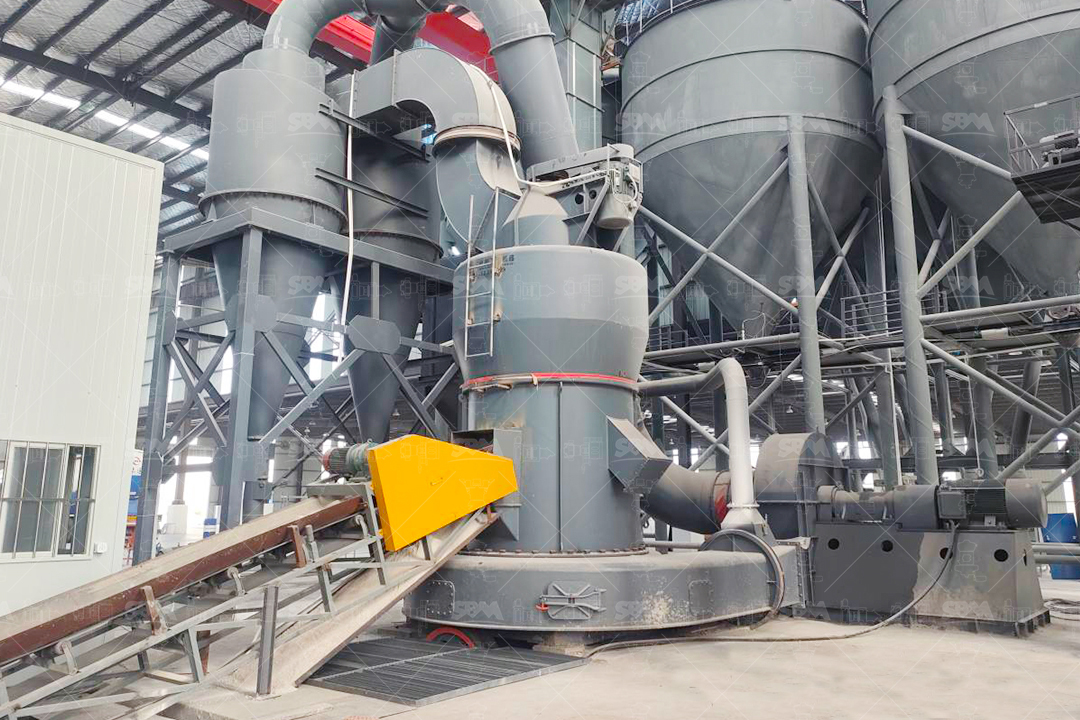
LUM Ultrafine Vertical Roller Mill
For the most demanding 800 mesh applications, especially those requiring high throughput and superior particle shape, the LUM Ultrafine Vertical Roller Mill represents the pinnacle of SBM's technology. It integrates German powder separating technology and is specifically designed as a medium and high-end processing equipment. With an output range of 325-4000 mesh, it operates with ease at 800 mesh.
The LUM mill's core strength lies in its high efficiency and superior finished product quality. The grinding curves of the roller shell and lining plate are uniquely designed based on ultrafine pulverization principles, making it easier to form a stable material bed. This improves grinding efficiency and increases the proportion of on-spec product from the primary grinding pass. Its advanced separation technology, utilizing a multi-rotor powder classifier, ensures a sharp particle size cut with no low-grade material contamination. The intelligentized control system allows for precise control over grinding pressure and classifier speed, ensuring stable operation and consistent product quality at 800 mesh.
SCM Ultrafine Mill
The SCM Series Ultrafine Mill is another specialized solution for producing powders in the 325 to 4000 mesh range, making 800 mesh a core competency. It is particularly renowned for its ability to achieve very high fineness with low energy consumption.
A key advantage of the SCM mill is its high output and low energy consumption. Its capacity is more than twice that of many jet mills while consuming 30% less energy. It features an automatic feedback system for fast and stable product conversion. The high fineness is achieved through frequency-conversion control and an efficient vertical turbine powder classifier that provides accurate cutting size and prevents coarse powder spillover. The heavy rotor design and tight test methods ensure the grinding chamber works stably without vibration, and the use of special materials for rollers and rings extends durability significantly.
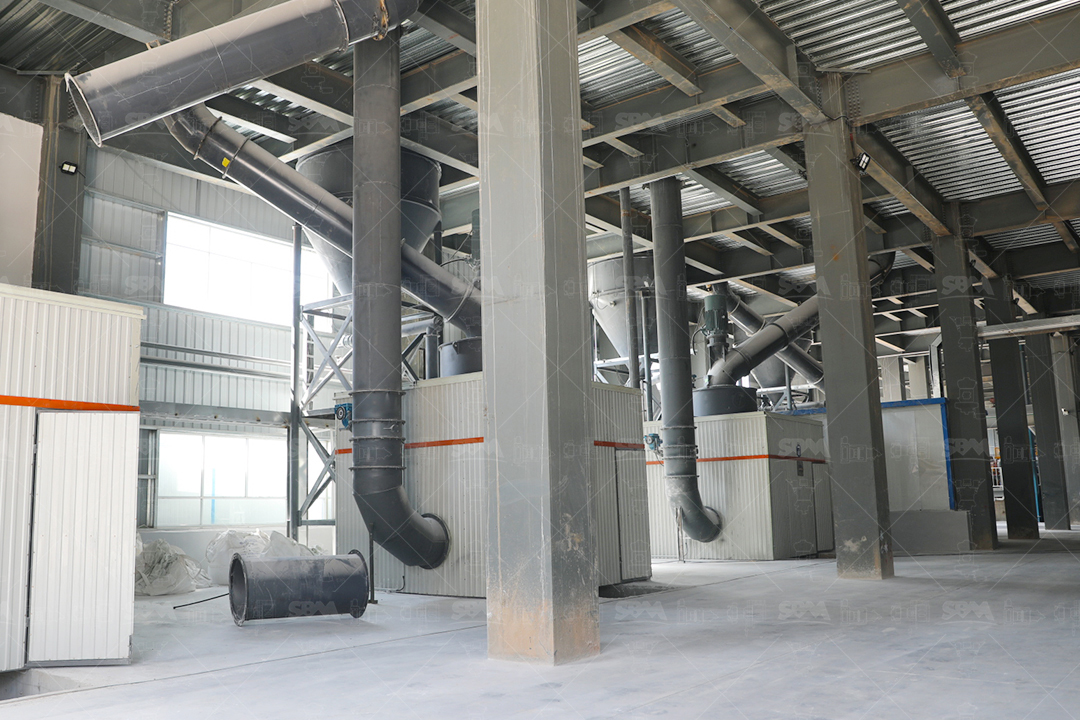
Making the Right Choice: A Comparative Perspective
Choosing between these technologies depends on your specific operational parameters.
- For balanced performance and cost-effectiveness: The MTW European Trapezium Mill is an excellent choice for producers who need a reliable, proven technology to consistently achieve 800 mesh without the need for the highest possible throughput. Its lower initial investment and simplified maintenance are major benefits.
- For high-capacity, high-efficiency production: The LUM Ultrafine Vertical Roller Mill is ideal for large-scale operations where throughput (10-70 TPH), energy efficiency, and precise particle size control are paramount. Its integrated drying, grinding, and classifying functions make it a comprehensive solution.
- For specialized, high-fineness applications: The SCM Ultrafine Mill is perfectly suited for operations that may occasionally require fineness far beyond 800 mesh (up to 2500 mesh) and prioritize extremely low energy consumption for ultrafine grinding at a slightly lower capacity range (0.5-25 TPH).
All SBM mills are designed with environmental protection in mind, featuring sealed systems that operate under negative pressure to prevent dust spillage and meet international emission standards.
Conclusion
Selecting an 800 mesh mill is a strategic decision that goes beyond mere particle size. It involves a careful consideration of material properties, desired capacity, energy sustainability, and total operational costs. Shanghai SBM Machinery's diverse range of grinding equipment—from the robust MTW European Trapezium Mill to the high-performance LUM Ultrafine Vertical Roller Mill and the specialized SCM Ultrafine Mill—ensures that there is an optimized solution for every need. By leveraging SBM's global experience and technological innovations, you can achieve your 800 mesh grinding goals with reliability, efficiency, and long-term profitability.
Frequently Asked Questions (FAQ)
- What is the primary factor affecting the energy consumption of an 800 mesh mill?
The grinding mechanism and classifier efficiency are the most critical factors. Mills like the LUM Vertical Roller Mill and SCM Ultrafine Mill are designed with high-efficiency classifiers and optimized grinding zones, consuming 30-40% less energy than conventional systems for the same output. - How often do the grinding rollers and rings need to be replaced, and what is the associated cost?
Replacement frequency depends on material abrasiveness. SBM mills feature wear-resistant designs and special materials that extend service life significantly. For instance, the MTW mill's combined shovel blade only requires blade replacement, not the entire assembly, drastically reducing maintenance costs and downtime. - Can the mill handle variations in feedstock moisture content?
Yes, several SBM mills, particularly the LUM Vertical Roller Mill, integrate a drying function. They can use hot air from an auxiliary heater to simultaneously dry and grind materials, making them suitable for feedstocks with some moisture content without requiring a separate drying step. - Is it difficult to control the final product fineness to a consistent 800 mesh?
No. SBM's advanced mills feature intelligent control systems (PLC/DCS) and frequency-conversion classifiers. These allow for precise, automated adjustment of key parameters like classifier speed and grinding pressure, ensuring a stable and consistent 800 mesh output with a narrow particle size distribution. - What are the dust collection and noise levels like for these high-performance mills?
SBM mills are designed for high environmental standards. The systems are wholly sealed and operate under negative pressure, preventing dust spillover. Efficient pulse dust collectors ensure emissions meet national standards. Furthermore, optimized sound insulation and mufflers effectively control equipment noise, creating a safer and more compliant working environment.


