

Barite mill production efficiency
Published: October 26, 2023
Maximizing production efficiency in barite processing is a critical challenge for operators worldwide, directly impacting profitability, product quality, and market competitiveness. This article explores how selecting the appropriate grinding technology—specifically comparing Vertical Roller Mills, European Trapezium Mills, and Ultrafine Mills—can dramatically enhance throughput, reduce energy consumption, and minimize operational costs in barite milling operations. Drawing from extensive global application data and technological innovations from Shanghai SBM Machinery, we analyze how modern mill designs address common production bottlenecks while maintaining consistent product quality across various fineness requirements, from coarse grinding for oil and gas drilling applications to ultrafine powders for chemical and filler industries.
The fundamental challenge in barite milling lies in achieving the optimal balance between particle size distribution, production capacity, and energy efficiency. Traditional ball mills, while reliable, often struggle with high energy consumption and significant wear part costs. Modern grinding solutions have evolved to address these limitations through integrated systems that combine crushing, drying, grinding, and classification in single units. The MTW Series European Trapezium Grinding Mill, for instance, incorporates cone gear whole transmission technology that achieves higher mechanical efficiency while reducing space requirements and initial investment costs. Its unique wear-proof perching knife design and curved shovel blades significantly extend the service life of critical components, directly addressing the operational cost concerns that plague many barite processing facilities.
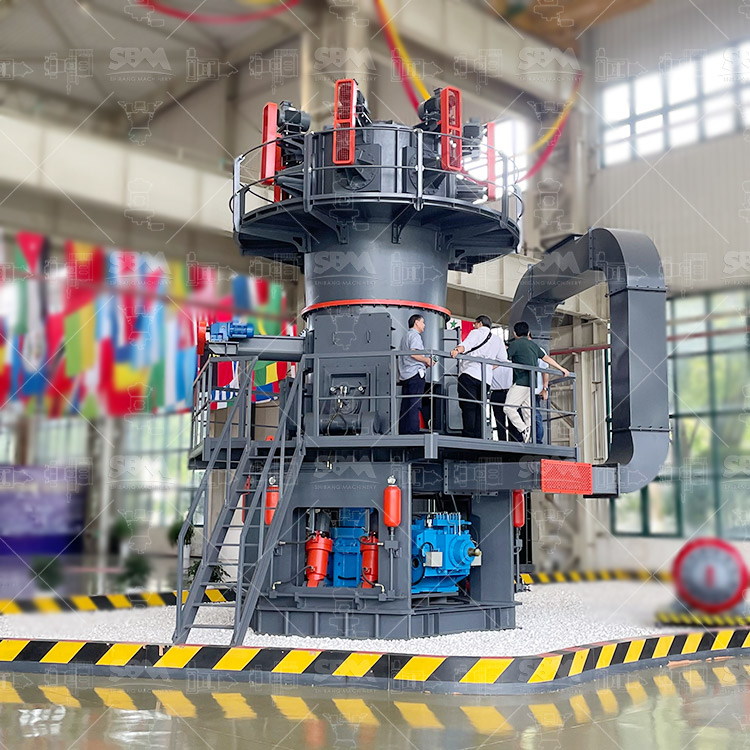
_1764346937988.jpg) Vertical grinding technologies represent another significant advancement for barite processing. The LM Vertical Roller Mill integrates multiple functions into a compact system, with floor space requirements approximately 50% of equivalent ball mill systems. This integrated approach not only reduces comprehensive investment but also delivers substantial operating cost savings. The grinding principle—where rollers directly grind materials on the rotating table—enables energy consumption reductions of 30-40% compared to traditional ball milling systems. Furthermore, the non-contact grinding design between rollers and grinding plate, combined with high-quality materials, results in dramatically reduced wear rates and extended component life, particularly important when processing abrasive materials like barite.
Vertical grinding technologies represent another significant advancement for barite processing. The LM Vertical Roller Mill integrates multiple functions into a compact system, with floor space requirements approximately 50% of equivalent ball mill systems. This integrated approach not only reduces comprehensive investment but also delivers substantial operating cost savings. The grinding principle—where rollers directly grind materials on the rotating table—enables energy consumption reductions of 30-40% compared to traditional ball milling systems. Furthermore, the non-contact grinding design between rollers and grinding plate, combined with high-quality materials, results in dramatically reduced wear rates and extended component life, particularly important when processing abrasive materials like barite.
For applications requiring ultrafine barite powders, SCM Series Ultrafine Grinding Mills offer fineness adjustment from 325 to 2500 meshes, with single-pass fineness reaching D97≤5μm. This capability eliminates the need for multiple processing stages, streamlining production while maintaining consistent quality. The high-efficiency vertical turbine powder classifier ensures precise particle size control without coarse powder spillover, addressing a common quality control challenge in fine barite production. Additionally, these mills demonstrate remarkable energy efficiency, with capacity more than twice that of jet mills while consuming 30% less energy—a critical consideration given energy costs typically represent the largest operational expense in grinding operations.
 Environmental considerations increasingly influence mill selection decisions, particularly regarding dust control and noise pollution. Modern grinding systems address these concerns through wholly sealed designs operating under negative pressure, effectively preventing dust spillage while meeting stringent international emission standards. Advanced sound insulation technologies further reduce operational noise, creating safer working environments and facilitating compliance with workplace regulations. The LUM Ultrafine Vertical Mill exemplifies this approach, combining German powder separation technology with Taiwan's grinding roller innovations to deliver environmentally compliant processing for high-value barite applications in plastics, paints, and specialty chemicals.
Automation represents another frontier in barite mill efficiency optimization. Modern mills incorporate PLC/DCS automatic control systems that enable remote operation and precise parameter management. These intelligent systems automatically adjust critical variables including grinding pressure, rotational speed, and classifier settings in response to feed material characteristics and desired product specifications. This not only reduces labor requirements but also ensures consistent product quality despite variations in raw material properties. The economic impact of these advancements extends beyond direct operational savings to include reduced quality rejections, lower maintenance downtime, and increased equipment utilization rates.
The selection criteria for barite grinding equipment should consider specific application requirements, including target fineness, production capacity, and available infrastructure. For high-volume production of drilling-grade barite (30-400 mesh), Vertical Roller Mills and European Trapezium Mills offer compelling advantages in throughput and operating costs. For specialized applications requiring ultrafine barite (exceeding 1000 mesh), dedicated Ultrafine Mills provide the necessary precision and efficiency. In all cases, the integration of drying capabilities within the grinding system proves particularly valuable for barite, which often requires moisture reduction alongside size reduction.
Ultimately, maximizing barite mill production efficiency requires a holistic approach that considers not only the grinding equipment itself but also auxiliary systems, operational practices, and maintenance strategies. The technological advancements embodied in modern grinding mills—from wear-resistant materials to intelligent control systems—provide barite processors with powerful tools to enhance competitiveness in an increasingly demanding global market. By leveraging these innovations, operators can achieve the dual objectives of reduced production costs and improved product quality, positioning their operations for long-term success in the evolving barite industry.
Frequently Asked Questions
What is the most energy-efficient mill type for producing standard 200-mesh barite for drilling applications?
For standard 200-mesh barite production, Vertical Roller Mills typically offer the highest energy efficiency, consuming 30-40% less power than traditional ball mills while maintaining comparable product quality and higher throughput rates.
How can we reduce the excessive wear on grinding components when processing abrasive barite ore?
Modern mills address wear challenges through specialized material selections, innovative grinding geometry designs, and reduced component contact. The MTW European Trapezium Mill's curved shovel blades and combined-type wear-proof perching knife specifically extend service life by optimizing material flow and reducing direct abrasion.
What mill configuration is recommended for producing both coarse drilling mud barite and fine-grade barite for chemical applications?
A combination system using a Vertical Roller Mill for coarse to medium grinding (30-400 mesh) paired with an Ultrafine Mill for high-value fine products (400-2500 mesh) provides maximum flexibility. This approach allows operators to serve multiple market segments while optimizing energy usage for each product grade.
How do modern mills address dust control challenges in barite processing plants?
Advanced grinding systems incorporate wholly sealed designs operating under negative pressure, effectively containing barite dust within the system. Efficient powder collection methods using multiple cyclones and pulse dust collectors ensure emissions remain well below international environmental standards.
Can automated control systems really improve consistency in barite product quality?
Yes, PLC/DCS automatic control systems continuously monitor and adjust critical parameters including grinding pressure, mill speed, and classifier settings. This maintains consistent particle size distribution despite variations in feed material characteristics, significantly reducing quality variations and product rejections.


