

Applications of phosphate grinding mills
Published: October 26, 2023
Phosphate rock processing represents one of the most demanding applications in mineral grinding, requiring specialized equipment capable of handling abrasive materials while maintaining precise particle size distribution and operational efficiency. Shanghai SBM Machinery Equipment Co., Ltd. has developed a comprehensive portfolio of grinding solutions specifically engineered to address the unique challenges of phosphate processing. From coarse grinding to ultrafine powder production, SBM's advanced mill technologies—including the MTW European Trapezium Mill, LM Vertical Roller Mill, and various ultrafine grinding systems—offer tailored solutions that optimize productivity, reduce operational costs, and meet stringent environmental standards across the phosphate processing workflow.
The fundamental challenge in phosphate grinding lies in the material's abrasive nature and the varying hardness of phosphate deposits. Traditional grinding equipment often suffers from accelerated wear, high energy consumption, and inconsistent product quality. SBM's engineering team has addressed these issues through innovative design features that extend component life, improve grinding efficiency, and enhance system reliability. The company's extensive experience serving over 180 countries and regions has provided invaluable insights into the practical requirements of phosphate processors worldwide.
Technical Solutions for Phosphate Processing Challenges
Phosphate rock typically requires size reduction from mine-run material to various fineness levels depending on the end application—whether for direct application as fertilizer, further chemical processing, or industrial uses. SBM's MTW Series European Trapezium Grinding Mill represents a significant advancement for medium-fine grinding applications. Its unique wear-proof perching knife design specifically addresses the abrasion concerns common in phosphate processing. The combined-type shovel blade reduces wearing parts costs, with only the blade requiring replacement during maintenance. The curved shovel blade design optimizes the feeding angle, prolonging the service life of rollers and rings, which directly translates to reduced operating costs in high-wear phosphate applications.
The MTW Mill's cone gear whole transmission system provides higher transmission efficiency while saving space and lowering investment costs. For phosphate processors dealing with moist feed materials, the arc air duct design ensures efficient material transport without energy loss, while the high-strength guard plate protects the working face of the air duct from abrasive phosphate particles. With an output range of 30-400 mesh and capacity up to 40tph, this mill serves as an ideal solution for many phosphate grinding operations requiring consistent medium-fineness products.
Vertical Mill Technology for Large-Scale Phosphate Operations
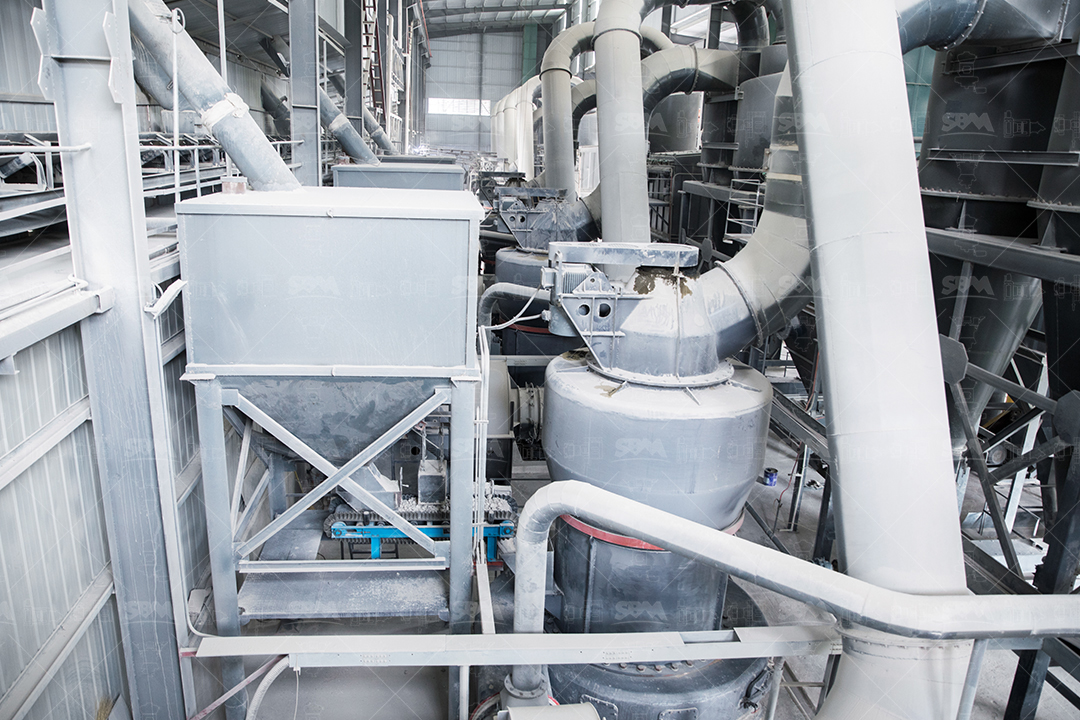
For larger-scale phosphate processing requirements, SBM's LM Vertical Roller Mill offers compelling advantages through its integrated design that combines crushing, drying, grinding, powder separation, and transportation in a single unit. The compact layout occupies approximately 50% of the space required by traditional ball-milling systems, significantly reducing construction costs. This space efficiency, combined with the ability to arrange the system outdoors, makes the LM Vertical Roller Mill particularly suitable for greenfield phosphate projects where infrastructure costs are a major consideration.
The operating cost advantages become particularly evident in phosphate applications. The grinding principle, where rollers do not directly contact the grinding plate, combined with high-quality materials for both components, results in substantially less wear compared to conventional mills. The direct grinding action on the grinding plate provides 30-40% lower energy consumption than ball-milling systems—a critical factor given that grinding typically represents the most energy-intensive stage in phosphate processing. The integrated expert automatic control system enables remote operation and optimizes grinding parameters in real-time, further enhancing efficiency and reducing labor requirements.
Advanced Ultrafine Grinding for Specialty Phosphate Products
As market demands evolve, there is growing need for ultrafine phosphate powders in specialty applications such as advanced fertilizers, animal feed supplements, and industrial uses. SBM's SCM series ultrafine grinding mill addresses this niche with fineness adjustable from 325 to 2500 meshes and disposable fineness reaching D97≤5μm. The mill's high efficiency and low energy consumption—with capacity more than twice that of jet mills but energy consumption lower by 30%—make it economically viable for high-value phosphate products.
The LUM Ultrafine Vertical Mill represents the latest advancement in this category, integrating powder grinding, separation, and transportation with specialized grinding curves for the roller shell and lining plate based on ultrafine pulverization principles. This design makes it easier to form material beds, improving grinding efficiency and increasing the proportion of finished products from primary grinding. The multi-rotor powder classifiers enable customized fineness ranges without low-grade material contamination, while the PLC control system maintains precise control over grinding pressure, rotating speed of grinding disc, and classifier speed.
Comprehensive System Integration and Environmental Compliance
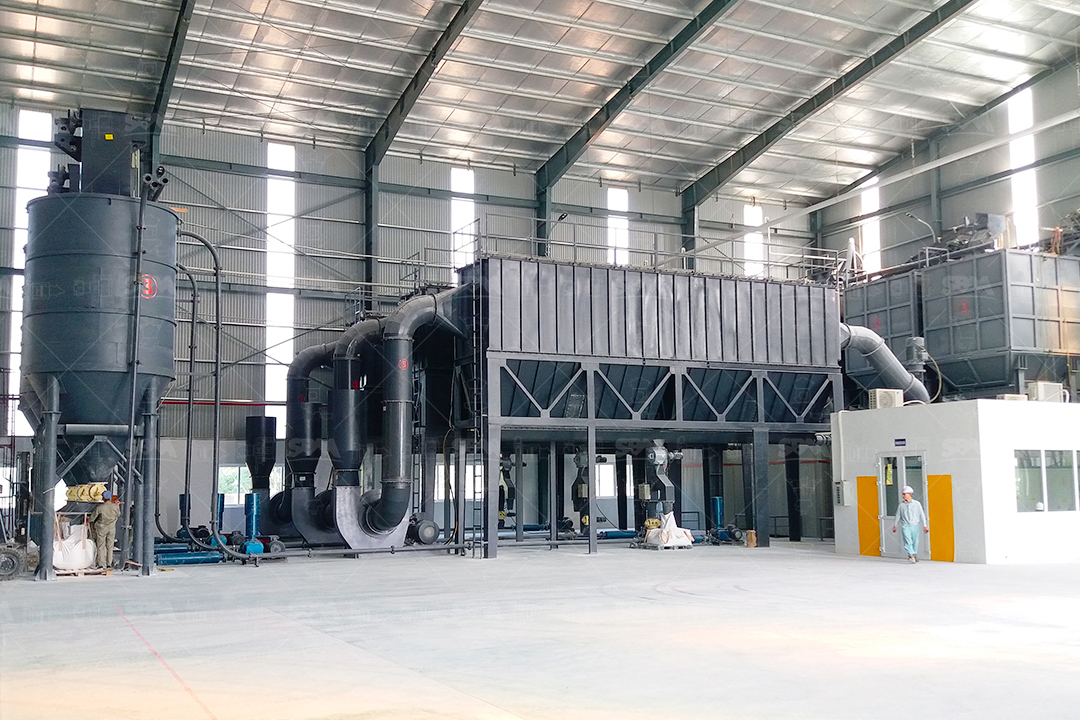
Beyond individual mill performance, SBM emphasizes complete system integration to optimize the entire phosphate grinding circuit. The company's approach as a total solution provider ensures that all components—from feeding systems and classifiers to dust collection and material handling—work in harmony to maximize overall efficiency. This systems perspective is particularly valuable in phosphate processing, where downstream operations depend heavily on consistent grind quality and reliable material flow.
Environmental considerations have become increasingly important in phosphate operations worldwide. SBM's grinding systems incorporate multiple features to address these concerns, including wholly sealed systems operating under negative pressure to prevent dust spillover, efficient double powder collecting methods using powder collectors and pulse dust collectors, and optimized sound insulation to minimize noise pollution. The automatic control systems not only optimize operational parameters but also ensure compliance with environmental standards through continuous monitoring and adjustment.
Adapting to Varied Phosphate Rock Characteristics
Phosphate deposits vary significantly in hardness, moisture content, and chemical composition across different geographic regions. SBM's grinding equipment portfolio provides the flexibility to address these variations through customizable configurations and operating parameters. The ball mill options, for instance, include both dry and wet grinding configurations to suit different processing requirements—dry milling for common powder production and wet milling for mineral dressing applications where subsequent flotation or other beneficiation processes are employed.
The technical advantages across SBM's mill series—including the heavy rotor design with special materials for rollers and rings in ultrafine mills, the vibration-resistant construction, and the intelligent control systems—collectively ensure reliable performance despite variations in feed material characteristics. This adaptability, combined with global service support, makes SBM equipment suitable for phosphate operations in diverse environments from North Africa to North America.
Future Directions in Phosphate Grinding Technology
The evolution of phosphate grinding technology continues as market demands shift toward higher efficiency, greater automation, and improved sustainability. SBM's ongoing research and development focuses on further reducing energy consumption, enhancing wear resistance for even more abrasive phosphate varieties, and integrating digital technologies for predictive maintenance and remote operation. The company's collaboration with customers worldwide ensures that new developments address practical operational challenges while anticipating future requirements in the dynamic phosphate industry.
As phosphate remains essential for global food security and industrial applications, the role of advanced grinding technology in ensuring efficient, cost-effective, and environmentally responsible processing becomes increasingly critical. SBM's comprehensive approach—from equipment design to complete system integration—positions phosphate producers to meet these challenges while maintaining competitiveness in evolving markets.
Frequently Asked Questions
What is the typical wear life of grinding components when processing abrasive phosphate rock?
The wear life varies by mill type and specific phosphate characteristics, but SBM's specialized wear-resistant materials and designs typically provide 2-3 times longer service life compared to conventional mills. The MTW Mill's curved shovel blades and the Vertical Roller Mill's non-contact grinding principle significantly reduce wear rates.
How do SBM mills handle variations in moisture content in phosphate feed material?
Several SBM mills incorporate integrated drying capabilities, particularly the LM Vertical Roller Mill which combines grinding and drying operations. The system adjusts automatically to moisture variations, maintaining consistent product quality without requiring separate drying equipment in most cases.
What fineness ranges can be achieved for specialized phosphate applications?
SBM's ultrafine grinding mills can produce powders from 325 to 4000 mesh, with the SCM series achieving D97≤5μm in a single pass. The LUM Ultrafine Vertical Mill offers precise control over particle size distribution for specialty phosphate products.
How significant are the energy savings compared to traditional ball mills?
Documented results show 30-40% energy reduction with Vertical Roller Mills compared to ball-milling systems. The ultrafine mills achieve even greater efficiency, with energy consumption 30% lower than jet mills while providing twice the capacity.
What environmental compliance features are incorporated into the grinding systems?
All SBM phosphate grinding systems feature wholly sealed operation under negative pressure to prevent dust emissions, efficient pulse dust collection systems exceeding international standards, and noise reduction technologies to meet workplace and community environmental requirements.


