

Suitable mills for 800 mesh limestone
Published on: October 26, 2023
Producing high-quality 800-mesh limestone powder presents significant challenges in equipment selection, balancing fineness, throughput, energy efficiency, and operational stability. For applications ranging from environmental desulfurization and high-grade plastics to advanced construction materials, achieving consistent ultra-fine powder is crucial. Shanghai SBM Machinery, with its global footprint serving over 180 countries, offers a portfolio of advanced grinding solutions specifically engineered to overcome these hurdles. This article analyzes the most suitable SBM mill technologies—the MTW European Trapezium Mill, LM Vertical Roller Mill, SCM Ultrafine Mill, LUM Ultrafine Vertical Mill, and optimized Ball Mill—detailing their technical merits for 800-mesh limestone processing, helping you navigate the path to efficient, reliable, and profitable production.
The quest for 800-mesh (approximately 18-20μm) limestone powder demands precision engineering. Not all grinding systems are created equal; factors like feed size, moisture content, desired capacity, and total cost of ownership must guide the selection. SBM's philosophy as a total solution provider is to match the mill's inherent strengths to the specific project parameters, ensuring optimal performance across the entire mineral processing workflow.
For producers seeking a robust and proven solution with excellent drying capability and moderate to high capacity, the LM Vertical Roller Mill stands out. Its integrated design combines crushing, drying, grinding, and classification in a single compact unit. A key advantage for limestone is its efficient drying function, handling feed moisture effectively. The grinding principle, where rollers compress material onto a rotating table, offers inherently lower energy consumption—typically 30-40% less than traditional ball milling systems for similar output. This translates directly to reduced operating costs. Furthermore, its fully sealed system operating under negative pressure ensures an environmentally friendly process with minimal dust emission, a critical consideration for modern plants.
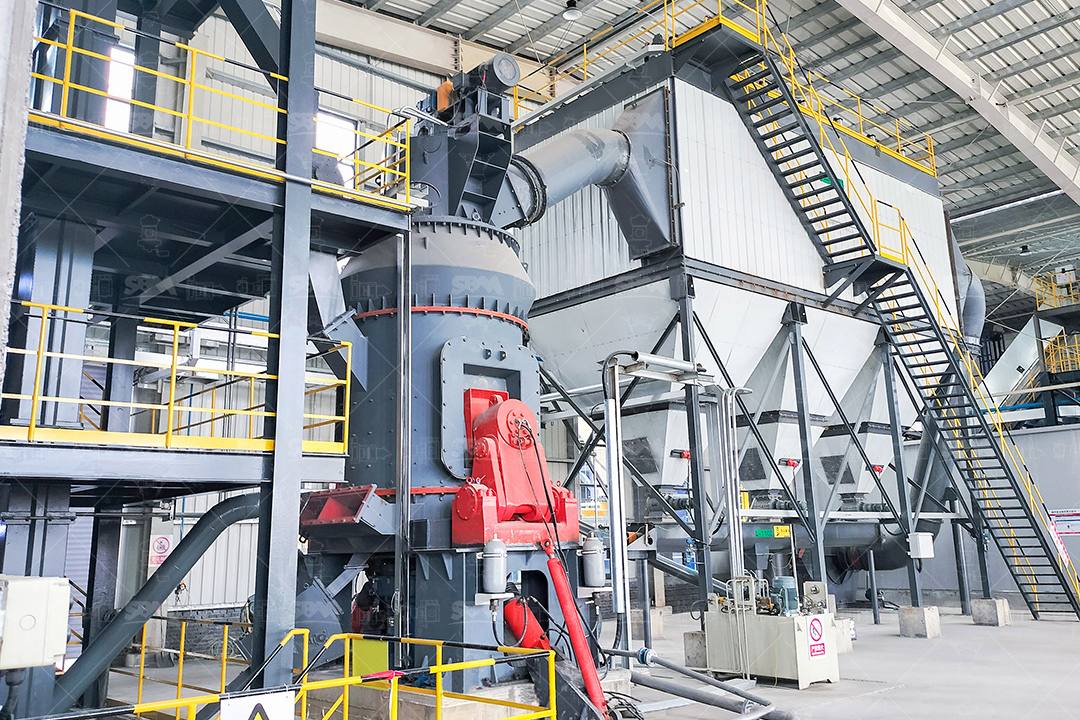
When the project demands the ultimate in fineness control and energy efficiency for ultra-fine powders, the SCM Ultrafine Mill and the LUM Ultrafine Vertical Mill are the specialists. The SCM series is a powerhouse for high output at low energy consumption, capable of achieving fineness up to 2500 mesh. Its heavy-duty rotor design and special material for rollers and rings provide exceptional durability, reducing wear part frequency. For 800-mesh production, it offers stability and precision. The LUM Ultrafine Vertical Mill, however, represents the next generation. It incorporates advanced grinding roll technology and a multi-rotor powder classifier derived from German separation technology. This allows for highly customizable fineness with precise cut points, ensuring no coarse powder spillage and a uniformly high-quality product. Its intelligent PLC/DCS control system automatically manages grinding pressure and classifier speed, guaranteeing stable operation and consistent 800-mesh output.
For operations prioritizing high capacity within the 30-400 mesh range and value a legacy of reliability, the MTW European Trapezium Mill (MTW Raymond Mill) is a formidable choice. While it comfortably reaches 800 mesh, its strengths shine in high-volume production. Innovations like the cone gear whole transmission enhance efficiency and save space, while the arc air duct design minimizes airflow resistance and energy loss. Its unique curved shovel blade design is a masterstroke in wear management, allowing for the replacement of only the blade itself, drastically cutting maintenance time and spare parts costs for long-term, continuous limestone grinding campaigns.
Despite the rise of newer technologies, the Ball Mill remains relevant, especially in certain integrated circuits or where wet grinding is preferred. SBM's optimized ball mills address historical pain points like high liner and ball wear, and excessive energy use. Through structural improvements and advanced materials, wear rates are significantly reduced. For 800-mesh dry limestone powder, a closed-circuit system with a high-efficiency classifier paired with a ball mill can be a viable, though generally less energy-efficient, option compared to vertical or ultrafine mills.
_1766215280026.jpg)
Selection ultimately hinges on your complete project profile. The LM Vertical Roller Mill is ideal for large-scale production (3-400 TPH) where drying and integrated processing are needed. The MTW European Trapezium Mill excels in reliable, high-capacity (3-40 TPH) fine grinding. For dedicated, high-precision ultrafine production (0.5-70 TPH), the SCM or LUM series are superior, with LUM offering the pinnacle of automation and classification accuracy. SBM's expertise lies in providing not just a machine, but a tailored system—from individual units to complete grinding circuits—ensuring your 800-mesh limestone operation is efficient, sustainable, and competitive.
Frequently Asked Questions (FAQs)
Q1: We often experience rapid wear of grinding rollers and rings when processing abrasive minerals like limestone. How do SBM mills address this?
A1: SBM mills employ several strategies. The MTW Mill uses a unique curved shovel blade and replaceable tip design to protect the roller and ring, extending service life. The LM, SCM, and LUM mills utilize special, high-wear-resistance alloys for grinding components. The vertical mill design also often avoids direct metal-to-metal contact, reducing wear significantly compared to some traditional methods.
Q2: Energy consumption is our biggest operational cost. Which mill is most efficient for 800-mesh output?
A2: For ultra-fine grinding to 800 mesh, vertical roller mills (LM, LUM) and the SCM Ultrafine Mill are typically the most energy-efficient. The LM Vertical Mill can reduce energy use by 30-40% compared to a ball mill system. The LUM and SCM mills further optimize this with advanced classifier systems and efficient grinding mechanics, minimizing wasted power.
Q3: How do we ensure consistent fineness (like a stable 800 mesh) and avoid product quality fluctuations?
A3: Consistency is achieved through advanced separation and control. The LUM Mill's multi-rotor classifier and the SCM Mill's efficient turbine classifier provide precise particle size cuts. Crucially, models like the LUM and LM feature expert automatic control systems (PLC/DCS) that constantly monitor and adjust parameters like grinding pressure and classifier speed, locking in the target fineness automatically.
Q4: Dust collection and environmental compliance are major concerns for our new plant. Are these mills sealed systems?
A4: Yes, a core design principle for SBM's LM, LUM, and SCM mills is environmental protection. They operate as fully sealed systems under negative pressure, meaning air is drawn into the mill, preventing dust from escaping. This, combined with efficient pulse dust collectors, ensures dust emissions meet strict international and national standards, creating a cleaner workplace.
Q5: We have limited floor space. Do these systems require a large footprint?
A5: Vertical mills (LM, LUM) offer a significant space-saving advantage. By integrating multiple functions (drying, grinding, separation) into one vertical structure, their footprint can be up to 50% smaller than a traditional ball mill system of comparable capacity. They can also be installed outdoors, further freeing up valuable plant space.


