

Gcc production equipment required
Published: October 26, 2023
For producers of Ground Calcium Carbonate (GCC), selecting the right grinding equipment is a critical decision impacting product quality, operational efficiency, and long-term profitability. This article provides a professional analysis of the core equipment required for modern GCC production, addressing common industry challenges and exploring advanced technological solutions. We will examine key mill types—from high-capacity vertical systems to precision ultrafine grinders—focusing on their technical merits in achieving desired fineness, energy efficiency, and environmental compliance for applications ranging from plastics and paints to paper and construction materials.
The GCC industry demands equipment capable of transforming raw limestone or marble into powders with specific particle size distributions, brightness, and chemical purity. Traditional methods often struggle with high energy consumption, excessive wear part costs, and limitations in achieving consistent ultra-fine grades. Modern milling technology, however, offers integrated solutions that streamline the entire process from crushing and drying to classification and collection.
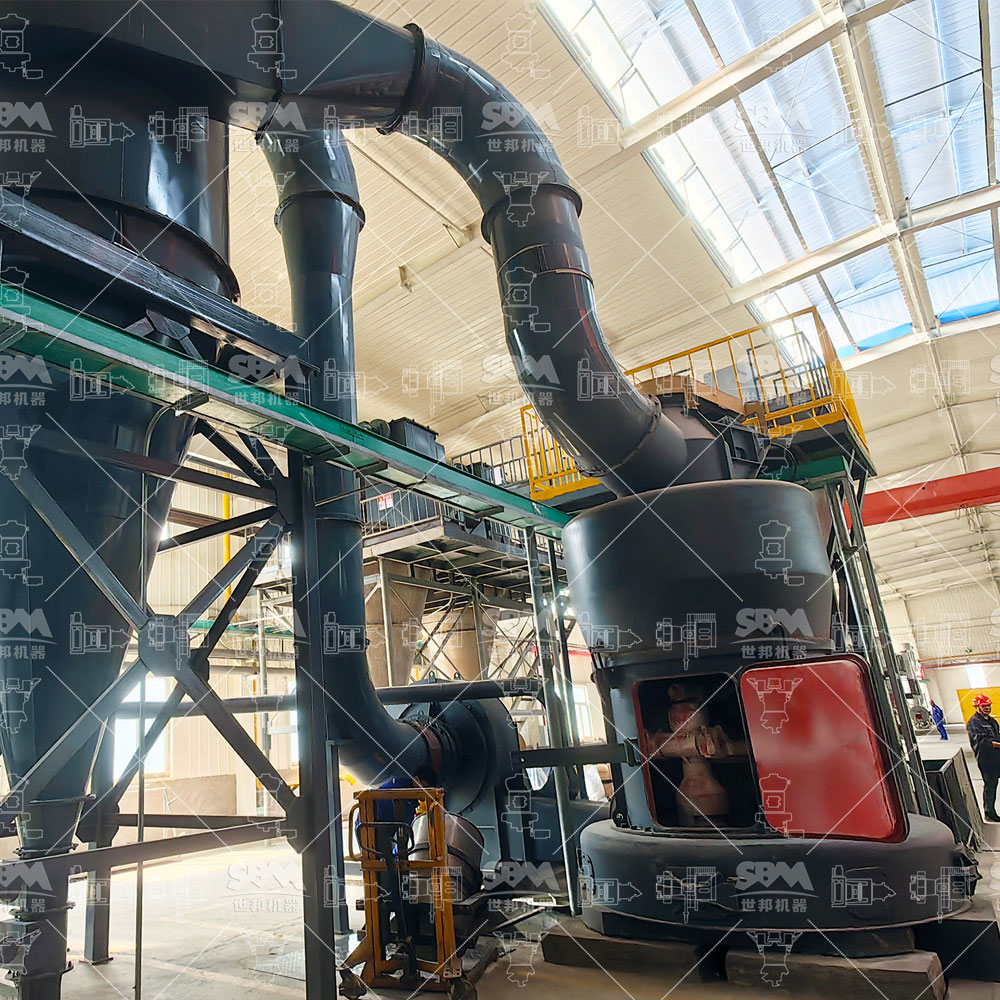 A prime example of evolved technology is the MTW Series European Trapezium Grinding Mill. Engineered from extensive R&D and customer feedback, it addresses durability and efficiency head-on. Its cone gear whole transmission ensures higher mechanical efficiency and reliability in continuous GCC production, while the unique wear-proof shovel blade design significantly reduces maintenance downtime and spare part costs—a direct response to the client pain point of frequent component replacement. Furthermore, the optimized arc air duct minimizes pneumatic resistance, enhancing powder conveying efficiency and system stability, which is crucial for maintaining consistent output quality.
For large-scale GCC projects requiring high throughput, the LM Vertical Roller Mill presents a compelling case. Its integrated design combines multiple processing stages—drying, grinding, and separation—into a single, space-saving unit. This compact layout can reduce the plant's footprint by approximately 50% compared to traditional ball mill systems, directly lowering civil construction costs. Operationally, its grinding principle, where rollers grind material on a plate without direct metal-to-metal contact, leads to remarkably lower wear and 30-40% lower energy consumption. This directly tackles two of the most frequent client complaints: high power bills and the ongoing expense of grinding media replacement. The inclusion of an expert automatic control system allows for precise process parameter management, ensuring stable operation and reducing labor intensity.
As market requirements shift towards specialized, high-value GCC products with ultra-fine or narrowly classified particle sizes, standard mills reach their limits. The SCM Series Ultrafine Mill is engineered specifically for this niche. Capable of achieving fineness up to 4000 mesh, it employs a high-efficiency vertical turbine powder classifier that ensures precise particle cut-points and prevents coarse powder spillover. Its high-output, low-energy-consumption design offers more than double the capacity of some jet mills while using 30% less energy, making premium-grade production economically viable. The heavy rotor design and special material for rollers and rings extend service life dramatically, countering the wear challenges inherent in fine grinding.
_1766161132254.jpg) Building on vertical mill advantages for ultrafine applications, the LUM Ultrafine Vertical Roller Mill integrates advanced grinding roller and German powder-separating technologies. It excels in producing consistent, high-purity GCC for masterbatch, PVC, and high-end coatings. Its core strength lies in an intelligentized control system where grinding pressure and classifier speed are managed via PLC/DCS. This allows for real-time adjustments to maintain product specifications despite variations in feed material, directly addressing the pain point of product inconsistency. The uniquely designed grinding curves of its roller and plate promote stable material bed formation, enhancing grinding efficiency and first-pass yield.
Building on vertical mill advantages for ultrafine applications, the LUM Ultrafine Vertical Roller Mill integrates advanced grinding roller and German powder-separating technologies. It excels in producing consistent, high-purity GCC for masterbatch, PVC, and high-end coatings. Its core strength lies in an intelligentized control system where grinding pressure and classifier speed are managed via PLC/DCS. This allows for real-time adjustments to maintain product specifications despite variations in feed material, directly addressing the pain point of product inconsistency. The uniquely designed grinding curves of its roller and plate promote stable material bed formation, enhancing grinding efficiency and first-pass yield.
While newer technologies dominate discussions, the Ball Mill remains relevant for certain GCC applications, particularly where wet grinding is preferred or a specific particle morphology is desired. Recognizing its historical drawbacks—high wear and energy use—modern optimized versions employ improved structural designs and advanced materials to extend liner and ball life. They offer a robust and well-understood solution for producing standard GCC powders reliably.
Across all equipment, environmental performance is non-negotiable. Modern mills from SBM are designed with fully sealed systems operating under negative pressure, virtually eliminating dust spillage. Combined with efficient pulse dust collectors and noise reduction engineering, they ensure that GCC plants can meet stringent national and international environmental standards, turning regulatory compliance from a challenge into a built-in feature.
In conclusion, the "right" GCC production equipment is not a one-size-fits-all proposition but a strategic selection based on target fineness, capacity, energy goals, and total cost of ownership. By leveraging technologies that offer integrated processes, intelligent control, superior wear resistance, and inherent environmental protection, producers can overcome traditional industry pain points and build a competitive, sustainable operation.
Frequently Asked Questions (FAQs)
- Q: We struggle with high energy costs and frequent replacement of grinding parts. Which mill type offers the best long-term operational economy for high-volume GCC production?
A: The LM Vertical Roller Mill is specifically designed to address these twin challenges. Its grinding principle reduces energy consumption by 30-40% compared to traditional ball mills, and its wear-resistant materials and non-contact grinding design drastically extend the service life of critical components, lowering both your power bill and maintenance costs. - Q: Our clients demand ultra-fine GCC (over 2500 mesh) with very tight particle distribution. Can your equipment achieve this consistently?
A: Yes. The SCM Ultrafine Mill and LUM Ultrafine Vertical Mill are engineered for this purpose. They feature high-precision turbine classifiers and intelligent control systems that allow precise fineness adjustment up to 4000 mesh and ensure consistent product quality with minimal coarse powder spillover, meeting the most stringent specifications. - Q: Dust control and noise are major concerns for our new plant's environmental permits. How do your mills perform in these areas?
A: Our modern grinding systems are designed with environmental protection as a core principle. They operate as fully sealed, negative-pressure systems, preventing dust escape. Combined with high-efficiency dust collectors and integrated noise insulation technology, they easily meet strict national emission and noise standards, simplifying the permitting process. - Q: We have limited factory space. Is it possible to install a complete grinding line without a large footprint?
A: Absolutely. Vertical roller mills like the LM and LUM series are ideal for space-constrained sites. Their integrated design (combining crushing, drying, grinding, and separation) and compact layout can reduce the required floor area by up to 50% compared to conventional systems, and they can even be installed outdoors. - Q: We need to produce multiple GCC grades from the same line. How easily can your mills adjust between different product finenesses?
A: Our advanced mills, particularly those with PLC/DCS control systems like the LUM series, allow for quick and stable product changeover. Fineness is adjusted primarily through the classifier speed, which can be controlled via frequency conversion on the operator interface, enabling flexible production scheduling with minimal downtime or transition waste.


