

Dolomite production investment projects
Published on: October 26, 2023
Investing in a dolomite production project requires a strategic approach that balances high-quality output, operational efficiency, and long-term profitability. The core of such an investment lies in selecting the right grinding technology tailored to specific fineness requirements, capacity needs, and sustainability goals. For projects targeting construction materials, soil conditioners, or glass manufacturing, achieving consistent particle size with controlled operational costs is paramount. Advanced grinding solutions, such as the MTW European Trapezium Mill for coarse to medium fineness or the LUM Ultrafine Vertical Mill for high-value superfine powders, offer distinct advantages in energy efficiency, system integration, and environmental compliance. A successful project hinges not just on the mill itself, but on partnering with a provider capable of delivering a complete system solution—from initial material analysis and layout design to installation, training, and lifecycle support—ensuring the investment delivers a rapid return and sustained competitive edge in the dynamic dolomite market.
The journey begins with a clear understanding of the end-product specifications. Dolomite, a calcium magnesium carbonate mineral, finds applications ranging from agricultural limestone (requiring 20-100 mesh) to fillers in plastics and paints (often requiring 400 mesh and finer). For large-scale production of coarse to medium-fine powders (30-400 mesh), the MTW Series European Trapezium Grinding Mill presents a robust solution. Its evolutionary design, incorporating a cone gear whole transmission system and an arc air flue, directly addresses classic pain points of traditional Raymond mills. The cone gear transmission enhances mechanical efficiency and reliability while saving space, a crucial factor in plant layout optimization. The patented curved shovel blade design is a masterstroke in reducing wear-part costs, as only the blade itself needs replacement, not the entire carrier. This focus on minimizing downtime and maintenance expense is a critical consideration for any project's bottom line.
_1766733578093.jpg)
When project scope demands higher capacity or integrated drying of moist feed material, the LM Vertical Roller Mill emerges as the technology of choice. Its principle of material bed grinding between rollers and a table offers unparalleled energy efficiency, typically 30-40% lower than traditional ball mill systems for the same output. For dolomite projects where the raw material may have variable moisture content, its integrated drying capability—using hot gases introduced into the mill—eliminates the need for a separate dryer, simplifying the process flow and reducing capital investment. The system's compact, vertical design occupies roughly 50% of the space of a ball mill circuit, offering significant savings in civil engineering costs. Furthermore, its operation under negative pressure ensures a dust-free environment, a non-negotiable aspect of modern, responsible mineral processing.
For investors targeting the high-value-added end of the market, such as the production of ultrafine dolomite for polymers, sealants, or advanced ceramics, fineness and particle shape consistency become the dominant factors. Here, SCM Ultrafine Mill and LUM Ultrafine Vertical Mill represent the pinnacle of grinding technology. The LUM series, integrating advanced grinding roller and German-derived powder separating technology, can achieve precise fineness control between 325 to 4000 mesh. Its intelligent PLC/DCS control system automatically maintains optimal grinding pressure and classifier speed, ensuring product uniformity even with varying feed characteristics. This level of automation translates to reduced manual intervention, lower labor costs, and guaranteed product quality—key drivers for profitability in niche applications. The multi-rotor classifier ensures no coarse particles contaminate the final product, a common quality failure point in less advanced systems.
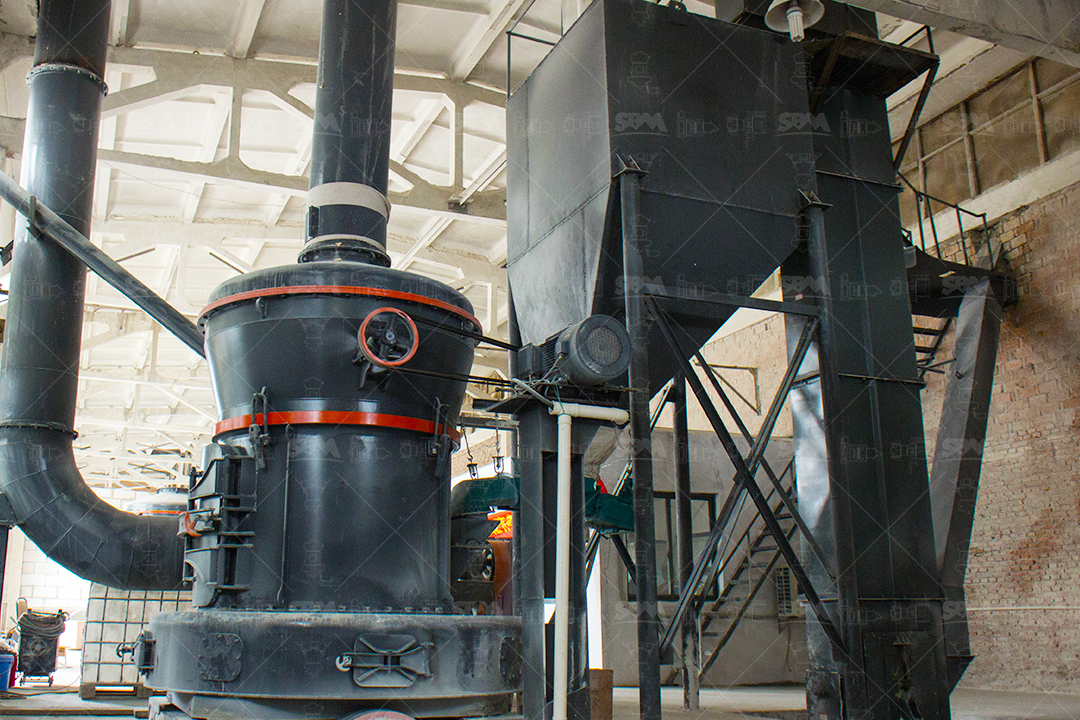
Beyond the machine specifications, the success of a dolomite investment is deeply intertwined with the expertise of the solution provider. A partner with global experience across over 180 countries brings invaluable insight into local regulatory standards, climatic challenges, and operational best practices. They offer more than equipment; they deliver a guaranteed process. This includes comprehensive testing of your dolomite sample in their research center, detailed plant layout engineering, and training for your operational staff. The goal is to create a production asset that is not only technologically advanced but also operator-friendly and maintainable with local resources, ensuring decades of reliable service and protecting the core of your investment.
Frequently Asked Questions (FAQs)
- What are the most common operational cost overruns in a dolomite grinding project, and how can they be mitigated?
The primary cost drivers are energy consumption and wear-part replacement. Selecting mills with high grinding efficiency (like vertical roller mills) and designs that allow for partial wear-part replacement (like the MTW's shovel blade) can reduce these costs by 30-50% over the lifecycle of the plant. - We need to produce multiple fineness grades from the same deposit. Does this require multiple milling lines?
Not necessarily. Modern mills, especially vertical roller and ultrafine mills with advanced classifier systems, offer excellent adjustability. A single line with a high-efficiency dynamic classifier can often produce a range of products from coarse filler to fine powder by adjusting speed and airflow parameters. - How do we ensure consistent product quality given natural variations in the dolomite feed material?
Automated control systems are crucial. Mills equipped with expert control systems (like on the LM and LUM series) continuously monitor parameters like grinding pressure and motor load, automatically adjusting to feed variations to maintain a stable product fineness and output rate. - Environmental compliance is a major concern. What dust and noise control features are standard?
Modern grinding systems are fully enclosed and operate under negative pressure, preventing dust escape. They are paired with high-efficiency baghouse or pulse dust collectors. For noise, optimized mill designs, sound insulation chambers, and mufflers are employed to keep plant noise well within regulatory limits. - What level of technical support and training can we expect during and after commissioning?
A full-scope provider should offer on-site supervision during installation and commissioning, comprehensive operational and maintenance training for your engineers, and provide detailed manuals. Remote monitoring support and a clear spare parts supply chain are essential for long-term operational security.


