

Desulfurization mills for long-term power plant use
Published: October 26, 2023
For power generation facilities committed to long-term operational efficiency and stringent environmental compliance, selecting the right desulfurization limestone grinding equipment is a critical strategic decision. This article explores the technical considerations for choosing mills that deliver consistent performance, high availability, and low total cost of ownership over decades of service. We will examine how modern grinding technologies address the core challenges of material preparation for Flue Gas Desulfurization (FGD) systems, focusing on reliability, energy efficiency, and adaptability to varying feedstock and output requirements.
The cornerstone of an effective wet limestone FGD system is a consistent, high-quality supply of finely ground limestone slurry. The grinding process must be robust enough to handle variable feed sizes and material hardness while maintaining precise particle size distribution for optimal SO2 removal efficiency. Traditional solutions often grapple with high wear rates, excessive energy consumption, and complex maintenance routines, leading to unpredictable downtime and escalating operational costs. In this context, the evolution of grinding technology offers power plants more sophisticated and durable options.
One highly engineered solution for mid-to-high capacity requirements is the MTW Series European Trapezium Grinding Mill. Developed from extensive R&D and customer feedback, this mill incorporates several patented features aimed at longevity. Its cone gear whole transmission system ensures higher mechanical efficiency and reliability in continuous operation, while the inner oil absorption lubrication minimizes maintenance interventions. A key innovation for wear management is the unique combined-type shovel blade. This design allows for the replacement of only the blade segment rather than the entire assembly, significantly reducing spare parts inventory and cost. Furthermore, the curved blade design optimizes material feeding to reduce abrasive wear on the grinding roller and ring, directly extending their service life and controlling long-term operating expenses.
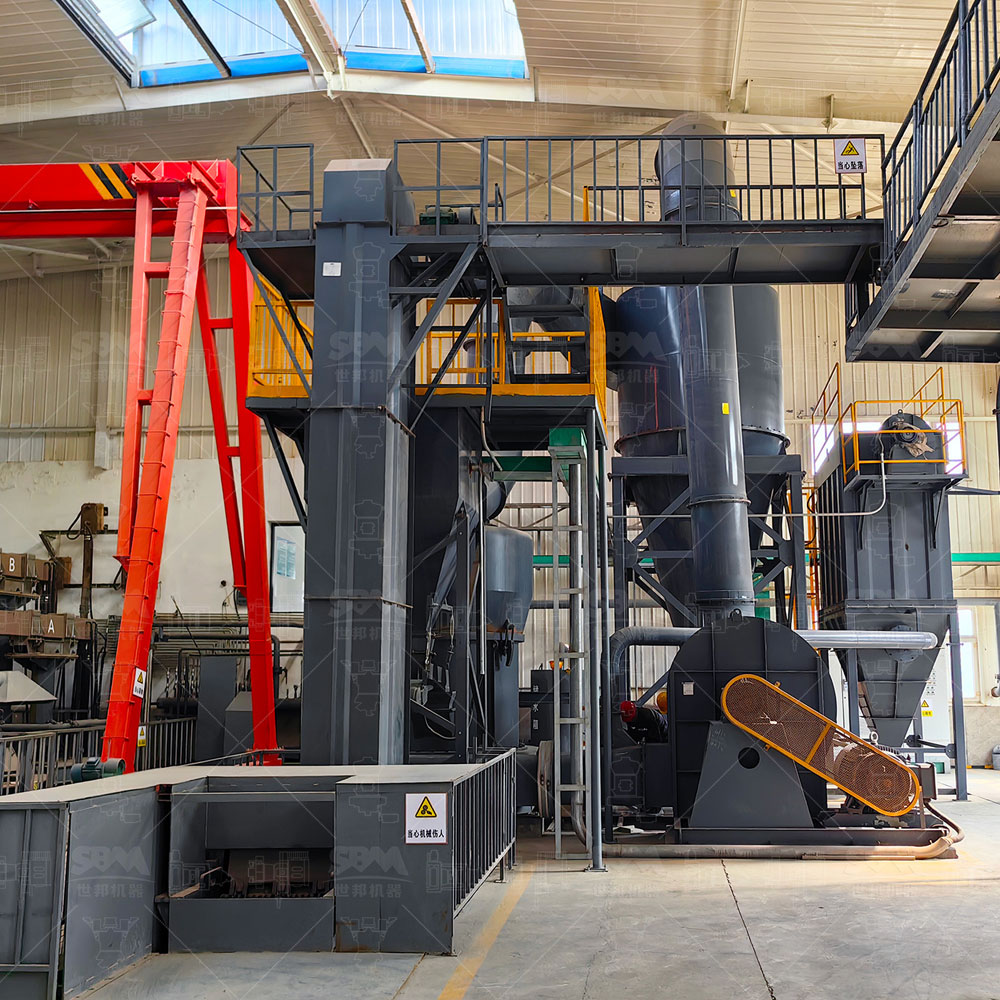
For power plants prioritizing maximum system integration and energy savings, the LM Vertical Roller Mill presents a compelling case. Its design integrates crushing, grinding, drying, and classification into a single unit, resulting in a remarkably compact layout that can reduce the footprint by approximately 50% compared to traditional ball mill systems. This consolidation not only lowers initial civil engineering costs but also simplifies material flow and plant design. From an operational standpoint, the grinding principle—where rollers press on a rotating table—is inherently more energy-efficient, typically reducing power consumption by 30-40% compared to ball milling. The non-contact design between roller and table under neutral operation, coupled with high-quality wear materials, leads to exceptionally low wear rates. This combination of low energy use and minimal component consumption is a decisive factor for long-term cost control in power generation.
When regulatory demands or process optimization call for ultra-fine limestone powders to enhance reactivity and absorption rates, Ultrafine Grinding Mills become essential. The SCM Series Ultrafine Mill and the LUM Ultrafine Vertical Roller Mill are engineered to produce powders in the 325 to 4000 mesh range. These mills achieve high fineness (D97 ≤5μm) with energy consumption significantly lower than alternative technologies like jet mills. The LUM model, integrating advanced grinding roller and German powder separation technology, features an intelligent PLC/DCS control system. This system automatically stabilizes key parameters such as grinding pressure and classifier speed, ensuring consistent product quality despite fluctuations in feed material—a vital requirement for stable FGD performance. Their fully sealed, negative-pressure operation also guarantees a dust-free environment, aligning with the highest plant housekeeping and environmental standards.
_1767079146954.jpg)
While newer technologies offer distinct advantages, optimized Ball Mills remain a reliable and mature technology for certain applications. Through structural improvements and the use of advanced materials, modern ball mills have addressed historical concerns over liner and ball wear. They offer flexibility for both dry and wet grinding processes and are well-understood by plant maintenance teams worldwide. The choice often depends on specific plant configuration, existing infrastructure, and the desired balance between capital expenditure and proven operational familiarity.
Ultimately, the selection of a desulfurization mill for long-term power plant use is an investment in future operational stability. It requires a holistic evaluation beyond the initial purchase price, focusing on total lifecycle costs, including energy, wear parts, maintenance labor, and production consistency. Partnering with a provider that offers complete system solutions, backed by global operational experience across diverse conditions, ensures that the chosen technology will meet today's efficiency targets and adapt to tomorrow's environmental regulations.
Frequently Asked Questions (FAQs)
Q1: What is the most significant operational cost driver for a desulfurization mill over a 20-year lifespan?
A: Energy consumption consistently represents the largest portion of the total operating cost. Selecting a mill with high grinding efficiency (like Vertical Roller Mills) can reduce power usage by 30-40%, leading to massive savings over decades of continuous operation.
Q2: How can we minimize unplanned downtime caused by wear part failure?
A: Opt for mills with designs that extend component life, such as unique wear-proof shovel blades or non-contact grinding principles. Also, choose equipment with modular wear parts that can be replaced quickly and without dismantling major sections of the mill, drastically reducing maintenance windows.
Q3: Our limestone source and quality can vary. Can the mill handle such fluctuations without compromising product fineness?
A: Yes. Modern mills with advanced automatic control systems (like the LUM Ultrafine Vertical Mill) continuously monitor and adjust grinding pressure, classifier speed, and feed rate in real-time. This intelligent feedback loop stabilizes the output fineness and throughput despite variations in feed material hardness or size.
Q4: Dust emission is a major concern for our plant's environmental compliance. Are these mills sealed effectively?
A: Absolutely. Contemporary grinding systems are designed as fully sealed units operating under negative internal pressure. This means any air leakage is inward, preventing the escape of limestone dust. This is complemented by high-efficiency bag filter or pulse dust collection systems, ensuring emissions are well within national and international standards.
Q5: We have limited space for expansion. Is a complete new grinding system feasible?
A: Integrated mill designs, particularly Vertical Roller Mills, consolidate multiple processes into a single, compact unit. They can reduce the required floor space by up to 50% compared to traditional systems and can even be arranged outdoors with proper housing, making them ideal for space-constrained power plant sites.


