

Market applications of carbon black mills
Published: October 26, 2023
The global carbon black market demands precision, efficiency, and reliability in processing, presenting unique challenges for producers. This article explores the critical role of advanced grinding mills in meeting these demands, focusing on key applications, technological innovations, and solutions to common industry pain points. We will examine how modern mill designs—from European Trapezium Mills to Ultrafine Vertical Mills—address specific needs in carbon black production, enhancing product quality, operational sustainability, and overall cost-effectiveness for processors worldwide.
The processing of carbon black, a material essential to industries ranging from tire manufacturing to plastics and inks, requires grinding equipment capable of handling fine to ultra-fine particle size reduction with consistent output and minimal energy expenditure. Traditional milling approaches often struggle with the abrasive nature of carbon black, leading to excessive wear, high maintenance downtime, and unpredictable product fineness. In response, engineered grinding solutions have evolved to integrate robust construction, intelligent control systems, and optimized grinding geometries specifically for such demanding applications.
For coarse to medium-fine grinding within the 30-400 mesh range, the MTW Series European Trapezium Grinding Mill offers a proven solution. Its design directly tackles the issue of component wear—a major operational cost driver. The unique combined-type shovel blade allows for the replacement of only the wear segment, not the entire assembly, drastically reducing spare parts inventory and maintenance time. Furthermore, its cone gear whole transmission system and arc air duct design enhance mechanical efficiency and airflow, ensuring stable throughput for carbon black grades used in masterbatch and rubber compounding. _1767197889452.jpg)
When higher capacity and integrated processing are paramount, the LM Vertical Roller Mill presents a compelling alternative. Its integrated design combines drying, grinding, and classification in a single, compact footprint, which is particularly advantageous for carbon black that may require residual moisture management. The grinding principle—where rollers press on a rotating table—minimizes metal-to-metal contact, leading to significantly lower wear rates compared to traditional ball mills. This translates directly to reduced operating costs. The automatic control system ensures consistent product quality by maintaining optimal grinding pressure and classifier speed, addressing the common pain point of batch-to-batch variability.
The push for higher-value, specialized carbon blacks, such as those for conductive polymers or high-performance coatings, necessitates grinding to ultrafine and nano-scale fineness. Here, the SCM Ultrafine Mill and LUM Ultrafine Vertical Mill come to the fore. Capable of achieving fineness from 325 to over 2500 mesh, these mills incorporate advanced classifier technology to ensure precise particle size distribution with no coarse powder spillover. The LUM model, integrating high-end grinding roller and powder separating technologies, is especially suited for masterbatch and specialty chemical applications. Its intelligent control system allows for precise customization of fineness, a critical requirement for carbon blacks where specific surface area and structure define end-product performance. 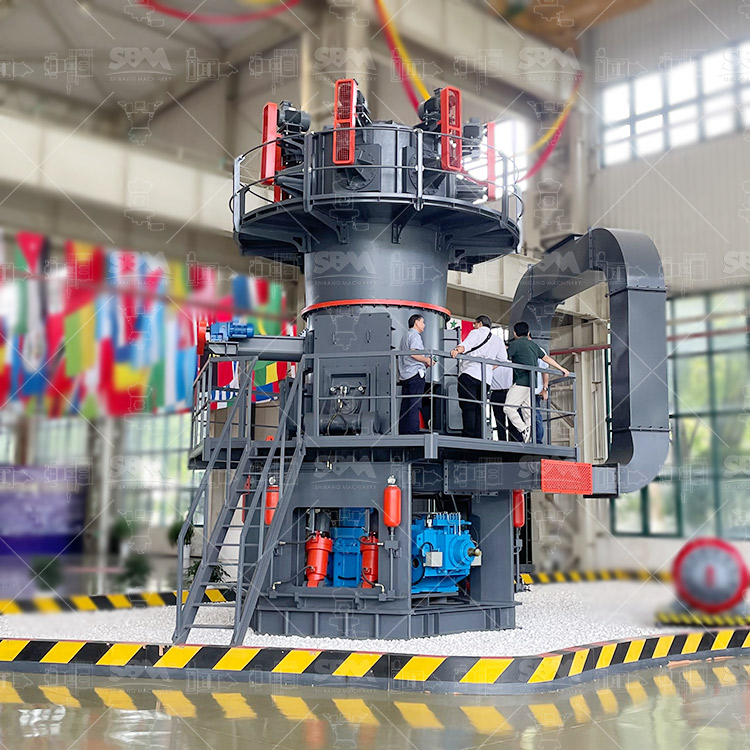
Even the traditional Ball Mill remains relevant, especially in optimized forms for certain carbon black processing stages. Modern designs address historical weaknesses like high energy consumption and ball wear through improved liner materials and drive efficiency. Wet ball milling, in particular, can be effective for certain slurry-based carbon black applications. The key is selecting the right mill technology for the specific product grade and production scale.
Across all these technologies, common themes address universal client challenges: reducing total cost of ownership through durable wear parts and energy efficiency, ensuring product consistency via automated controls, and meeting stringent environmental standards with fully sealed, negative-pressure systems that contain dust. The evolution from standalone machines to intelligent, system-oriented grinding solutions allows carbon black producers to not only solve immediate processing problems but also future-proof their operations against rising energy costs and tighter quality specifications.
Frequently Asked Questions (FAQs)
Q1: Our main issue is the rapid wear of grinding components when processing abrasive materials like carbon black. How do your mills address this?
A1: Our mills employ several strategies: the MTW series uses a unique, replaceable shovel blade design to limit wear part costs. Vertical Roller Mills (LM, LUM) utilize a grinding principle that minimizes direct metal contact, and rollers/liners are made from special, durable materials. Ultrafine mills feature heavy-duty rotors and rings with durability several times higher than conventional materials.
Q2: We need to produce multiple carbon black grades with different fineness requirements. Is frequent re-configuration complex and time-consuming?
A2: No. Our advanced mills (SCM, LUM, MTW) feature intelligent control systems with frequency-conversion adjustment for the classifier. This allows operators to adjust target fineness (from 30 to over 2500 mesh) quickly and precisely via the control panel, enabling flexible production with minimal downtime between product grade changes.
Q3: Energy consumption is a major operational cost. What efficiency gains can we expect?
A3: Vertical Roller Mills (LM/LUM) are designed for high grinding efficiency, typically consuming 30-40% less energy than traditional ball milling systems for similar output. The Ultrafine Mill also offers energy consumption approximately 30% lower than jet mills of comparable capacity, thanks to its high-efficiency grinding chamber and classifier design.
Q4: Dust control and environmental compliance are critical. How are your mills sealed?
A4: All our mill systems are designed as fully sealed circuits operating under negative internal pressure. This prevents dust spillage at source. They are equipped with high-efficiency pulse dust collectors, often in a two-stage configuration, ensuring collection efficiency far exceeds international environmental standards for particulate emissions.
Q5: We are planning a new production line and are concerned about space constraints and overall system complexity.
A5: Our Vertical Roller Mills offer a significant advantage here. They integrate crushing, drying, grinding, and classification into a single, compact unit, reducing the floor space requirement by up to 50% compared to a traditional ball mill system. Their modular design and automated control also simplify installation, operation, and maintenance.


