

Handling bucket elevator slippage
Published: October 26, 2023
Bucket elevator slippage is a persistent operational challenge in material handling systems, leading to reduced throughput, increased energy consumption, and accelerated component wear. This issue directly impacts the efficiency and cost-effectiveness of downstream grinding processes. SBM Machinery, as a total solution provider, addresses this not merely as a mechanical fault but as a systemic inefficiency within the mineral processing workflow. Our approach integrates advanced grinding mill technology—such as the MTW European Trapezium Mill, LM Vertical Roller Mill, and LUM Ultrafine Vertical Mill—with optimized material feed characteristics to mitigate slippage at its source, ensuring stable, high-yield, and low-maintenance operation across industries from power generation to non-metallic mineral processing.
At its core, bucket elevator slippage occurs when the driving force fails to effectively transmit to the belt or chain, causing buckets to underperform or stall. Common culprits include material overload, improper belt tension, worn lagging, moisture-induced material adhesion, or mismatched feed rates from upstream crushers or conveyors. While mechanical adjustments are part of the remedy, a holistic view considers the material's physical properties. For instance, feed with inconsistent particle size or high moisture content can cause uneven loading and packing in buckets, increasing drag and promoting slip. This is where the preprocessing capability of SBM grinding equipment becomes a critical line of defense.
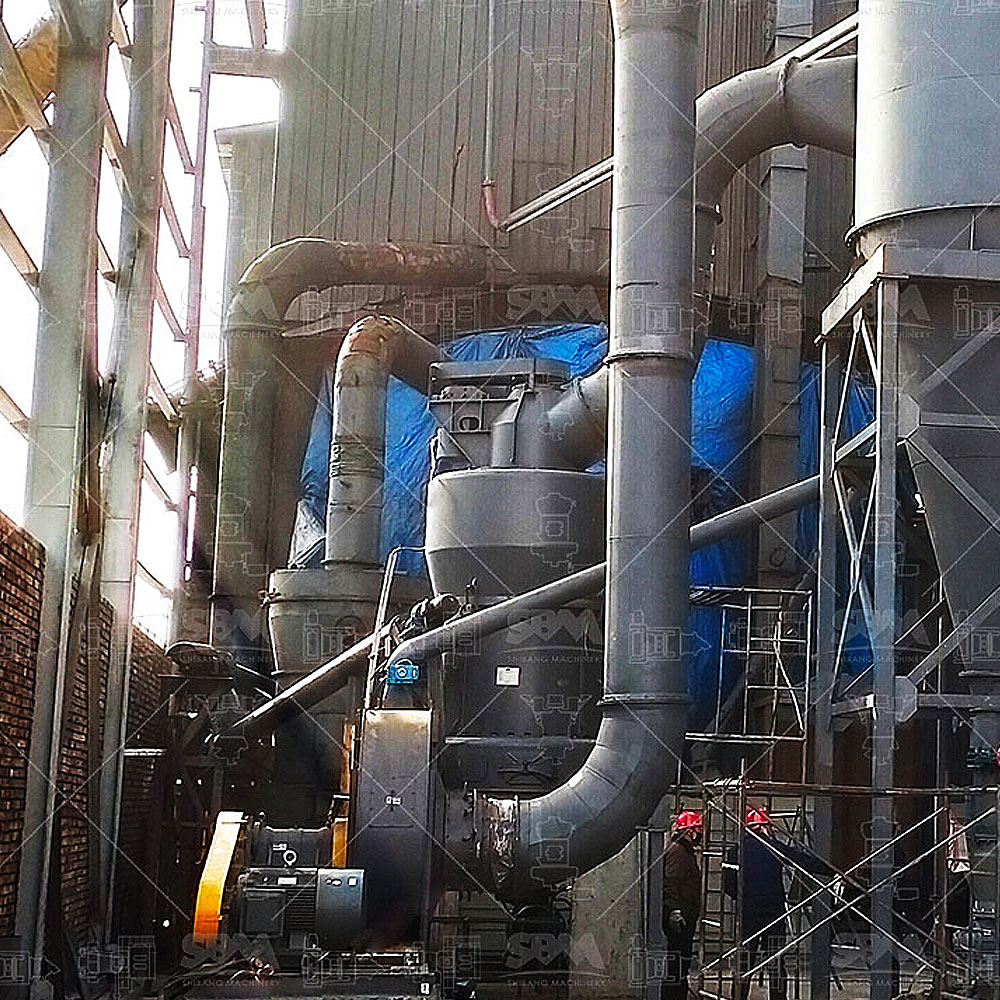 SBM's MTW Series European Trapezium Grinding Mill incorporates a unique wear-proof perching knife design and an arc air duct. These features ensure a consistent and controlled feed rate of pre-homogenized material to the elevator. By transforming raw, lumpy feedstock into a more uniform stream (typically 0-50mm input size), the mill reduces the risk of sudden, shock loading on the elevator—a primary trigger for slippage. The cone gear whole transmission system further contributes to system stability by ensuring smooth power delivery, minimizing pulsations that could disrupt downstream handling.
For systems requiring direct integration, the LM Vertical Roller Mill presents a paradigm shift. Its compact design integrates crushing, drying, grinding, and separation, often eliminating the need for intermediate conveying stages that include prone-to-slip bucket elevators. When an elevator is still necessary for raw material intake, the LM mill's automatic control system and stable operation (thanks to non-contact grinding rollers) provide a steady, predictable feed flow. This allows for precise calibration of elevator speed and loading, keeping it within its optimal operational envelope. The mill's ability to handle moist materials with its integrated drying function also prevents the sticky buildup in buckets that often leads to slippage.
In high-precision applications demanding ultrafine powders, slippage can introduce contamination and batch inconsistency. SBM's LUM Ultrafine Vertical Mill and SCM Ultrafine Mill tackle this through intelligent control and superior feed preparation. The LUM mill's advanced separation technology and PLC-controlled grinding pressure ensure a remarkably stable output of fine powder (325-4000 mesh). This consistency allows downstream pneumatic conveying systems—often a more reliable alternative to mechanical elevators for fine powders—to operate at peak efficiency. For operations still utilizing elevators for intermediate products, the mills' high efficiency and stable material bed formation mean the elevator receives material with uniform density and flow characteristics.
_1768493816026.jpg) Ultimately, preventing bucket elevator slippage is about system synergy. SBM's expertise across the entire mineral processing workflow enables us to design grinding solutions that consider material handling as an integral component. Whether it's the robust, high-capacity design of our optimized Ball Mill for consistent feed sizing or the energy-efficient, vibration-free operation of our vertical mills that minimizes disruptive harmonics, the goal is to create a stable, efficient, and continuous process flow. This systemic reliability, proven across over 180 countries, translates directly into reduced downtime, lower operating costs, and sustained production quality.
Ultimately, preventing bucket elevator slippage is about system synergy. SBM's expertise across the entire mineral processing workflow enables us to design grinding solutions that consider material handling as an integral component. Whether it's the robust, high-capacity design of our optimized Ball Mill for consistent feed sizing or the energy-efficient, vibration-free operation of our vertical mills that minimizes disruptive harmonics, the goal is to create a stable, efficient, and continuous process flow. This systemic reliability, proven across over 180 countries, translates directly into reduced downtime, lower operating costs, and sustained production quality.
Frequently Asked Questions (FAQs)
Q1: Our bucket elevator frequently slips when handling limestone for desulfurization. Can SBM equipment help?
A: Absolutely. Our MTW European Trapezium Mill is specifically suited for environmental desulfurization limestone powder preparation. Its combined-type shovel blade and arc air duct design ensure a stable, controlled output of 30-400 mesh powder, providing a consistent and manageable feed to your elevator, drastically reducing overload-induced slippage.
Q2: We experience slippage mainly with wet, sticky materials. Do you have a solution?
A: Yes. The LM Vertical Roller Mill integrates a drying function with grinding. It can handle moist feed (0-50mm) directly, drying and pulverizing it in one step. This produces a dry, free-flowing powder that is less likely to adhere to elevator buckets, eliminating a major cause of slippage and buildup.
Q3: Does optimizing the grinding process for elevator feed compromise final product fineness?
A: Not at all. In fact, it enhances consistency. Equipment like the LUM Ultrafine Vertical Mill uses advanced classifier technology and PLC control to maintain precise fineness (up to 4000 mesh) while ensuring a stable output rate. A steady feed rate protects the elevator and results in a more uniform final product.
Q4: We have limited space. Can we simplify our layout to reduce reliance on bucket elevators?
A: The compact, integrated design of SBM's vertical mills (LM & LUM) is the ideal solution. They combine multiple functions into a single unit with a footprint about 50% of a traditional ball mill system. This often allows for a more direct layout, minimizing transfer points and the associated elevator challenges.
Q5: How can we monitor if our grinding mill output is causing elevator strain?
A: SBM's modern mills feature expert automatic control systems. These systems provide real-time data on parameters like output rate, motor load, and grinding pressure. By correlating this data with elevator motor current, you can identify and adjust operating conditions to keep the entire system, from mill to elevator, in optimal balance.


