

Suitable mills for 1000 mesh carbon black
Published: October 26, 2023
Producing high-quality carbon black powder at 1000 mesh (approximately 15 microns) presents significant technical challenges, including achieving consistent fineness, managing high energy consumption, controlling heat generation, and ensuring operational stability. For processors targeting this demanding specification, selecting the correct grinding technology is paramount. Based on extensive global application experience, Shanghai SBM Machinery Equipment Co., Ltd. recommends its advanced Ultrafine Mill (SCM Series) and Ultrafine Vertical Roller Mill (LUM Series) as the optimal solutions. These mills are engineered to deliver precise particle size control, exceptional energy efficiency, and robust system stability, specifically addressing the unique properties of carbon black such as its low density, tendency to agglomerate, and abrasiveness.
Carbon black, a material derived from the incomplete combustion of heavy petroleum products, is a critical additive in rubber, plastics, inks, and coatings. Its performance is heavily influenced by particle size and structure. Achieving a fine and uniform 1000 mesh powder significantly enhances its reinforcing properties, tinting strength, and dispersion characteristics. However, conventional grinding equipment often struggles with the low bulk density and static-prone nature of carbon black, leading to inefficient grinding, high wear rates, and inconsistent product quality.
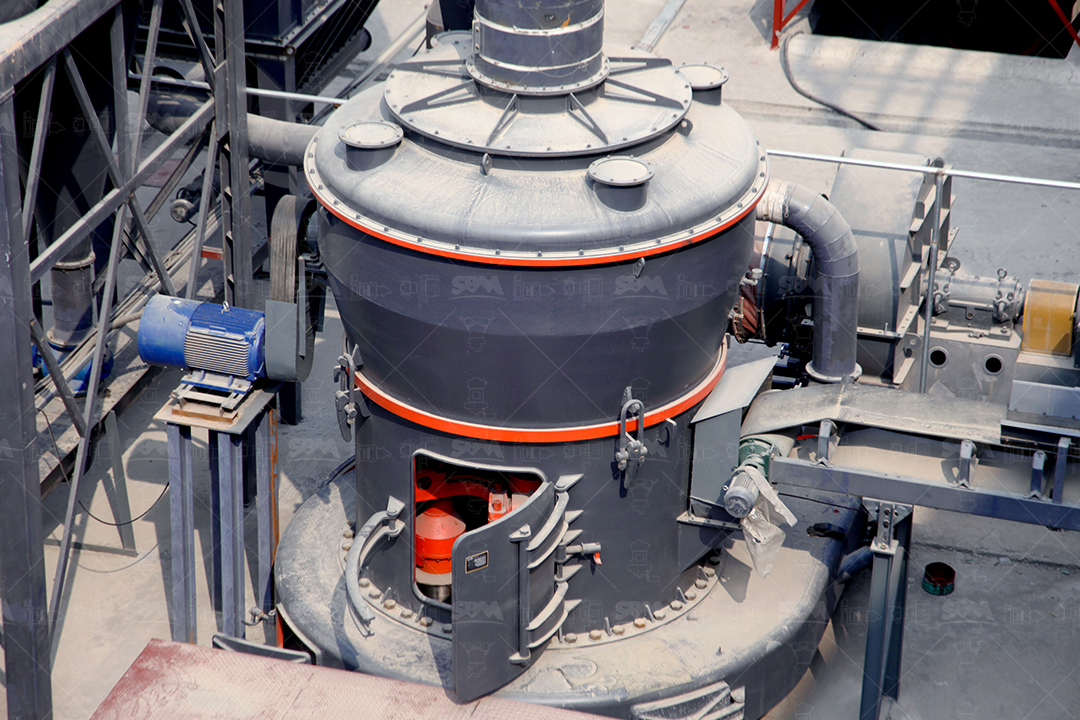 Traditional ball mills or Raymond mills, while suitable for coarser applications, frequently fall short at this fineness level. They may incur excessive energy costs, generate too much heat (which can affect carbon black properties), and offer limited control over the top particle size cut-off. This is where specialized ultrafine grinding technology becomes indispensable.
SBM's SCM Series Ultrafine Mill is a pioneering solution designed explicitly for superfine powder production ranging from 325 to 4000 mesh. For 1000 mesh carbon black processing, its technical advantages are pronounced. The mill employs a heavy-duty rotor design and utilizes rollers and rings made from special wear-resistant materials, offering durability several times higher than standard components—a critical factor for abrasive materials. Its high-efficiency vertical turbine powder classifier ensures precise particle size separation with no spillover of coarse powder, guaranteeing that the final product consistently meets the D97 ≤ 15μm target for 1000 mesh. Furthermore, the integrated automatic control system provides intelligent feedback and stable operation, directly translating to labor savings and consistent output quality.
Complementing the SCM series is the LUM Series Ultrafine Vertical Roller Mill, which represents the next evolution in grinding technology. It integrates grinding, classification, and conveying into a single, compact unit. Its core advantage for carbon black lies in its unique grinding curve design for the roller and lining plate, which facilitates the formation of a stable material bed. This results in higher grinding efficiency and a greater proportion of finished product from the primary pass. The adoption of multi-rotor powder classifier technology allows for highly customizable fineness with a sharp particle size distribution. The PLC/DCS automatic control system precisely manages grinding pressure and classifier speed, ensuring stable operation crucial for handling low-density materials like carbon black.
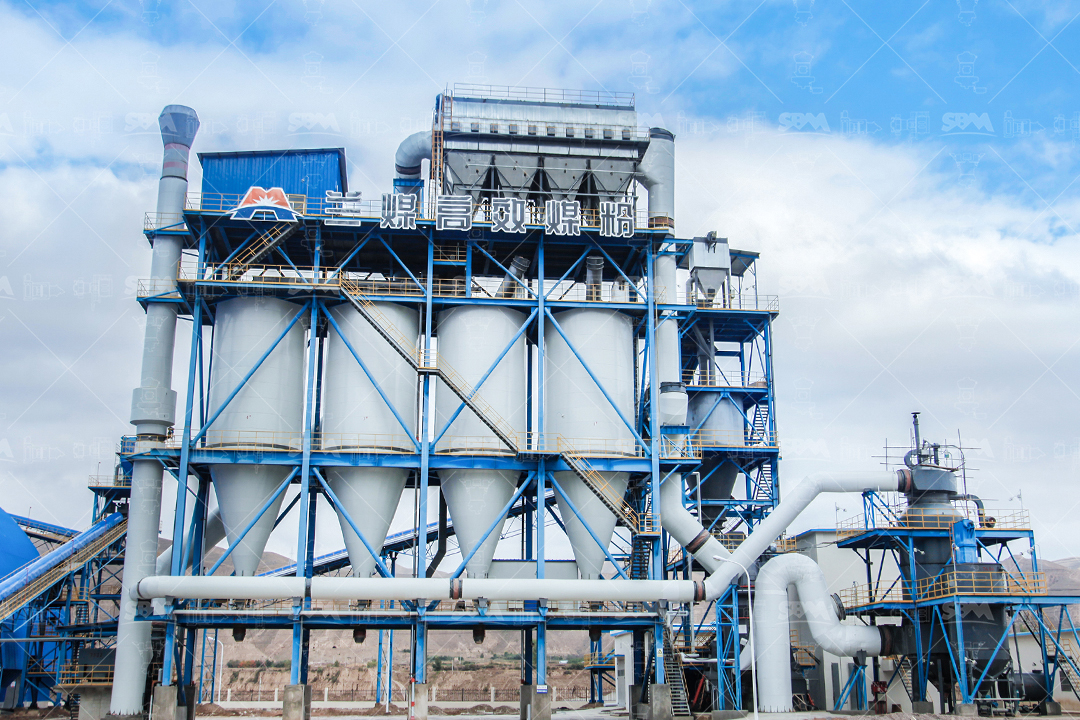 Both mills are designed with stringent environmental and operational standards. They operate under fully sealed, negative-pressure systems, effectively containing carbon black dust—a major concern for plant safety and cleanliness. Their optimized mechanical structure and sound insulation design result in low vibration and noise levels, contributing to a better working environment and reduced maintenance. The system layout is compact, occupying significantly less space than traditional ball mill circuits, which reduces overall plant footprint and civil engineering costs.
In conclusion, navigating the complexities of 1000 mesh carbon black production requires a partner with deep technological expertise and proven equipment. SBM Machinery, with its portfolio serving over 180 countries, provides not just machines but total grinding solutions. The SCM Ultrafine Mill and LUM Ultrafine Vertical Roller Mill stand out as technically superior choices, engineered to overcome the classic pain points of energy waste, product inconsistency, and high wear. By focusing on efficiency, precision, and stability, these mills empower carbon black processors to achieve premium product quality reliably and sustainably.
Frequently Asked Questions (FAQs)
- Q: Our current mill struggles with high energy consumption and heat generation when grinding carbon black to fine mesh. How do SBM mills address this?
A: Both the SCM and LUM mills are designed for high efficiency. The LUM mill's material-bed grinding principle and the SCM's optimized mechanical movement significantly reduce energy consumption compared to impact-based or traditional ball mills. Their efficient classification systems also prevent over-grinding, minimizing unnecessary energy use and associated heat. - Q: Carbon black is notoriously abrasive and causes rapid wear on grinding parts. What is your solution for wear resistance?
A: We use specially formulated, high-wear-resistant materials for key components like rollers, rings, and liners. For instance, the SCM mill's grinding ring and roller are made from special alloys, offering several times the service life of conventional parts, drastically reducing downtime and maintenance costs. - Q: How do you ensure consistent fineness and prevent coarse particles in the final 1000 mesh product?
A: Our mills feature advanced, high-precision turbine or multi-rotor classifiers. These classifiers provide accurate particle size cuts and ensure no coarse powder spillover. The fineness can be adjusted in real-time via the PLC control system, guaranteeing a stable and uniform product meeting D97 specifications. - Q: Dust containment is a major operational and safety issue with carbon black. Are your mills sealed effectively?
A: Absolutely. All our recommended mills operate under a fully sealed, negative-pressure system. This design ensures that no carbon black dust escapes during operation, maintaining a clean plant environment, protecting worker health, and preventing product loss. - Q: We have limited plant space. What is the footprint of these grinding systems?
A: Both systems, especially the vertical roller mill (LUM), have a highly compact and integrated design. They combine crushing, grinding, drying (if needed), classification, and conveying. Their footprint can be up to 50% smaller than a traditional ball mill system, and they can even be arranged outdoors to save valuable indoor space.


