

Growing demand for pcc mills
Published on: October 26, 2023
The global market for Precipitated Calcium Carbonate (PCC) is experiencing significant growth, driven by its expanding applications in industries such as paper, plastics, paints, coatings, and pharmaceuticals. This surge necessitates advanced, efficient, and reliable grinding technology to produce high-quality, ultra-fine PCC powder. SBM Machinery, as a total solution provider with decades of expertise and a presence in over 180 countries, addresses this growing demand through a comprehensive portfolio of grinding mills. Our equipment is engineered to tackle the core challenges of modern PCC production: achieving precise fineness control, ensuring high throughput with low energy consumption, maintaining operational stability, and meeting stringent environmental standards. From the high-capacity LM Vertical Roller Mill to the ultra-fine precision of the LUM Ultrafine Vertical Mill, SBM offers tailored solutions that enhance productivity and profitability for PCC producers worldwide.
The production of high-grade PCC requires grinding equipment capable of delivering consistent fineness within a specific range, often extending into the ultrafine spectrum (above 400 mesh). Traditional grinding systems often struggle with the high energy costs associated with achieving such fine particles and may suffer from rapid wear of grinding components when processing abrasive materials like limestone. Furthermore, the need for integrated drying, precise classification, and dust-free operation adds layers of complexity to the system design. SBM's grinding technology is developed in direct response to these industrial pain points, incorporating patented designs and international advanced technologies to provide a holistic and efficient grinding solution.
For large-scale PCC production requiring high output and integrated drying, the LM Vertical Roller Mill stands out. Its integrated design combines crushing, drying, grinding, and separation in a single compact unit, reducing the footprint by approximately 50% compared to traditional ball mill systems. The grinding principle, where rollers grind material directly on a plate, is inherently more energy-efficient, consuming 30% to 40% less power. The automatic control system allows for remote operation and stable process management, while its fully sealed negative-pressure operation ensures an environmentally friendly process with minimal dust emission.
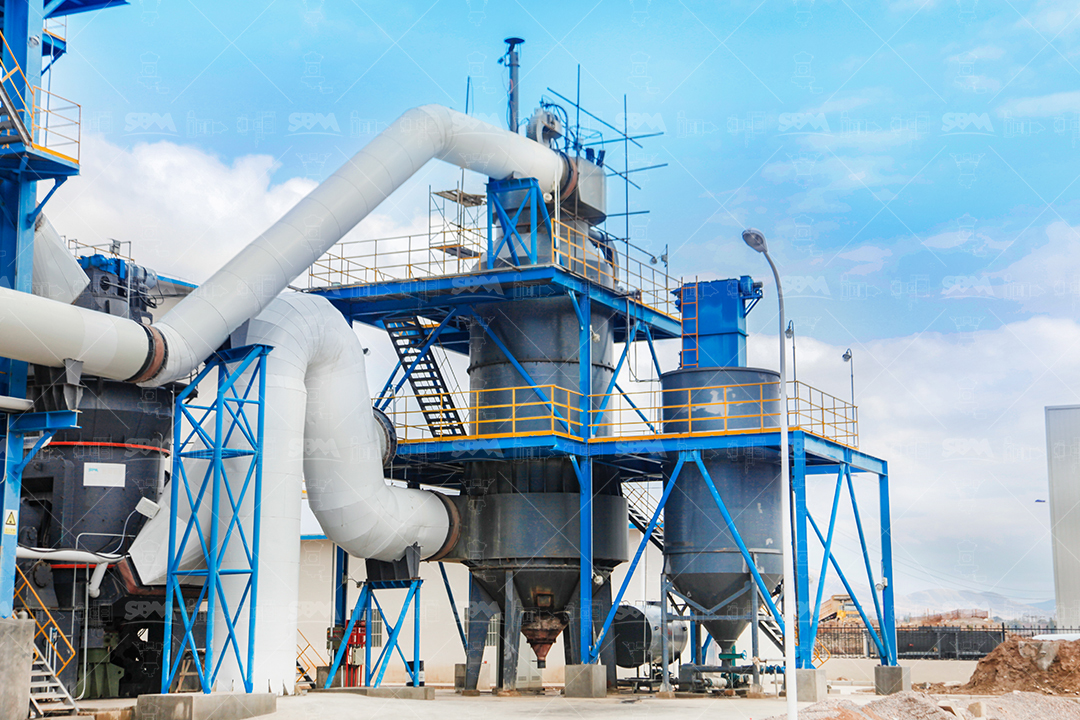
When the application demands extremely fine or customized particle size distribution for specialty PCC grades, the LUM Ultrafine Vertical Mill and the SCM Ultrafine Mill are the technologies of choice. The LUM series integrates German powder separating technology, allowing for precise fineness customization with high classification efficiency, ensuring no coarse powder spillover. Its intelligent PLC/DCS control system accurately manages grinding pressure and classifier speed for optimal results. The SCM Ultrafine Mill, renowned for its ability to reach fineness up to 4000 mesh, employs a heavy-duty rotor design and special material for rollers and rings, offering exceptional durability. Its efficient dual-powder collection system far exceeds international dust emission standards, making it ideal for high-value, ultra-fine PCC production.
For operations seeking a robust and proven technology with recent optimizations, SBM's Ball Mill solutions, including dry and wet process configurations, remain relevant. Through structural improvements and the use of advanced wear-resistant materials, we have addressed traditional concerns about high liner and ball consumption, thereby reducing long-term operating costs. Meanwhile, the MTW European Trapezium Mill, with its bevel gear whole transmission and inner oil absorption lubrication system, offers a reliable and cost-effective solution for medium-fineness PCC grinding, featuring lower maintenance costs due to its unique wear-proof shovel blade design.
The journey from raw limestone to high-purity PCC is complex, and the grinding stage is pivotal. SBM Machinery supports clients through the entire mineral processing workflow, not just by supplying equipment but by providing a total solution. Our engineers analyze specific feedstock characteristics and desired product specifications to recommend the most suitable mill configuration. This consultative approach, backed by global service and support, ensures that our clients' PCC production lines are not only built for today's demand but are also scalable and efficient for future growth. By prioritizing energy efficiency, operational intelligence, and environmental stewardship, SBM's grinding solutions are directly aligned with the sustainable and quality-driven future of the PCC industry.
_1768667079632.jpg)
Frequently Asked Questions (FAQs)
Q1: What are the main challenges in grinding limestone for PCC production, and how does SBM equipment address them?
A: Key challenges include high energy consumption for fine grinding, rapid wear of grinding parts due to abrasiveness, and ensuring consistent particle size distribution. SBM mills address these through energy-efficient designs like vertical roller mills (saving 30-40% energy), use of special wear-resistant materials for rollers/rings, and advanced classifier technology for precise size control.
Q2: For a new PCC plant targeting high-volume output (e.g., 50 tph), which type of mill is most suitable?
A: The LM Vertical Roller Mill is highly recommended for such large-scale production. It integrates multiple processes, has a large capacity range up to 400tph, offers significant energy savings, and features a compact layout that reduces overall plant footprint and civil engineering costs.
Q3: How does SBM ensure environmental compliance in its grinding systems for dust-sensitive industries?
A: Our mills, especially the vertical roller and ultrafine series, are designed as fully sealed systems operating under negative pressure. This prevents dust spillage. They are equipped with high-efficiency pulse dust collectors and powder collectors, with emission levels designed to meet or exceed stringent international and national environmental standards.
Q4: We need to produce very fine PCC (above 2500 mesh). Is this possible, and what mill should we consider?
A: Yes, producing PCC with fineness above 2500 mesh is achievable. The SCM Ultrafine Mill or the LUM Ultrafine Vertical Mill are specifically designed for this purpose. They can adjust fineness within a range from 325 to 4000 mesh, with advanced classifier systems ensuring accurate top-cut size and high product quality.
Q5: How does SBM's technology help reduce long-term operating and maintenance costs?
A: Cost reduction is achieved through several features: lower energy consumption designs, longer-lasting wear parts (e.g., combined-type shovel blades, special material rollers), integrated systems that reduce the number of auxiliary equipment, and intelligent automatic control systems that optimize process parameters and reduce labor requirements.


