

Raymond mill vs. superfine mill: cost comparison
Published on: October 26, 2023
Selecting the optimal grinding equipment is a critical decision that directly impacts operational efficiency, product quality, and long-term profitability. For many in industries like mining, chemicals, building materials, and non-metallic minerals, the choice often narrows down to two powerful contenders: the robust Raymond Mill (exemplified by our MTW European Trapezium Mill) and the advanced Superfine Mill (represented by our SCM Ultrafine Mill and LUM Ultrafine Vertical Mill). While both serve the core function of size reduction, their design philosophies, operational parameters, and associated cost structures differ significantly. This analysis provides a detailed cost comparison, focusing not on the initial price tag but on the Total Cost of Ownership (TCO), which encompasses capital investment, operational expenses, maintenance, and output value. Understanding these nuances is key to aligning your equipment choice with your specific production goals—be it high-volume processing of materials to 30-400 mesh or precision grinding to ultrafine ranges of 2500 mesh and beyond.
The Raymond Mill, particularly our MTW Series European Trapezium Grinding Mill, is engineered for reliability and efficiency in medium-fine grinding applications. Its design evolution incorporates direct feedback from thousands of global installations, focusing on durability and lower operating costs for specific output ranges. A cornerstone of its cost-effectiveness is the unique wear-proof shovel blade design. The combined-type, curved blades not only improve feeding efficiency but are also easily replaceable, significantly reducing the cost and downtime associated with wearing parts. Furthermore, innovations like the bevel gear integral transmission enhance mechanical efficiency, save space, and contribute to lower long-term investment costs by minimizing energy loss and maintenance complexity. The mill's structure is proven for continuous, high-volume operation (up to 40tph) where the target fineness is within 400 mesh.
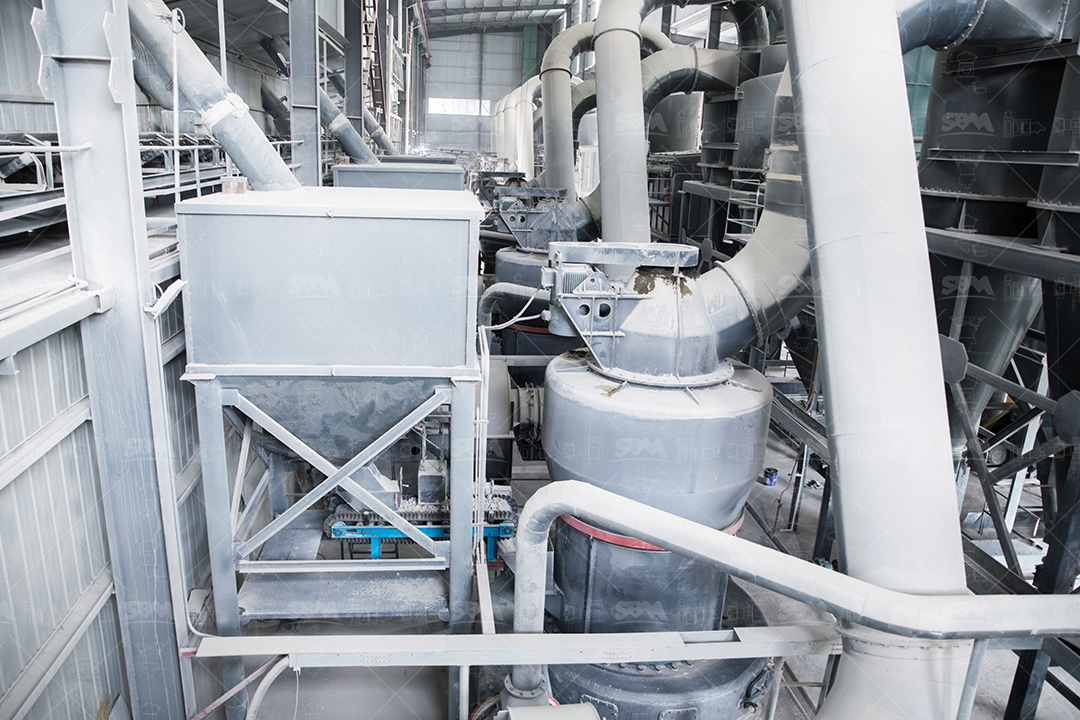
In contrast, Superfine Mills, such as our SCM Ultrafine Mill, are purpose-built to address the market's growing demand for ultra-high fineness and specialized powder properties. The primary cost driver and value proposition here is technological sophistication. These mills achieve fineness up to 4000 mesh, a realm where traditional Raymond mills cannot operate efficiently. The cost comparison shifts from sheer volume to precision, product quality, and energy efficiency per unit of ultrafine product. A key advantage is high output with low energy consumption; the SCM mill can offer over twice the capacity of some alternative fine-grinding systems like jet mills while consuming approximately 30% less energy. This translates to substantially lower operating costs for producing high-value ultrafine powders. Additionally, features like the efficient vertical turbine powder classifier ensure precise particle size distribution with no coarse powder spillover, maximizing yield and product consistency, which directly impacts sales value and reduces waste.
When dissecting operational costs, several factors come into play. Energy Consumption is paramount. Raymond Mills are generally efficient within their designed fineness range. However, when pushed towards their upper fineness limits, their energy efficiency can drop. Superfine Mills, incorporating advanced grinding principles and classifier technology, are optimized for energy efficiency at high fineness levels, often leading to lower kWh consumption per ton of finished ultrafine powder. Wear Parts Consumption presents another differentiator. The MTW Raymond Mill's design mitigates wear on the roller and ring through its curved shovel blade and inner oil absorption lubrication system. Superfine Mills often utilize special materials for rollers and rings (like those in our LUM Ultrafine Vertical Mill) that offer several times higher durability against abrasive ultrafine materials, though individual parts may have a higher unit cost. The net effect over time can be comparable or even favorable for the superfine mill in demanding applications.
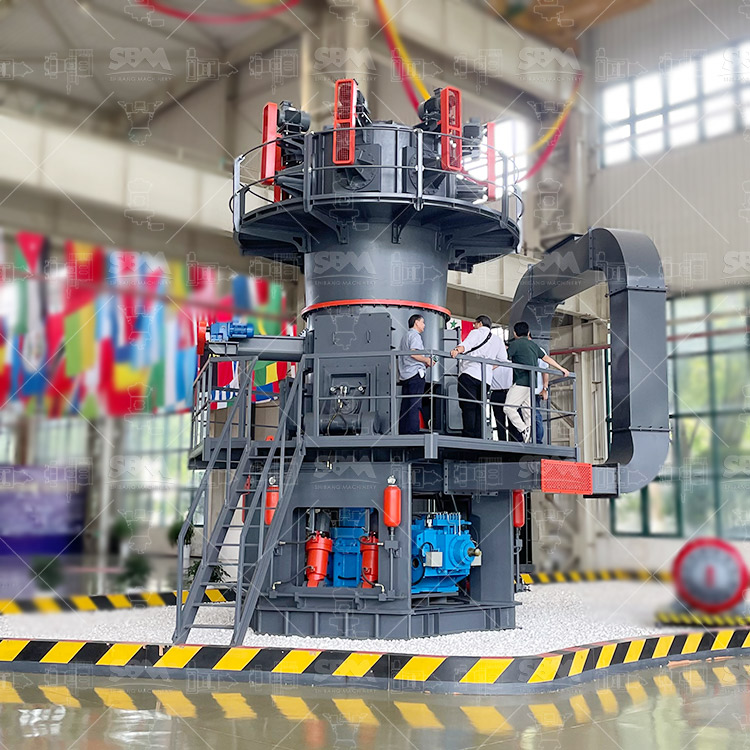
System Footprint and Ancillary Equipment also influence the initial capital layout. A traditional Raymond mill system may require separate feeding, grinding, and classifying units. Modern superfine mills, especially vertical roller mill types like our LUM series, integrate crushing, drying, grinding, separation, and transportation into a single, compact unit. This integration can reduce the floor space by up to 50% compared to some traditional systems, lowering civil construction costs and simplifying the overall plant layout. Moreover, the automated control systems standard in our superfine and vertical mills (like PLC/DCS systems) enable remote operation, precise process control, and labor savings, contributing to a lower operational cost profile over the equipment's lifespan.
Ultimately, the choice is application-driven. For high-tonnage production of powders up to 400 mesh—such as in desulfurization limestone preparation, coal powder preparation, or coarse GCC processing—the Raymond Mill (MTW Series) often presents an unbeatable balance of low capital intensity and proven, reliable performance with manageable operating costs. Its strength is in doing a common job uncommonly well and economically. For ventures targeting the high-end market with products like engineered fillers, high-purity ceramic powders, advanced battery materials, or pigments requiring fineness from 400 to 4000 mesh, the Superfine Mill is not just an option but a necessity. Its higher initial investment is justified by its ability to create premium products, achieve superior energy efficiency at target fineness, and ensure consistent quality that commands a higher market price. As a total solution provider with equipment operating in over 180 countries, SBM Machinery's expertise lies in guiding clients through this precise evaluation, ensuring the selected mill—be it Raymond, Vertical, or Ultrafine—delivers the optimal cost-performance ratio for their unique operational and financial landscape.
Frequently Asked Questions (FAQs)
Q1: We need to produce both 200-mesh and 800-mesh powder from the same material. Can one mill handle this range efficiently, or do we need two separate lines?
A: This is a common challenge. A Raymond mill is highly efficient for 200 mesh but may struggle with energy efficiency and wear at 800 mesh. A superfine mill like our SCM series can comfortably cover this entire range (325-2500 mesh) with optimized efficiency. For the most cost-effective solution, a detailed analysis of your production ratio for each product is recommended. In some cases, a single, flexible superfine mill line may be more economical than two dedicated systems.
Q2: Our main pain point is the frequent downtime and high cost of replacing grinding rollers and rings. How do these mills compare?
A: Our MTW Raymond Mill addresses this with its unique curved shovel blade design that reduces direct impact on the grinding ring and allows for partial replacement. For ultrafine grinding where abrasion is severe, our SCM and LUM mills use special alloy materials for rollers and rings, offering durability several times higher than standard materials, drastically reducing replacement frequency and long-term parts cost despite a potentially higher unit price.
Q3: Energy costs are our biggest operational concern. Which mill type is more energy-efficient?
A: Efficiency is fineness-dependent. For outputs coarser than 400 mesh, a modern Raymond mill like the MTW series with its efficient transmission system is very competitive. For fineness exceeding 400 mesh, superfine mills like the SCM series are specifically engineered for lower energy consumption, often using 30-40% less energy than alternative fine-grinding methods. The integrated design of vertical mills also reduces system power losses.
Q4: We have limited plant space. How do the footprints of these systems compare?
A: Vertical and integrated superfine mill systems (like the LUM Ultrafine Vertical Mill) offer a significant advantage. They consolidate multiple processes (grinding, drying, classifying) into a single, vertical structure, occupying up to 50% less floor space than a traditional horizontal ball mill or a Raymond mill system with separate classifiers and collectors. This is a crucial factor for greenfield projects or space-constrained upgrades.
Q5: We are worried about meeting strict environmental noise and dust emission standards. How do these mills perform?
A: Both mill types from SBM are designed with environmental protection in mind. The MTW mill features a sealed grinding chamber and efficient dust collection points. Our superfine mills (SCM & LUM) take this further: they operate under full negative pressure, ensuring no dust spillage. They are also equipped with advanced pulse dust collectors and sound insulation technology, keeping noise and emissions well below national and international standards, which is critical for modern industrial permits.


