

Equipment for rock asphalt processing
Published on: October 26, 2023
Rock asphalt, a naturally occurring hydrocarbon-impregnated rock, presents unique processing challenges that demand robust, efficient, and precise grinding technology. Success hinges on selecting equipment capable of handling its abrasive nature, achieving the required fineness for bitumen extraction or direct powder applications, and operating with sustainable energy profiles. Shanghai SBM Machinery, as a total solution provider with global experience spanning over 180 countries, addresses these core demands through a portfolio of advanced mills. From the high-capacity stability of the MTW European Trapezium Mill and the integrated efficiency of the LM Vertical Roller Mill to the ultra-fine precision of the SCM Ultrafine Mill and LUM Ultrafine Vertical Mill, SBM offers tailored grinding circuits that enhance yield, reduce operational costs, and ensure environmental compliance for rock asphalt processing plants.
The journey of processing rock asphalt begins with the primary size reduction of mined rock to a manageable feed size. Here, reliability and wear resistance are paramount. SBM's MTW Series European Trapezium Grinding Mill is engineered for such demanding applications. Its patented wear-proof combined shovel blade design is a critical advantage. By allowing only the blade tip to be replaced during maintenance, it drastically reduces downtime and the cost of wearing parts when processing abrasive materials like rock asphalt. Furthermore, the innovative curved shovel blade design optimizes the feeding angle, directing material more effectively onto the grinding ring and extending the service life of both rollers and the ring. This translates directly into lower long-term operating costs—a key concern for plant managers.
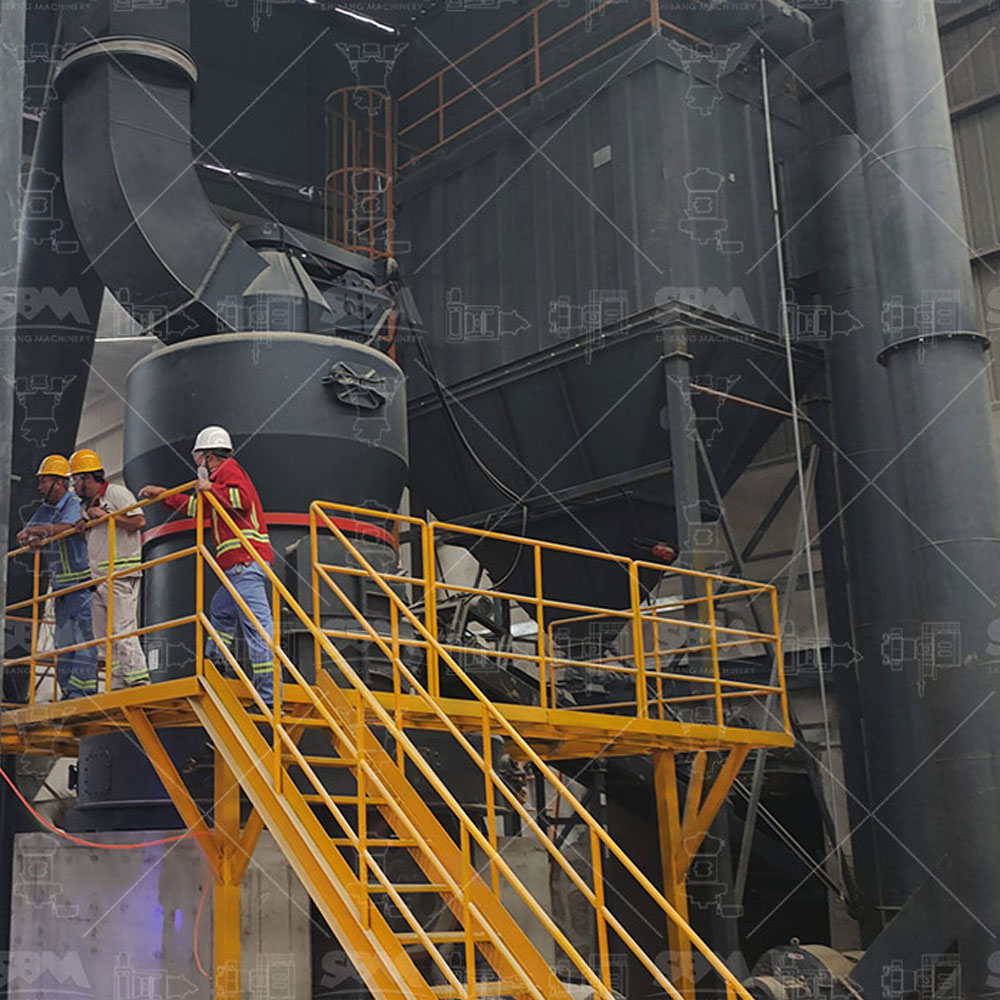 The mill's Cone Gear Whole Transmission system provides smooth, high-efficiency power transfer with minimal energy loss, a vital feature for the continuous, high-power demands of rock asphalt milling. Complementing this is the Arc Air Duct, which ensures unimpeded airflow for material transport within the mill, preventing blockages and maintaining consistent throughput. For operations targeting a finished product in the range of 30-400 mesh for subsequent processing or as a filler material, the MTW Mill, with capacities up to 40 TPH, offers a robust and cost-effective solution.
For larger-scale operations or projects where space optimization and energy efficiency are top priorities, the LM Vertical Roller Mill stands out. Its integrated design combines crushing, drying, grinding, and classification into a single, compact unit. This not only reduces the plant's footprint by approximately 50% compared to traditional ball mill systems but also slashes initial civil engineering and installation costs. The energy savings are even more compelling; by utilizing a grinding principle where rollers directly compress material on a rotating table, the LM Vertical Mill consumes 30% to 40% less energy than a ball mill of equivalent output—addressing one of the most significant pain points in mineral processing.
In rock asphalt processing, controlling moisture content can be crucial. The LM Vertical Mill's integrated drying capability, using hot gases introduced into the mill, efficiently handles this task simultaneously with grinding. Its operation under negative pressure ensures a dust-free environment, meeting stringent environmental standards. The inclusion of an expert automatic control system allows for remote monitoring and adjustment of key parameters, ensuring stable operation and consistent product quality while minimizing labor intervention.
As applications for finely ground rock asphalt expand into high-value areas such as modified asphalt compounds or specialized coatings, the demand for ultra-fine powders increases. This is the domain of SBM's ultrafine grinding technologies. The SCM Series Ultrafine Mill is engineered to produce powders from 325 to an exceptional 2500 mesh. Its high-efficiency turbine powder classifier ensures precise particle size cut-off, guaranteeing that no coarse particles contaminate the final product. For processors needing both ultra-fine fineness and higher capacity, the LUM Ultrafine Vertical Mill integrates advanced German powder-separating technology with a vertical grinding mechanism. Its unique grinding curve design promotes stable material bed formation, enhancing efficiency and the yield of on-spec product from the first pass.
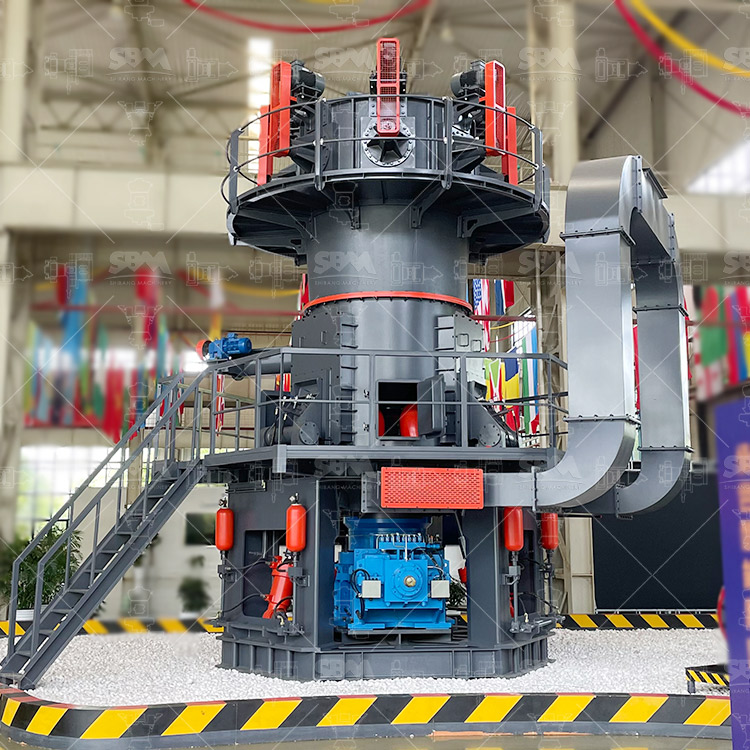 Both ultrafine mills feature intelligent control systems that automatically adjust grinding pressure and classifier speed to maintain target fineness, exemplified by the ability to consistently achieve D97 ≤ 5µm. Their fully sealed systems and efficient pulse dust collection not only capture valuable product but also ensure emissions are far below international environmental standards, a critical factor for modern, responsible operations.
While newer technologies often take the spotlight, optimized traditional solutions like SBM's Ball Mill retain relevance for specific stages, particularly in wet grinding scenarios sometimes used in certain extraction processes. SBM's continuous improvements in liner and grinding media materials have addressed historical weaknesses like rapid wear and high energy consumption, making them a viable part of a comprehensive rock asphalt processing circuit.
Ultimately, processing rock asphalt is not about finding a single machine but building an efficient, reliable system. Shanghai SBM Machinery leverages its expertise as a total solution provider to analyze each client's specific ore characteristics, target product specifications, and production goals. By recommending the optimal configuration—whether it's a standalone vertical mill for direct processing or a multi-stage circuit involving coarse and ultra-fine grinding—SBM ensures that rock asphalt processors can maximize their resource value, control their operational expenditures, and produce high-quality powders that meet the evolving demands of the construction and materials industries.
Frequently Asked Questions (FAQs)
- What is the biggest challenge when grinding abrasive materials like rock asphalt, and how does SBM equipment address it?
The primary challenge is excessive wear on grinding components, leading to high maintenance costs and frequent downtime. SBM mills combat this through specialized designs like the replaceable shovel blades in the MTW Mill and the use of high-quality, wear-resistant materials for rollers and rings across all models, significantly extending service life and reducing operating costs. - We have limited plant space. Is there a compact grinding solution that doesn't sacrifice capacity?
Yes. The LM Vertical Roller Mill is specifically designed for this scenario. It integrates multiple functions (drying, grinding, separation) into one unit, reducing floor space by about 50% compared to traditional ball mill systems while offering high capacity (up to 400 TPH) and superior energy efficiency. - Our application requires a very fine powder (below 800 mesh). Can your equipment achieve this consistently?
Absolutely. For ultra-fine grinding, the SCM Ultrafine Mill and LUM Ultrafine Vertical Mill are ideal. They are engineered to produce powder from 325 to 4000 mesh with high consistency. The advanced classifier technology ensures precise particle size control, and intelligent systems automatically adjust parameters to maintain target fineness like D97 ≤ 5µm. - Energy consumption is a major cost driver for us. Which SBM solution offers the best efficiency?
Vertical roller mills (LM and LUM series) are the most energy-efficient options. Their grinding principle consumes 30-40% less energy than traditional ball mills for the same output. The MTW European Mill also features efficient whole gear transmission and aerodynamic designs that minimize energy loss. - How does SBM equipment ensure environmental compliance, particularly regarding dust emissions?
All SBM grinding mills are designed with environmental protection as a core principle. They operate under fully sealed, negative-pressure systems, preventing dust spillage. High-efficiency pulse dust collectors (often with dual systems in ultrafine mills) ensure collection efficiency exceeds international standards, keeping workplace and emission air clean.


