

Pcc, its uses, and processing equipment
Published on: October 26, 2023
Precipitated Calcium Carbonate (PCC) is a high-value, synthetic mineral with transformative applications across industries from paper and plastics to pharmaceuticals and food. Its production demands precise control over particle size, morphology, and purity, making the choice of grinding and classification equipment critical to operational success and product quality. This article explores the diverse uses of PCC and examines the advanced processing machinery, such as vertical roller mills and ultrafine grinding systems, engineered to meet these stringent requirements efficiently and sustainably. We will delve into how modern mill technology addresses core production challenges—including energy consumption, particle size distribution control, and environmental compliance—enabling manufacturers to achieve superior product consistency and operational economics.
The versatility of PCC stems from its engineered properties. Unlike ground calcium carbonate (GCC), which is derived from crushing limestone, PCC is synthesized through a chemical reaction, allowing precise control over its crystal form, particle size (often sub-micron), and surface characteristics. This makes it an indispensable functional filler and modifier. In the paper industry, PCC enhances brightness, opacity, and printability. In plastics and polymers, it improves impact strength, dimensional stability, and surface finish. Its high purity makes it suitable for sensitive applications like pharmaceuticals as an excipient, in food as a calcium fortifier, and in sealants and adhesives to control rheology. The drive towards lighter, stronger, and more sustainable materials continues to expand PCC's market, pushing the boundaries of required fineness and particle morphology.
_1770016778977.jpg) Meeting these precise specifications is where advanced mineral processing technology proves its worth. Traditional grinding methods often struggle with the high energy demands and limited fineness control needed for high-grade PCC. Modern solutions focus on integrated systems that combine grinding, drying, classification, and collection with intelligent control.
Meeting these precise specifications is where advanced mineral processing technology proves its worth. Traditional grinding methods often struggle with the high energy demands and limited fineness control needed for high-grade PCC. Modern solutions focus on integrated systems that combine grinding, drying, classification, and collection with intelligent control.
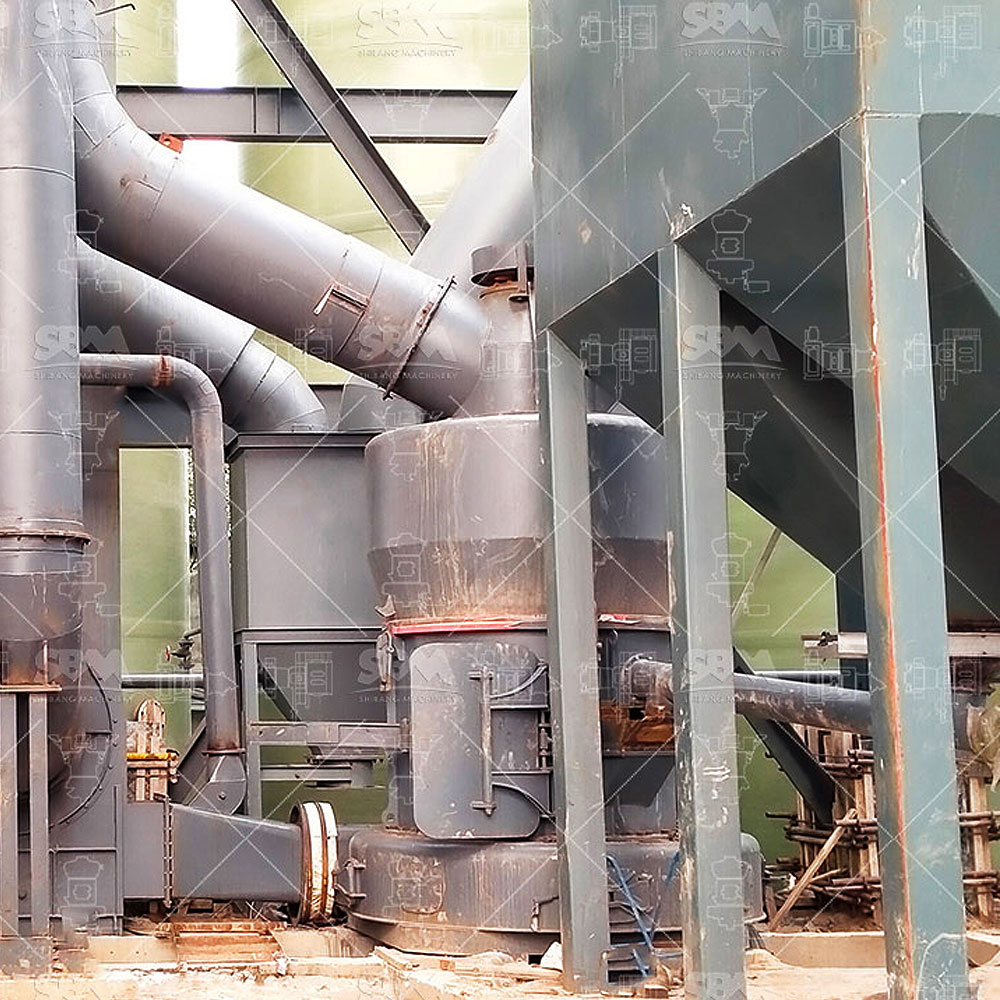
For general PCC production where high capacity and reliable performance are key, the Vertical Roller Mill (VRM) stands out. Our LM series VRM integrates crushing, grinding, drying, and separation in a single unit. Its compact design reduces footprint by up to 50% compared to traditional ball mill systems. The principle involves material being ground between rollers and a rotating table, with immediate classification by an internal separator. This results in significantly lower specific energy consumption—typically 30-40% less than ball milling. Furthermore, its fully enclosed system operating under negative pressure ensures dust-free operation, meeting stringent environmental standards. The integrated automatic control system allows for precise regulation of grinding pressure and classifier speed, ensuring consistent output quality.
When the application demands ultra-fine or nano-sized PCC, specialized Ultrafine Grinding Mills are essential. Our SCM series ultrafine mill is designed to produce powders in the range of 325 to 2500 mesh, with one-time fineness achievable at D97 ≤ 5µm. Key to its performance is a high-efficiency turbine classifier that ensures precise particle cut-points without coarse powder spillover. The mill's design, featuring a heavy-duty rotor and specially hardened grinding elements, guarantees stability, low vibration, and extended wear-part life, directly reducing operating costs. For even higher-end applications, such as masterbatch or high-performance polymers, the LUM Ultrafine Vertical Mill incorporates advanced multi-rotor classification technology from Germany. This allows for custom-tailored particle size distributions, eliminating low-grade fractions and maximizing product value. Its intelligent PLC/DCS system automates critical parameters for stable, hands-off operation.
 A holistic processing line extends beyond the grinding mill. Efficient powder collection is paramount. Our systems employ high-efficiency cyclone collectors combined with pulse-jet bag filters, achieving dust collection rates far exceeding international standards. This not only protects the environment but also maximizes product yield. Sound insulation rooms and mufflers are strategically implemented to control noise pollution, ensuring community-friendly plant operation.
For clients modernizing existing facilities or dealing with specific material challenges, the European Trapezium Mill (MTW Series) offers a robust upgrade path. It incorporates innovations like cone gear whole transmission for higher mechanical efficiency and an arc air duct that minimizes pneumatic resistance. Its unique combined-type shovel blade design allows for easy replacement of only the worn part, slashing maintenance time and spare parts inventory costs. This mill is exceptionally suited for producing PCC where reliability and ease of maintenance are top priorities.
Ultimately, selecting the right PCC processing equipment is not just about achieving a target mesh size. It's about building a cost-effective, reliable, and future-proof production line that delivers consistent quality while minimizing energy use, wear-part consumption, and environmental impact. The evolution from standalone mills to intelligent, integrated systems represents the new standard, empowering PCC producers to meet the exacting demands of tomorrow's markets.
Frequently Asked Questions (FAQs)
Q1: We struggle with high energy costs in our current PCC grinding process. What solutions can significantly reduce power consumption?
A: Vertical Roller Mills (VRMs) are specifically engineered to address this core pain point. By integrating multiple processes (drying, grinding, separation) and utilizing a highly efficient grinding principle with immediate internal classification, VRMs can reduce specific energy consumption by 30-40% compared to traditional ball mill systems, offering a rapid return on investment through lower operational expenses.
Q2: Achieving consistent, narrow particle size distribution for specialty PCC grades is a major challenge. How can this be improved?
A: Consistency requires precise classification integrated with stable grinding. Ultrafine mills equipped with advanced, frequency-controlled turbine classifiers or multi-rotor separators allow for real-time, accurate adjustment of the cut point. This technology, paired with an automated control system that regulates grinding pressure and feed rate, ensures a tight and repeatable particle size distribution, batch after batch.
Q3: Wear and tear on grinding rollers and rings leads to frequent downtime and high spare parts costs. Are there more durable options?
A> Absolutely. Modern mills address this through material science and design. Key components are manufactured from special alloy steels or composite materials with superior wear resistance. Furthermore, designs like curved shovel blades (in trapezium mills) or non-direct-contact grinding principles (in some VRMs) significantly extend the service life of wear parts, sometimes by multiples, drastically reducing maintenance frequency and long-term operating costs.
Q4: Dust emission and plant cleanliness are critical for our environmental permits and worker safety. Can a grinding system be truly dust-free?
A: Yes, a fully enclosed system operating under negative pressure is the industry benchmark for dust control. In such a design, any potential leak is inward, preventing powder escape. This is combined with high-efficiency two-stage powder collection (cyclone + pulse bag filter) that captures over 99.9% of particulates, ensuring emissions are not only compliant but often significantly better than national and international standards.
Q5: We need to produce multiple PCC grades with different fineness levels. Is frequent, complex re-configuration required?
A: Not with modern, intelligent mills. Key equipment like ultrafine grinding mills and classifiers feature frequency conversion drives and programmable logic controllers (PLC). Changing the product fineness often involves simply adjusting the classifier speed or grinding pressure via the control system interface, enabling fast product changeovers with minimal manual intervention and no major mechanical alterations.


