

Ball mill or superfine mill for 3000 mesh?
Published on: October 26, 2023
Selecting the optimal grinding equipment for producing powders at 3000 mesh (approximately 5 microns) is a critical decision impacting product quality, operational efficiency, and total cost of ownership. For projects demanding such extreme fineness, traditional ball mills reach their technical and economic limits. The superior choice lies within advanced superfine milling technologies, specifically engineered for the ultra-fine and nano-grinding domain. This article analyzes the core challenges of 3000-mesh production and explores how modern vertical roller mills and specialized ultra-fine mills provide targeted solutions for high-value mineral processing, new energy materials, and advanced chemicals, ensuring precise particle size distribution, energy efficiency, and system stability.
The fundamental challenge with achieving 3000 mesh is overcoming the exponential increase in energy consumption and wear as particle size decreases. Traditional ball mills, while robust for coarser grinds, operate with low energy efficiency at this fineness range. A significant portion of input energy is wasted as heat and noise, while grinding media wear contaminates the product and increases operational costs. Furthermore, their mechanical design often struggles with consistent classification at the sub-10-micron level, leading to a broad particle size distribution and potential "over-grinding" of a portion of the material.
This is where the paradigm shifts to superfine grinding systems. Technologies like the SCM Series Ultrafine Grinding Mill and the LUM Series Ultrafine Vertical Roller Mill are designed from the ground up for this specific application. Their core advantage lies in a focused grinding mechanism coupled with highly efficient, integrated dynamic classifiers. Unlike the impact and attrition in a tumbling ball mill, these mills often utilize a bed grinding principle or precision roller systems that apply controlled pressure to the material layer, resulting in more efficient size reduction with less energy converted to waste heat.
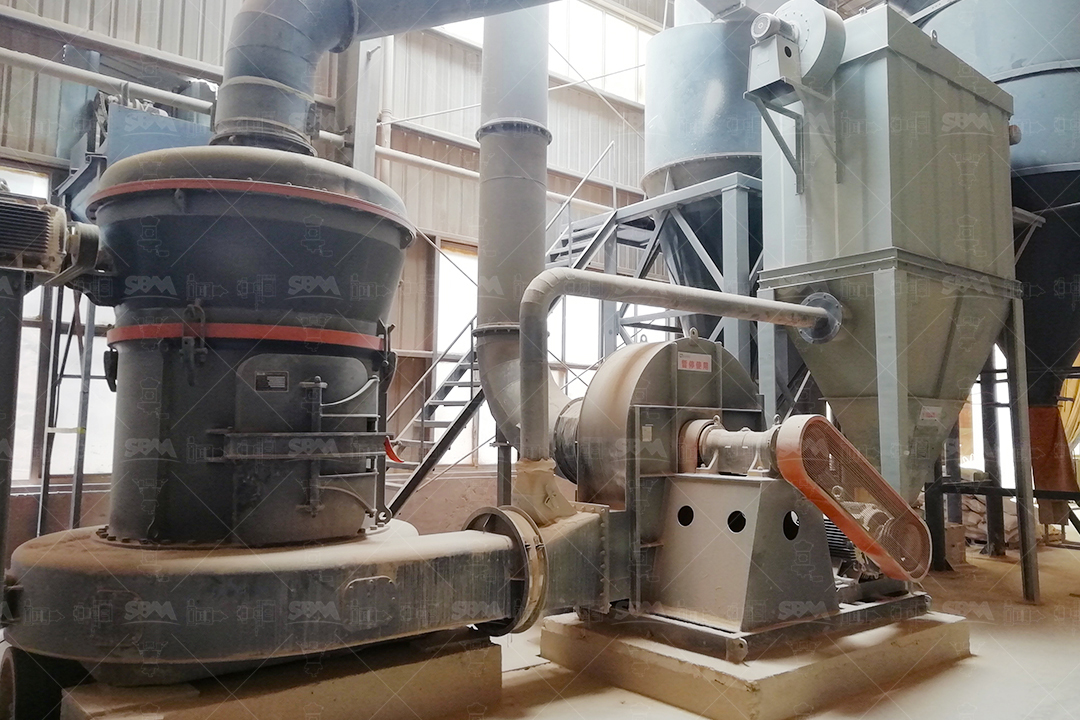
For instance, the SCM Ultrafine Mill is a benchmark for high-finesse production. Its technical architecture addresses key pain points: a heavy-duty rotor design and specially hardened rollers/rings offer durability several times greater than conventional parts, directly reducing wear-related contamination and maintenance downtime. The integrated high-efficiency vertical turbine classifier ensures precise particle cut-point control, preventing coarse powder spillover and guaranteeing a consistent D97 ≤ 5µm (approx. 2500-3000 mesh) product. Its system efficiency is notable, often delivering over twice the capacity of jet mills while consuming 30% less energy, making it a compelling solution for high-value additives and fillers.
When project scope scales up, the LUM Ultrafine Vertical Roller Mill presents a powerful alternative. It integrates grinding, drying, classification, and conveying into a single, compact footprint. Its intelligent control system (PLC/DCS) automatically manages critical parameters like grinding pressure and classifier speed, ensuring stable operation and consistent product quality with minimal manual intervention. The multi-rotor classifier technology allows for customizing the fineness across a wide range, including the 3000-mesh target, with high selectivity. This mill is particularly suited for large-scale production of non-metallic minerals like calcite, barite, and wollastonite for plastics, paints, and advanced composites.
It's important to contextualize the role of evolved traditional technologies. While a standard ball mill is not suitable for 3000 mesh, modern Vertical Roller Mills (VRM) like our LM series have pushed the boundaries of finer grinding. They offer excellent drying capabilities and are highly efficient for outputs up to 400 mesh. For some materials, a VRM can serve as a pre-grinding stage before a dedicated ultra-fine mill, optimizing the overall system energy profile. Similarly, the advanced MTW European Trapezium Mill, with its cone gear whole transmission and efficient curved blade design, excels in the 30-400 mesh range with exceptional reliability and lower wear costs, serving as a perfect preparatory or standalone solution for less demanding fineness requirements.
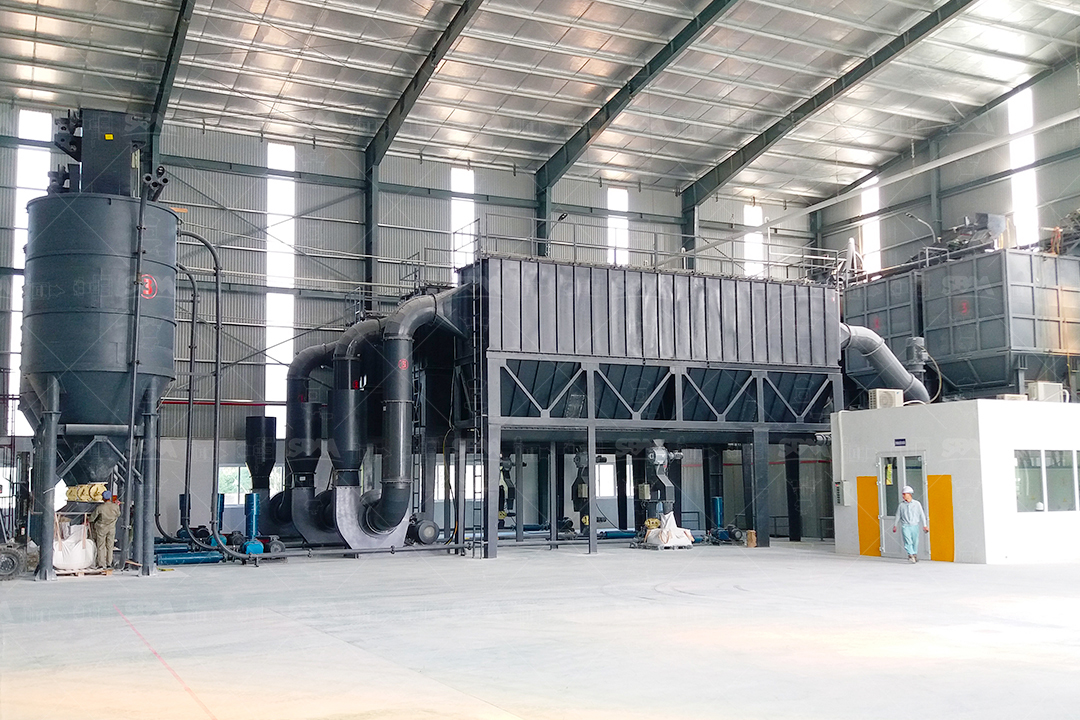
Ultimately, the choice for 3000-mesh production is clear: superfine milling technology is not just an option but a necessity. The decision between a mill like the SCM and the LUM hinges on specific factors: required capacity (SCM: 0.5-25 TPH, LUM: 10-70 TPH), the need for integrated drying (strong in LUM), and the material's specific characteristics. As a total solution provider with equipment operating in over 180 countries, the focus must be on a holistic system design that considers feed preparation, grinding, classification, and collection to unlock the full value of ultra-fine powders while controlling operational expenses and meeting stringent environmental standards.
Frequently Asked Questions (FAQs)
- Q: We currently use a ball mill but struggle with high energy costs and product contamination at finer grinds. Can we retrofit our system, or do we need a completely new setup?
A: Retrofitting a traditional ball mill to efficiently achieve 3000 mesh is typically not feasible due to fundamental design limitations. A dedicated superfine mill (like SCM or LUM) is recommended. However, a system audit can determine if your existing ball mill can be repurposed as a pre-crusher in a new, multi-stage grinding circuit for optimal efficiency. - Q: How do you ensure consistent 3000-mesh fineness, and what happens if the product is too coarse or too fine?
A: Consistency is achieved through advanced integrated classifiers (turbine or multi-rotor) with PLC-controlled speed regulation. This allows real-time adjustment of the cut point. The closed-loop system recirculates coarse material for re-grinding, while the precise control minimizes over-grinding, ensuring a tight particle size distribution centered on your target. - Q: Wear parts replacement in high-intensity grinding is a major downtime concern. How are your ultra-fine mills designed to address this?
A: Our superfine mills use specially developed materials for rollers, rings, and liners that offer dramatically extended service life. Designs like the curved shovel blade in the MTW mill or the unique grinding curve in the LUM mill reduce abrasive wear and allow for partial replacement, slashing both part costs and maintenance downtime. - Q: Is dust control a problem with such fine powders, and how is the system sealed?
A: Dust containment is critical. Our mills are designed as fully sealed systems operating under negative pressure, meaning air leaks inward, preventing powder escape. This is complemented by high-efficiency pulse jet bag filters or dual cyclone systems that ensure collection efficiency far exceeds international environmental standards. - Q: We have varying feed materials and may need to adjust final fineness. How flexible are these mills for different materials and product specifications?
A: Superfine mills like the SCM and LUM are built for flexibility. The classifier speed is key—adjusting it via the frequency converter allows you to shift the output fineness across a wide range (e.g., from 325 to 4000 mesh) without stopping the mill. The intelligent control system can store parameters for different materials, enabling quick changeovers.


