

Limestone powder uses in various industries
Published on: October 26, 2023
Limestone powder, a versatile and essential mineral derivative, serves as a critical raw material across a diverse spectrum of global industries. Its applications range from environmental protection and construction to advanced manufacturing and new energy materials. The value of limestone powder is intrinsically linked to its fineness, purity, and production efficiency, which are directly determined by the grinding technology employed. This article explores the multifaceted uses of limestone powder and examines how advanced grinding solutions, such as those offered by industry leaders like SBM Machinery, address core production challenges to unlock its full industrial potential.
The journey of limestone from quarry to fine powder is a technological process where precision and reliability are paramount. For power generation and heavy industries, a primary application is in flue gas desulfurization (FGD). Here, high-purity limestone powder is used as a sorbent to remove sulfur dioxide from emissions, a critical process for meeting stringent environmental regulations. The efficiency of this scrubbing process heavily depends on the particle size distribution and reactivity of the powder, necessitating grinding equipment capable of consistent, high-volume output with precise fineness control, typically in the range of 200-400 mesh.
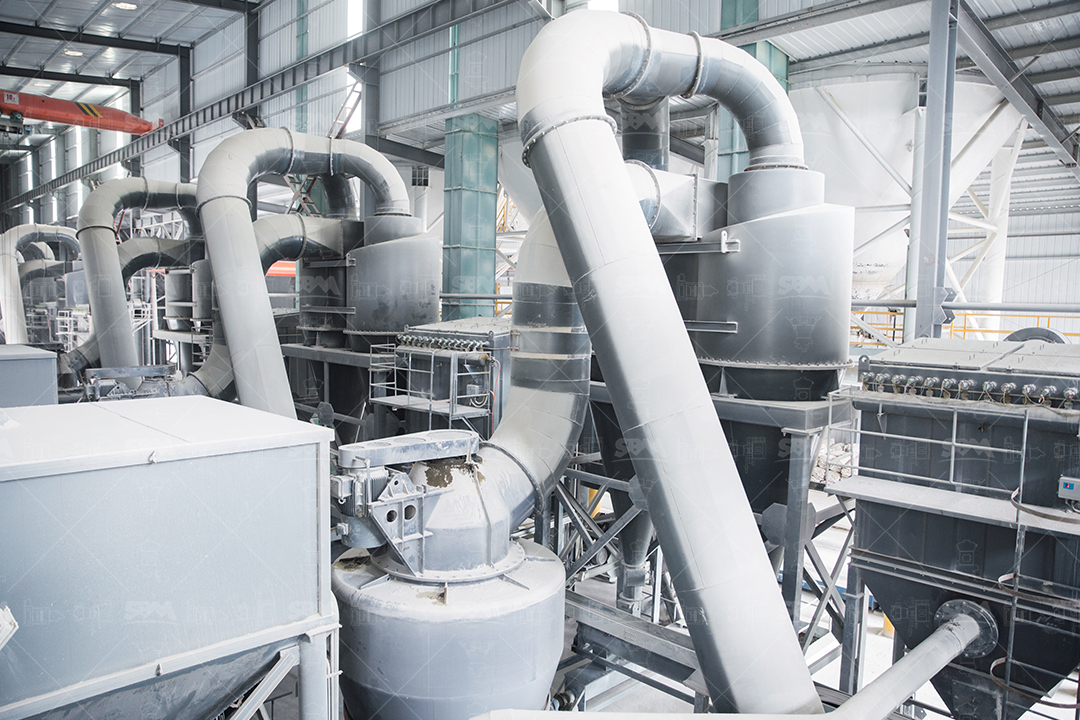
In the construction and building materials sector, limestone powder is a cornerstone ingredient. It is used as a filler in asphalt and concrete to improve volume stability and durability. Furthermore, it is a key component in the production of cement, plaster, and drywall. The paint, plastics, and rubber industries utilize ultra-fine limestone powder (often as heavy calcium carbonate, or GCC) as a functional filler and extender to enhance product properties such as opacity, strength, and weather resistance while reducing raw material costs. For these applications, achieving a superfine and uniform particle size—sometimes as fine as 2500 mesh or beyond—is essential for product performance and homogeneity.
Emerging industries are also creating new demand. The production of artificial quartz stone, PVC pipes, cables, and non-woven fabrics relies on high-quality, ultra-fine limestone fillers. Additionally, limestone powder is integral in producing slag micro-powder for green cement and in processing new energy materials. Each application presents unique challenges: the need for higher fineness, stricter particle shape control, lower energy consumption, or integration with drying processes. This is where the selection of grinding technology becomes critical. Traditional ball mills, while robust, often struggle with high energy consumption and wear part costs, especially for finer grinds. Raymond mills may not reach the ultra-fine spectrum required for high-value applications.
Modern grinding systems are engineered to overcome these limitations. For instance, the MTW Series European Trapezium Grinding Mill incorporates advanced features like cone gear whole transmission and an arc air flue design. These innovations enhance transmission efficiency, reduce energy loss in material conveying, and lower overall operating costs through unique wear-proof designs, making it an excellent choice for large-scale production of desulfurization limestone powder and coarse-to-medium fine GCC.
For projects demanding higher capacity and integrated processing, the LM Vertical Roller Mill offers a compelling solution. Its integrated design combines crushing, drying, grinding, and classification in a single unit, significantly reducing floor space and civil engineering costs. The direct grinding principle on the grinding plate leads to 30-40% lower energy consumption compared to traditional ball milling systems. Its operation under negative pressure ensures an environmentally friendly process with no dust spillover, ideal for cement, chemical, and coal powder preparation.
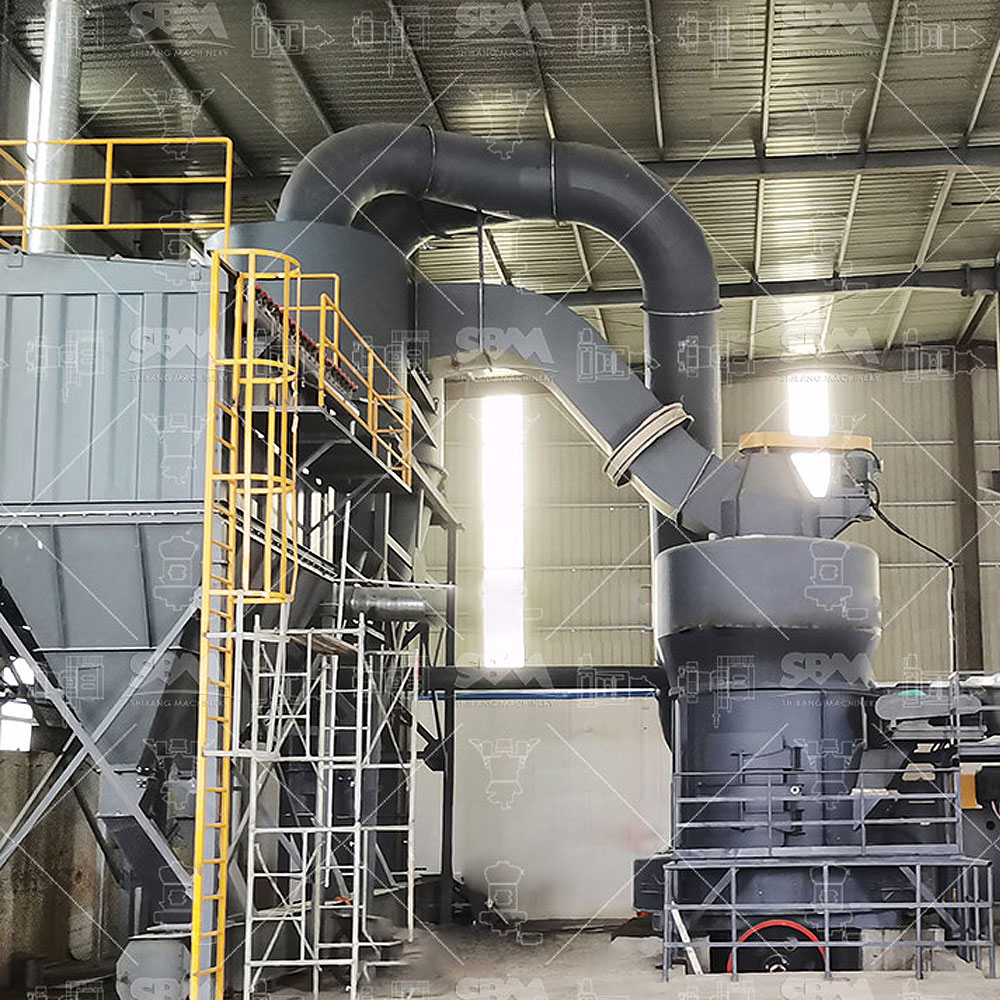
When the end-product requirement enters the ultra-fine domain (325-4000 mesh), specialized mills are required. The SCM Ultrafine Mill is designed for this purpose, achieving fineness up to D97≤5μm. It features high output with low energy consumption and an efficient vertical turbine classifier for precise particle size cuts. Building on vertical mill advantages for ultra-fine grinding, the LUM Ultrafine Vertical Mill integrates German powder separating technology. Its unique grinding curve design promotes stable material bed formation, improving efficiency and product quality from the first pass, which is crucial for processing materials like calcite, marble, and barite for masterbatch and high-end plastics.
Even mature technologies like the Ball Mill have been optimized to address historical pain points like high liner and grinding media wear. Modern designs focus on structural improvements and wear-resistant materials to reduce operating costs, making them suitable for specific wet or dry grinding processes where their characteristics are advantageous.
In conclusion, the expansive utility of limestone powder is a testament to its industrial importance. Selecting the correct grinding system—one that balances output, fineness, energy use, and operational stability—is not merely an equipment purchase but a strategic investment in product quality and plant profitability. With a comprehensive portfolio of grinding solutions backed by global experience, providers like SBM Machinery empower industries to transform raw limestone into a high-value product that meets the exacting standards of both traditional and cutting-edge markets.
Frequently Asked Questions (FAQs)
Q1: We need to produce limestone powder for flue gas desulfurization (FGD) but are concerned about high energy costs and meeting consistent fineness for regulatory compliance. What is the most efficient solution?
A: For high-volume FGD limestone powder production (typically 200-400 mesh), an MTW European Trapezium Mill or an LM Vertical Roller Mill is often recommended. The LM Vertical Mill, in particular, can offer 30-40% lower energy consumption compared to traditional ball mills and features an automatic control system that ensures stable output and consistent fineness, directly addressing cost and compliance concerns.
Q2: Our paint manufacturing requires ultra-fine calcium carbonate (GCC) above 2500 mesh, but our current mill cannot reach this fineness without multiple passes, hurting our productivity.
A: This is a common bottleneck. An SCM Ultrafine Mill or LUM Ultrafine Vertical Mill is specifically engineered for this range. The LUM model, with its advanced multi-rotor classifier and optimized grinding curves, can achieve a one-time fineness of D97≤5μm (approx. 2500 mesh) in a single pass, significantly improving throughput and product uniformity for high-end applications.
Q3: We operate a grinding plant and face frequent downtime and high costs due to the rapid wear of grinding rollers and rings. How can we improve equipment longevity?
A: Wear part life is critical for operational continuity. Look for mills designed with this in mind. For example, the MTW Mill features a unique combined-type shovel blade and curved roller design that prolongs service life. The LUM and LM Vertical Mills use high-quality materials for rollers and plates and employ grinding principles that reduce direct abrasive contact, dramatically extending maintenance intervals and lowering cost-per-ton.
Q4: Dust control and noise levels in our powder processing area are becoming a significant environmental and worker safety issue. Are there grinding systems designed with this in mind?
A> Absolutely. Modern mills prioritize environmental protection. LM and LUM Vertical Roller Mills operate under fully sealed, negative-pressure systems, preventing any dust spillover. They are also designed for low vibration and noise. Additionally, SCM Ultrafine Mills can be equipped with high-efficiency dust collectors and sound insulation, ensuring your plant meets strict national environmental and workplace safety standards.
Q5: We want to upgrade our system to be more automated and require less manual intervention to control quality and save on labor. What options exist?
A: Automation is a key advantage of newer grinding systems. Both the LM Vertical Mill and LUM Ultrafine Vertical Mill come equipped with expert automatic control systems (PLC/DCS). These systems allow for remote operation, automatic adjustment of key parameters like grinding pressure and classifier speed, and stable product conversion. This intelligent control minimizes human error, ensures consistent product quality, and reduces long-term labor costs.


