

Working principle of vertical roller mills
Published on: October 26, 2023
Vertical Roller Mills (VRMs) represent a cornerstone of modern industrial grinding, offering a highly efficient and integrated solution for size reduction, drying, and classification of various materials. As a leading total solution provider for grinding equipment, SBM Machinery has developed advanced VRM technology that addresses the core challenges of traditional milling systems—namely high energy consumption, large footprint, and operational complexity. By integrating crushing, grinding, drying, and separation into a single, compact unit, SBM's vertical roller mills deliver superior performance, reduced operating costs, and enhanced environmental compliance, making them the preferred choice across power generation, cement, mining, chemicals, and non-metallic mineral industries worldwide.
The fundamental working principle of a vertical roller mill revolves around a central grinding table and rollers that apply pressure to the material bed. Feed material, sized between 0-50mm, is introduced onto the center of a rotating grinding table. Under the action of centrifugal force, the material moves outward and passes under two, four, or six hydraulically pressurized grinding rollers. These rollers, which do not directly contact the table, exert significant grinding pressure onto the material layer, causing size reduction through compression and shear forces. This "bed grinding" mechanism is highly efficient as it minimizes direct metal-to-metal contact, reducing wear and energy loss compared to impact-based systems like ball mills.
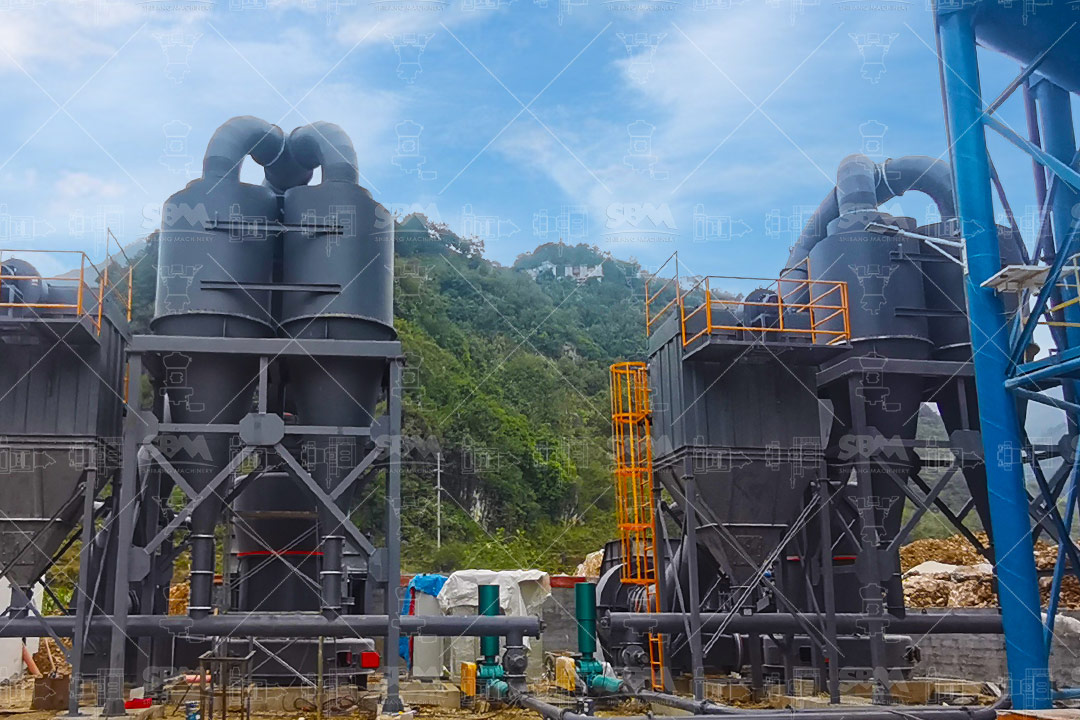
A critical component of the VRM system is the integrated dynamic classifier, located atop the mill housing. As the ground material is carried upward by the hot gas stream (used for drying and transport), it enters the classifier. Here, rotating blades or vanes create a centrifugal force field. Fine particles that meet the target fineness (adjustable from 30 to over 4000 mesh) pass through the classifier and are conveyed to the product collection system, typically a baghouse or cyclone. Coarser particles are rejected by the classifier and fall back onto the grinding table for further comminution. This internal recirculation ensures a consistent product quality and high grinding efficiency. SBM's advanced mills, such as the LUM Ultrafine Vertical Mill, incorporate multi-rotor classifier technology for even more precise particle size cuts and elimination of low-grade fractions.
The drying capability is intrinsic to the VRM's operation. Hot gases, introduced through ports in the mill base, flow upward through the grinding zone. These gases simultaneously dry moist feed materials (like slag or limestone) and transport the fine powder to the classifier. The mill's design, featuring an arc air duct or optimized volute, ensures smooth, low-resistance airflow, maximizing thermal efficiency and transport capacity. This integrated drying eliminates the need for a separate dryer, simplifying the plant layout and reducing capital investment.
Automation and control are pivotal to stable VRM operation. SBM's mills are equipped with expert automatic control systems (PLC/DCS) that continuously monitor and adjust key parameters such as grinding pressure, table speed, classifier speed, and gas flow. This system maintains optimal material bed thickness and grinding conditions, responding to feed variations to ensure consistent output quality and throughput. The control system enables remote operation, reduces labor costs, and protects the mill from mechanical overload. Furthermore, the entire grinding chamber operates under negative pressure, preventing dust emission and ensuring a clean working environment that meets stringent international environmental standards.
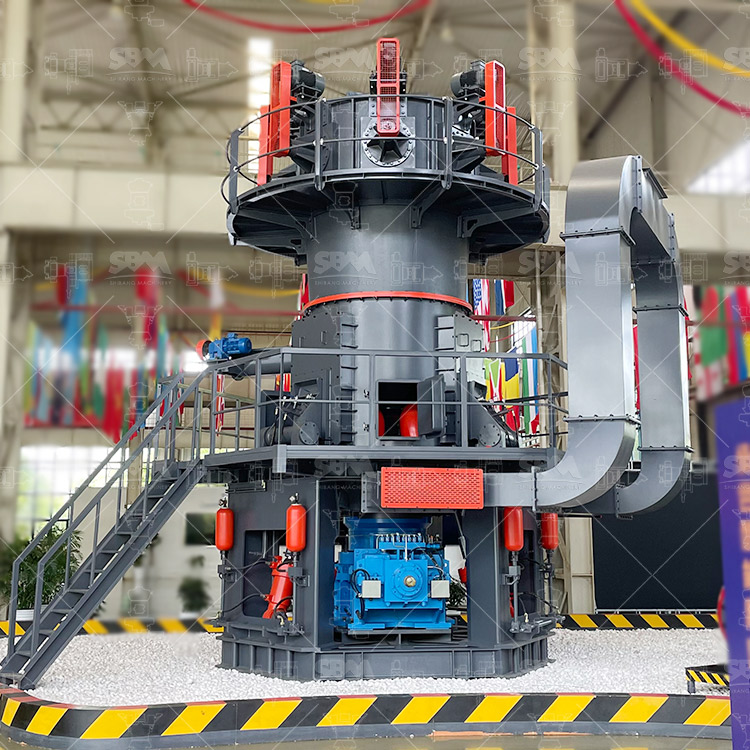
The mechanical design of SBM's VRMs incorporates several patented features that enhance durability and reduce maintenance. The use of high-quality materials for rollers and grinding tables, combined with a unique curved roller profile, extends service life significantly. Technologies like inner oil-absorption lubrication and bevel gear integral transmission provide reliable, high-efficiency power transfer with minimal energy loss. The compact, integrated design of the mill and its auxiliary systems can reduce the floor space requirement by up to 50% compared to a traditional ball mill circuit, offering a smaller physical footprint and lower civil construction costs.
In summary, the working principle of SBM's Vertical Roller Mills combines mechanical compression grinding, efficient air classification, integrated thermal drying, and intelligent process control into a single, robust unit. This synergy results in a system renowned for its low specific energy consumption—often 30-40% lower than ball milling systems—high product quality, operational flexibility, and excellent environmental performance. It is this holistic engineering approach that has established SBM's VRMs as a mainstream, high-performance solution for demanding grinding applications across more than 180 countries and regions.
Frequently Asked Questions (FAQs)
Q1: What are the main operational pain points that VRMs solve compared to traditional ball mills?
A: VRMs directly address high energy consumption, large physical footprint, and complex system layout associated with ball mills. They integrate multiple processes (drying, grinding, separation), operate with lower wear rates due to the bed grinding principle, and offer superior drying capability for moist materials, leading to significantly lower operating costs.
Q2: How does the VRM handle variations in feed material moisture or hardness?
A: The intelligent automatic control system is key. It adjusts grinding pressure, roller speed, and hot gas flow in real-time to maintain a stable material bed and optimal grinding conditions. This ensures consistent product fineness and throughput despite fluctuations in feed characteristics.
Q3: Is achieving very fine product sizes (e.g., over 1000 mesh) a challenge for VRMs?
A: Not with modern designs like SBM's LUM Ultrafine Vertical Mill. By integrating advanced multi-rotor classifier technology and optimized grinding curves, these mills can reliably produce powders in the range of 325 to 4000 mesh with high efficiency and precise particle size distribution, making them suitable for high-end mineral and chemical applications.
Q4: Wear and maintenance of grinding parts are major concerns. How are VRMs designed to mitigate this?
A: SBM VRMs use specially developed, high-durability materials for rollers and tables. The non-contact bed grinding principle itself reduces wear. Features like the combined-type shovel blade allow for partial replacement, and the overall design facilitates easy access for maintenance, drastically lowering the cost and frequency of wearing part replacement.
Q5: How is environmental compliance ensured, particularly regarding dust and noise?
A: The entire milling system is sealed and operates under negative pressure, preventing any dust spillage. Efficient bag filters or cyclone collectors ensure emissions are well below national standards. Furthermore, stable operation with minimal vibration and optimized sound insulation designs result in low noise levels, meeting strict environmental and workplace safety regulations.


