

Putty powder production line fineness
Published on: October 26, 2023
In the competitive world of building materials manufacturing, achieving and maintaining precise fineness in putty powder production is a critical determinant of product quality, performance, and operational efficiency. This article delves into the technological pathways and equipment solutions essential for mastering fineness control, addressing common industry challenges, and exploring how advanced grinding systems from SBM Machinery provide robust, energy-efficient, and scalable answers to these production demands. From traditional ball mills to cutting-edge vertical and ultrafine mills, the journey toward optimal particle size distribution is multifaceted, requiring a deep understanding of material characteristics, process integration, and innovative engineering.
The quest for the perfect putty powder fineness—typically ranging from 200 to 400 mesh for optimal workability, adhesion, and finish—is more than a simple grinding operation. It is a complex interplay between raw material properties, mechanical forces, classification efficiency, and system stability. Inconsistent fineness can lead to a cascade of issues: poor surface smoothness, increased binder consumption, cracking, and ultimately, customer dissatisfaction. Therefore, selecting the right production line configuration is paramount. A holistic approach considers not just the grinding mill itself, but the entire ecosystem, including feeding, drying, classification, and collection, to ensure a seamless and controlled process from lump to premium powder.
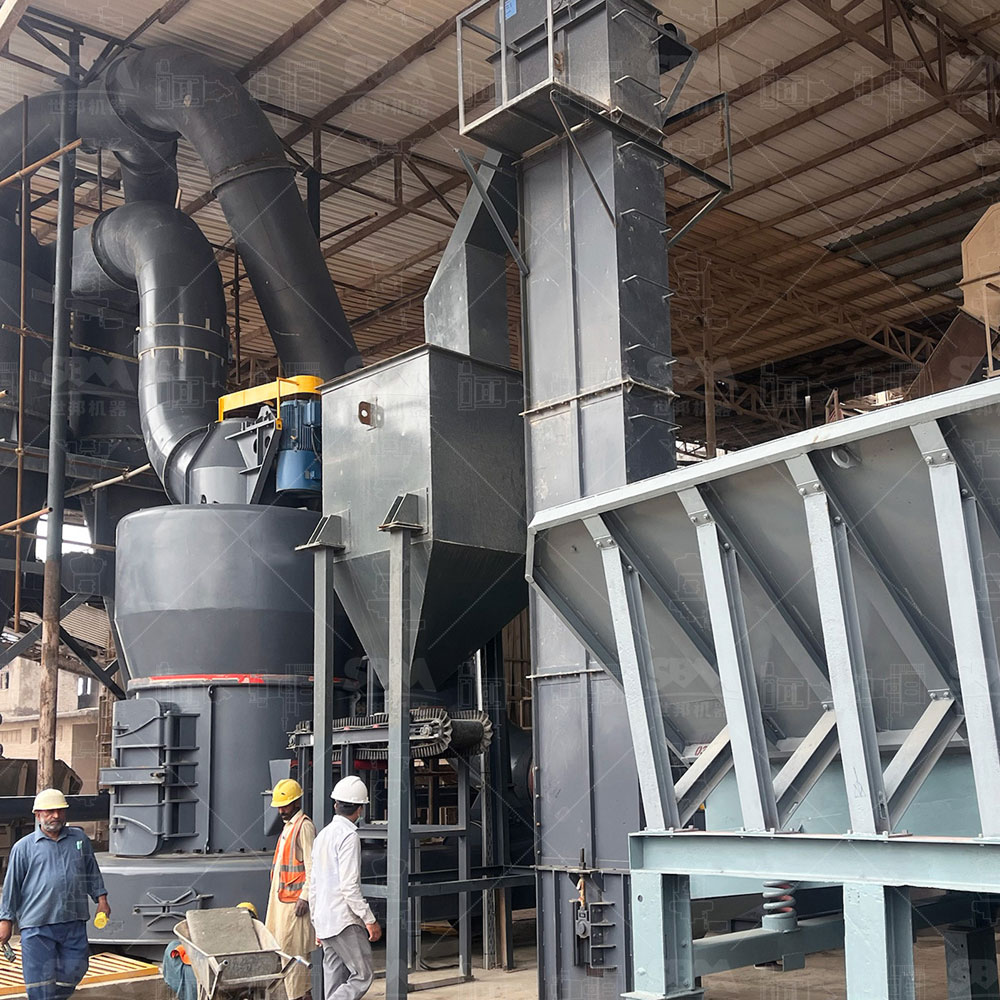
For high-volume production lines where output and energy efficiency are primary concerns, the Vertical Roller Mill (VRM) represents a technological leap. Its integrated design combines drying, grinding, and separation within a single, compact unit. The principle of material bed grinding, where rollers compress and shear the feedstock against a rotating table, allows for exceptionally low specific energy consumption—often 30-40% lower than traditional ball mill systems. This direct grinding mechanism, coupled with advanced static or dynamic classifiers integrated into the mill housing, provides superior control over the particle size distribution. The ability to quickly adjust classifier rotor speed enables operators to fine-tune fineness without stopping production, a crucial feature for maintaining consistent putty powder quality despite variations in raw material moisture or hardness.
When the application demands ultra-fine or highly consistent putty powder, moving beyond the capabilities of standard VRMs becomes necessary. This is where dedicated Ultrafine Grinding Mills excel. Engineered to operate in the realm of 325 to 2500 mesh and beyond, these mills utilize sophisticated grinding mechanics and high-precision turbine classifiers. The grinding elements, often comprising roller and ring sets made from special wear-resistant alloys, work in concert to apply intense mechanical force, reducing particles to micron and sub-micron levels. The heart of fineness control in such systems lies in the classifier. Advanced multi-rotor or vertical turbine classifiers provide sharp particle size cuts, ensuring that no oversized particles contaminate the final product and that the desired narrow distribution curve is achieved reliably. This level of precision is vital for high-grade putty powders used in demanding finishing applications.
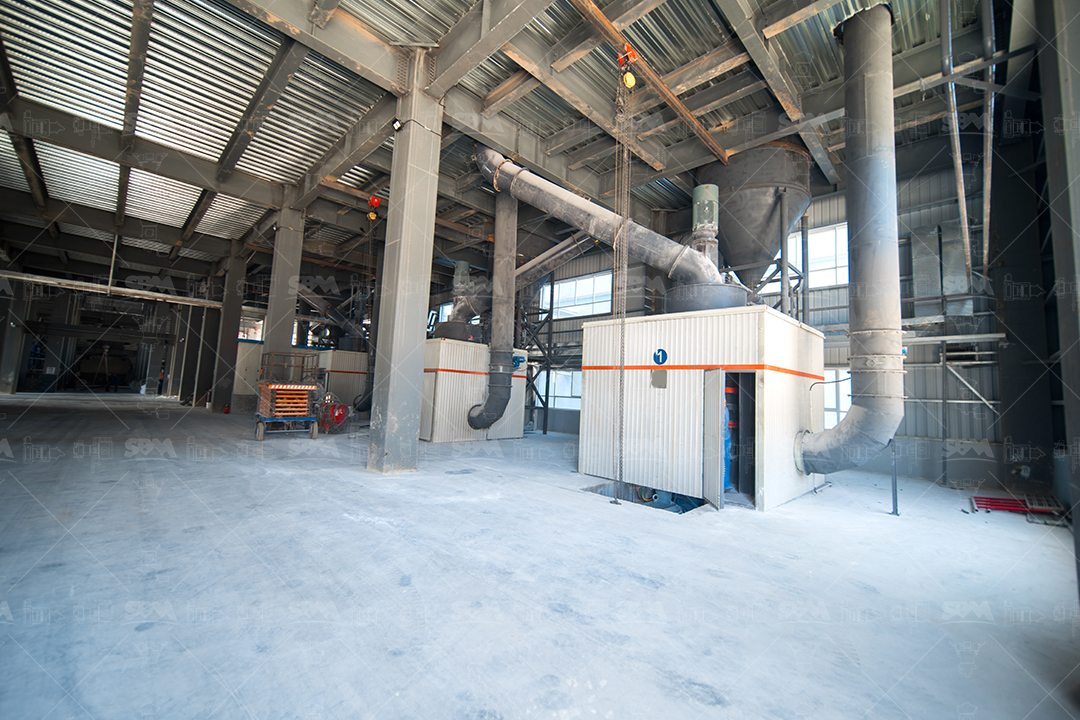
No discussion on fineness is complete without addressing system intelligence and stability. Modern grinding lines from industry leaders are equipped with automated control systems that transform fineness management from an art into a science. PLC/DCS-based systems continuously monitor key parameters such as grinding pressure, classifier speed, fan flow, and motor load. They can automatically adjust these variables in response to feed rate changes or desired fineness setpoints, stabilizing the process and minimizing human error. This automation ensures that the production line delivers a consistent product 24/7, while also optimizing energy use and wear rates on mechanical components. Furthermore, the environmental aspect is seamlessly integrated. Fully sealed systems operating under negative pressure, coupled with high-efficiency baghouse or pulse jet dust collectors, guarantee that the pursuit of fine powder does not come at the cost of a dusty plant environment, aligning production with stringent environmental standards.
Ultimately, designing a putty powder production line for optimal fineness is a task of matching technology to specific project goals—be it maximum throughput, exceptional product fineness, lowest total operating cost, or a combination thereof. It requires a partner with not just equipment, but with process expertise. A provider capable of analyzing raw materials, simulating process flows, and recommending a tailored solution—whether it's a high-capacity Vertical Roller Mill for base production, an Ultrafine Mill for specialty products, or a hybrid system—ensures that the final installation is not just a collection of machines, but a coherent, efficient, and future-proof production asset. This systems-level approach, backed by global operational experience, is what enables manufacturers to turn the challenge of fineness control into a consistent competitive advantage.
Frequently Asked Questions (FAQs)
Q1: We frequently experience fluctuations in final product fineness even with consistent raw material feed. What is usually the root cause?
A: Inconsistent fineness often stems from classifier instability or wear. Check the classifier rotor blades for wear or imbalance, which can affect cutting sharpness. Also, verify the stability of the grinding bed in VRMs or the grinding force in roller mills. Process fluctuations in air flow, feed moisture, or material hardness can also be culprits, highlighting the need for a robust automated control system to dampen these variations.
Q2: Our current ball mill system for putty powder is reliable but extremely energy-intensive. Is there a solution that significantly reduces power consumption?
A: Absolutely. Transitioning to a Vertical Roller Mill (VRM) system is the most effective step. VRMs utilize the material bed grinding principle, which can reduce specific energy consumption by 30% to 40% compared to traditional ball mills. The integrated drying and grinding process further enhances overall system efficiency.
Q3: We aim to produce a higher-value, ultra-smooth finish putty requiring finer powder (e.g., above 600 mesh). Can standard mills achieve this?
A: Standard Raymond or trapezium mills may struggle with efficiency at this range. For consistent, high-yield production of ultrafine putty powder (325-2500 mesh), a dedicated Ultrafine Grinding Mill or Ultrafine Vertical Mill is recommended. These mills incorporate high-precision classifiers and specialized grinding mechanics designed specifically for the ultrafine domain.
Q4: Dust emission and plant cleanliness are major concerns for us. How are modern grinding lines addressing this?
A: Modern systems are designed as fully closed-loop, operating under negative pressure. This means any potential leak is inward, preventing dust escape. This is combined with high-efficiency pulse jet dust collectors (baghouses) that achieve filtration efficiencies over 99.9%. The entire system is engineered to meet strict international environmental standards without compromising production.
Q5: We need to switch between different putty powder recipes with varying fineness requirements. How quickly can a mill adjust?
A: Mills equipped with frequency converters on the classifier motor allow for rapid and stepless adjustment of fineness. By simply changing the classifier rotor speed via the control system, the product fineness can be altered within minutes, often without stopping the mill. This flexibility is a key advantage of advanced vertical roller and ultrafine mill designs over traditional systems.


