

Key equipment for calcium carbonate processing
Published on: October 26, 2023
The successful processing of calcium carbonate, from coarse limestone to high-value fine and ultrafine powders, hinges on the selection of appropriate grinding technology. Key challenges in this industry include achieving target fineness and particle size distribution, managing high energy consumption, controlling operational and maintenance costs, ensuring system stability and environmental compliance, and scaling production efficiently. This article explores core grinding solutions tailored to address these specific needs across the calcium carbonate value chain, highlighting how integrated system design and advanced mill engineering provide a pathway to enhanced productivity and product quality.
For coarse to medium-fine grinding applications, such as producing fillers for plastics, paints, or construction materials, robust and efficient mills are essential. The European Trapezium Mill represents a significant evolution in this segment. Its design incorporates several patented technologies aimed at reducing lifecycle costs. For instance, the unique combined-type shovel blade design allows for the replacement of only the wear-prone blade section, drastically cutting down on spare parts expenditure and maintenance downtime. The integral cone gear transmission system not only enhances mechanical efficiency but also contributes to a more compact footprint, reducing initial infrastructure investment.
_1771777167976.jpg)
When processing capacity and energy efficiency are paramount, especially for large-scale production of ground calcium carbonate (GCC), Vertical Roller Mills (VRM) offer a compelling solution. A primary advantage is their integrated functionality, combining drying, grinding, classification, and conveying into a single unit. This leads to a significantly simpler plant layout, with a footprint roughly 50% smaller than a traditional ball mill system. The grinding principle, where rollers press on a rotating table, is inherently more energy-efficient, typically consuming 30-40% less power than ball mills for the same output. Furthermore, operating under negative pressure ensures a dust-free environment, aligning with stringent environmental standards.
The demand for ultra-fine and nano-sized calcium carbonate products for high-end applications in sealants, pharmaceuticals, and advanced composites requires specialized technology. Ultrafine Mills are engineered for this precise task. These mills can achieve fineness levels up to 4000 mesh, with a one-time pass fineness of D97 ≤ 5μm. Key to their performance is the advanced turbine classifier system, which ensures precise particle size cuts and prevents coarse particle contamination. Additionally, features like frequency-conversion control allow for real-time adjustment of product fineness, providing exceptional flexibility to meet specific customer specifications.
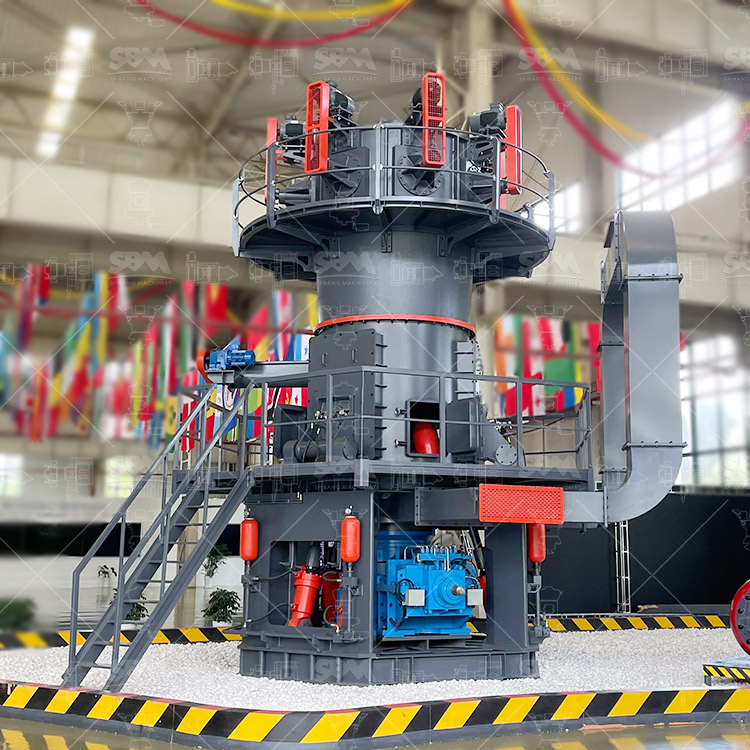
Building on vertical mill technology for the most demanding ultrafine applications, the Ultrafine Vertical Mill integrates high-end grinding roller and powder separation technologies. Its core strength lies in a grinding curve design optimized for ultrafine pulverization, promoting stable material bed formation and improving primary grinding efficiency. Coupled with a multi-rotor classifier, it allows for highly customizable particle size distributions without producing low-grade fractions. The entire process is managed by an intelligent PLC/DCS control system, which automates critical parameters like grinding pressure and classifier speed, ensuring consistent product quality and stable, hands-off operation.
While newer technologies have emerged, Ball Mills remain a reliable and versatile workhorse for certain calcium carbonate processing stages, particularly where wet grinding is required for mineral dressing or specific slurry preparations. Modern optimizations focus on mitigating traditional drawbacks like high wear of grinding media and liners. Through improved structural design and the use of advanced, wear-resistant materials, the operational lifespan of key components is extended, reducing the frequency and cost of replacements. They are often configured as part of a complete circuit to meet specific fineness and capacity requirements where their process characteristics are most advantageous.
Frequently Asked Questions (FAQs)
Q1: We struggle with high energy costs in our grinding circuit. What is the most energy-efficient option for producing 400-mesh GCC?
A: For high-volume production at 400 mesh, a Vertical Roller Mill is typically the most energy-efficient choice. Its grinding mechanism can reduce energy consumption by 30-40% compared to traditional ball mill systems, while its integrated design also minimizes power losses from auxiliary equipment.
Q2: Our target product is a very consistent 2500-mesh powder. Can your equipment achieve this in one pass without multiple classification stages?
A: Yes, our Ultrafine Mill and Ultrafine Vertical Mill are specifically designed for such high-precision applications. They incorporate advanced turbine or multi-rotor classifiers that enable a one-pass production of powders up to 4000 mesh, with tight particle size distribution (e.g., D97 ≤ 5μm), eliminating the need for inefficient multi-stage external classification.
Q3: Dust control and plant cleanliness are major concerns for us. How are these mills addressing environmental compliance?
A: Our grinding systems, especially the Vertical Roller and Ultrafine Mills, are designed as fully sealed systems that operate under negative pressure. This prevents dust escape at the source. They are equipped with high-efficiency pulse dust collectors, ensuring emissions are well below international and national environmental standards, creating a cleaner and safer workplace.
Q4: We experience frequent downtime due to the wear of grinding rollers and rings. How is this issue mitigated?
A: We address wear through multiple strategies: using special, high-durability alloys for rollers and rings; innovative designs like the curved shovel blade in our trapezium mill that reduces abrasive impact; and grinding curve optimization in vertical mills to promote material-bed grinding rather than direct metal-to-metal contact, significantly extending service life and reducing maintenance frequency.
Q5: We need to switch between different product finenesses regularly. Is the process easy to control and adjust?
A> Absolutely. Our modern mills feature intelligent automatic control systems (PLC/DCS) and frequency-conversion drives for key components like classifiers. Product fineness can be adjusted quickly and precisely through the control panel or remotely, enabling fast changeovers between different product specifications with minimal waste or downtime.


