

Sbm: industrial vs. small-scale mills
Published: October 26, 2023
The choice between industrial-scale and small-scale milling solutions represents a critical strategic decision for businesses in the powder processing industry. While small-scale operations prioritize flexibility and lower initial investment, industrial-scale production demands unparalleled efficiency, reliability, and throughput to maintain profitability. Shanghai SBM Machinery Equipment Co., Ltd., as a total solution provider with equipment deployed in over 180 countries, addresses this spectrum of needs through a purpose-built portfolio. From the high-volume, rugged reliability of the MTW European Trapezium Mill and LM Vertical Roller Mill for large-scale projects to the precision and ultra-fine capabilities of the SCM Ultrafine Mill and LUM Ultrafine Vertical Mill for specialized, high-value production, SBM's engineering philosophy bridges the gap. This article explores the technical distinctions, operational advantages, and ideal applications of SBM's industrial versus small-scale milling systems, providing a framework for selecting the optimal technology based on production scale, material characteristics, and long-term operational goals.
Industrial-scale mineral processing is defined by its relentless pursuit of throughput and operational economy. Here, equipment must handle massive feed rates, often exceeding hundreds of tons per hour, while minimizing per-ton energy and maintenance costs. SBM's solutions for this domain, such as the LM Vertical Roller Mill, are engineered as integrated systems. The LM mill's design consolidates crushing, drying, grinding, and classification into a single, compact unit. Its significant advantage lies in a 30-40% reduction in energy consumption compared to traditional ball milling systems, a decisive factor for continuous, high-volume operations. Furthermore, its ability to operate outdoors under negative pressure minimizes infrastructure costs and ensures environmental compliance—a non-negotiable requirement for modern industrial plants.
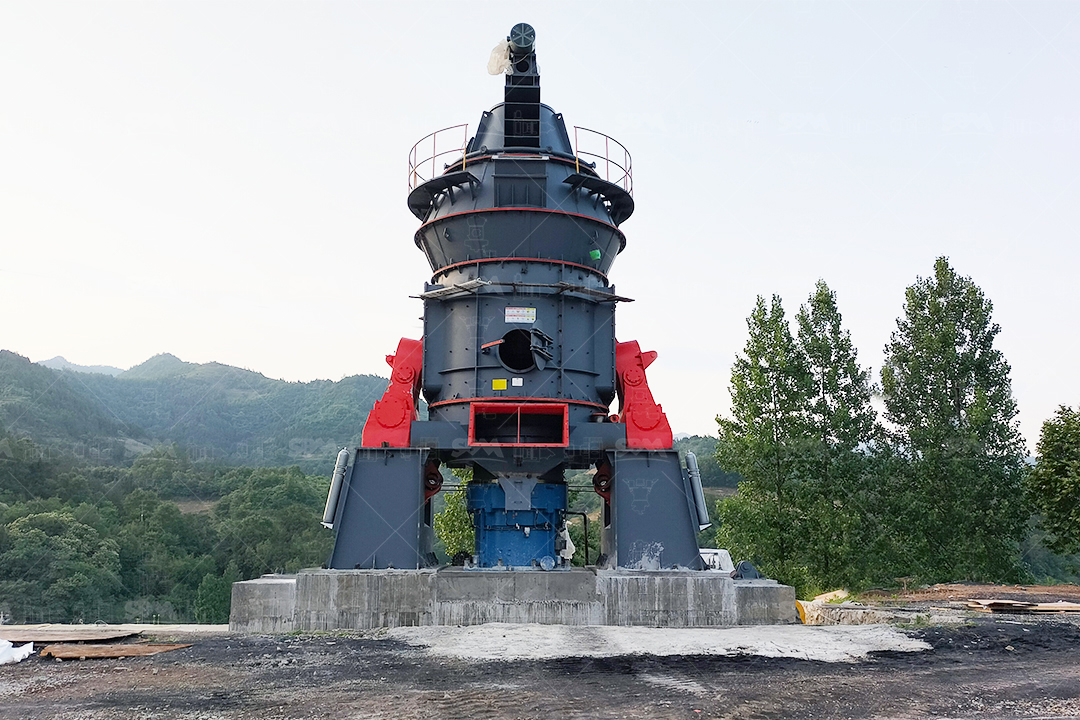
Complementing the vertical mill for certain applications is the MTW European Trapezium Grinding Mill. This mill inherits the robustness of the Raymond mill principle but elevates it with industrial-grade enhancements. Its cone gear whole transmission system ensures higher mechanical efficiency and reliability over long operating cycles. The patented curved shovel blade and arc air duct designs are not minor improvements; they directly combat the primary pain points of wear and pneumatic energy loss, extending component life and stabilizing system airflow. For industrial applications processing materials like desulfurization limestone, petroleum coke, or slag at outputs between 3-40tph, these features translate directly into lower operating costs and reduced downtime.
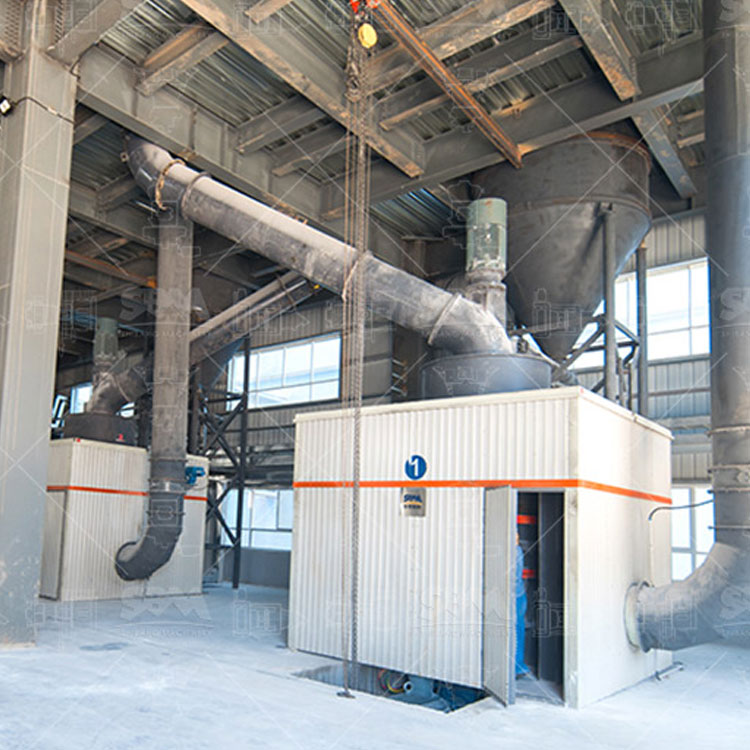
In contrast, small to medium-scale operations, including those in chemicals, new energy materials, or high-value non-metallic minerals, often face a different set of challenges. Here, the priority shifts from sheer volume to product fineness, precision, and flexibility. A batch requiring 2500-mesh powder for advanced composites cannot be efficiently produced on a mill designed for 400-mesh limestone. This is the domain of SBM's ultrafine grinding solutions. The SCM Ultrafine Mill is a standout for operations requiring fineness up to 4000 mesh. Its high-efficiency turbine classifier ensures precise particle size distribution, while its heavy-duty rotor and special material rollers are built for the intense demands of ultrafine grinding, offering durability several times that of conventional components.
The evolution of this technology is embodied in the LUM Ultrafine Vertical Mill, which merges the vertical mill's efficiency with specialized ultrafine capabilities. Integrating German powder-separating technology, it allows for customized fineness with no low-grade material spillover. Its intelligent PLC/DCS control system enables precise, remote adjustment of grinding pressure and classifier speed, making it ideal for producing consistent, high-quality powders for masterbatch, PVC, and other sensitive industries. For a small-scale operation, this level of control and product quality can be a key competitive advantage, enabling entry into niche, high-margin markets.
Even the traditional Ball Mill finds its optimized place in SBM's range. Acknowledging its maturity and persistent challenges like liner/ball wear and energy use, SBM has refined its ball mills with improved structural designs and advanced materials. Offered in both dry and wet process configurations, these mills provide a reliable, well-understood solution for applications where ultra-fineness is not the primary goal, but proven, steady performance is.
Ultimately, the decision is not merely about size but about aligning technology with business strategy. An industrial plant compromising on mill efficiency for a lower upfront cost may face unsustainable operating expenses. Conversely, a specialty chemical startup investing in an overly large, industrial system may suffer from poor flexibility and high capital lock-in. SBM's strength as a total solution provider lies in its ability to analyze the entire workflow—from input size and desired output to capacity requirements and site constraints—to recommend a system that balances scale with sophistication, ensuring that both the small-scale innovator and the industrial producer have a path to efficient, profitable powder processing.
Frequently Asked Questions (FAQs)
1. We are planning a new production line but are concerned about high energy costs. Which SBM mill technology is most effective for reducing long-term operating expenses?
For large-scale production, the LM Vertical Roller Mill is specifically engineered for low energy consumption, using 30-40% less power than traditional ball mill systems. Its integrated design also reduces auxiliary equipment needs. For smaller-scale ultra-fine grinding, the SCM Ultrafine Mill offers high output with energy consumption about 30% lower than comparable jet mills.
2. Our process requires a very consistent and specific particle size distribution (e.g., D97 ≤ 5μm). Can SBM mills achieve this reliably, and how is fineness controlled?
Yes. The LUM Ultrafine Vertical Mill and SCM Ultrafine Mill are designed for precise classification. They employ advanced multi-rotor or high-efficiency turbine classifiers paired with intelligent PLC control systems. This allows for real-time adjustment and stable control of key parameters like classifier speed to ensure the finished product consistently meets tight fineness specifications.
3. Wear part replacement is a major source of our downtime and maintenance cost. How do SBM mills address component wear?
SBM incorporates several patented designs to combat wear. The MTW Mill features a unique combined-type curved shovel blade that only requires blade replacement, not the entire holder. The LM Vertical Roller Mill's grinding rollers do not directly contact the plate, and both are made from special, long-life materials. Ultrafine mills use rollers and rings made from specially formulated materials for several times the durability of standard parts.
4. We have limited factory space and need a simple, compact layout. What options do we have?
The LM Vertical Roller Mill is an excellent choice, as it integrates multiple functions (drying, grinding, separation) into one unit, occupying about 50% of the space of a ball mill system and can be installed outdoors. For ultra-fine grinding, the vertical design of the LUM mill also offers a significantly smaller footprint compared to complex horizontal milling circuits.
5. Environmental compliance and dust control are critical for our site. Are SBM milling systems sealed and clean in operation?
Absolutely. SBM's modern mill designs, particularly the LM and LUM vertical mills, operate under fully sealed, negative-pressure systems. This prevents dust spillage entirely. They are also engineered for low vibration and noise, with optional sound insulation. The ultrafine mills feature efficient multi-stage dust collection systems that far exceed international emission standards.


