

Mills help mining companies save resources
Published: October 26, 2023
In an era of tightening margins and heightened environmental responsibility, mining and mineral processing operations face relentless pressure to optimize resource consumption—spanning energy, water, raw materials, and operational budgets. Traditional grinding equipment, often characterized by high wear rates, substantial energy demands, and complex maintenance cycles, represents a significant bottleneck. This article explores how modern, engineered grinding solutions from SBM Machinery directly address these challenges by enhancing efficiency, durability, and system intelligence, thereby delivering substantial, measurable resource savings across the entire comminution process.
The core of mineral processing lies in size reduction, a stage notoriously energy-intensive, accounting for a major portion of a site's power draw. Conventional mills can be profligate in their consumption, but next-generation designs fundamentally alter this equation. Take the LM Vertical Roller Mill as a prime example. Its integrated design combines crushing, drying, grinding, and separation into a single, compact unit. This consolidation alone reduces the plant footprint by approximately 50% compared to traditional ball mill systems, slashing initial civil and structural investment. More critically, its grinding principle—where rollers directly grind material on a table under hydraulic pressure—achieves a staggering 30-40% reduction in specific energy consumption. This is not a marginal gain; for a large-scale operation, it translates to megawatt-hours of saved electricity daily, directly lowering operational costs and carbon footprint.
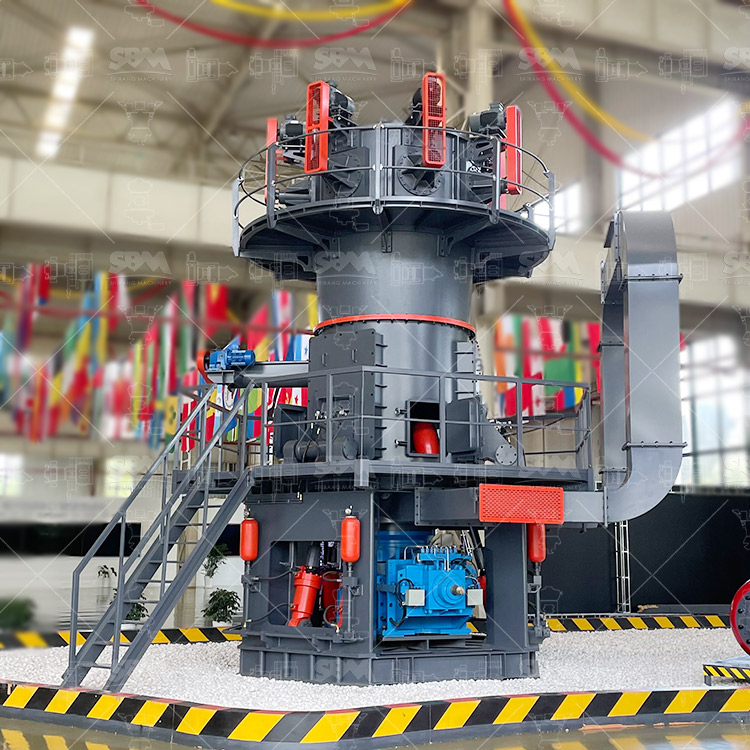
Beyond energy, the preservation of mechanical components is a constant battle against abrasion and downtime. Unplanned stoppages for part replacement are not just costly in terms of parts; they represent lost production time and labor. SBM's engineering tackles this through intelligent design and material science. The MTW European Trapezium Mill features a patented combined-type shovel blade. Instead of replacing an entire assembly, only the worn blade segment needs changing, drastically cutting spare parts inventory and maintenance time. Its curved blade design also optimizes material feed, reducing abrasive wear on the grinding roller and ring, extending their service life. Similarly, the SCM Ultrafine Mill utilizes rollers and rings forged from special materials, offering durability several times greater than conventional options. This focus on reducing wear rates directly conserves raw materials (the metal used in parts) and minimizes waste, while the extended lifecycle lowers the total cost of ownership.
For operations targeting ultra-fine powders, efficiency challenges multiply. Older technologies like jet mills or basic Raymond mills struggle with high energy use and inconsistent product quality. The LUM Ultrafine Vertical Mill and SCM series address this with advanced separation technology. The LUM mill employs a multi-rotor powder classifier, ensuring precise particle size cuts and eliminating the recirculation of low-grade, oversized material. This precision means more usable product from the first pass, saving the energy that would be wasted re-grinding off-spec material. The SCM Ultrafine Mill boasts an output more than double that of a jet mill while consuming 30% less energy, a testament to its efficient grinding dynamics and intelligent, automated control systems that maintain optimal parameters.
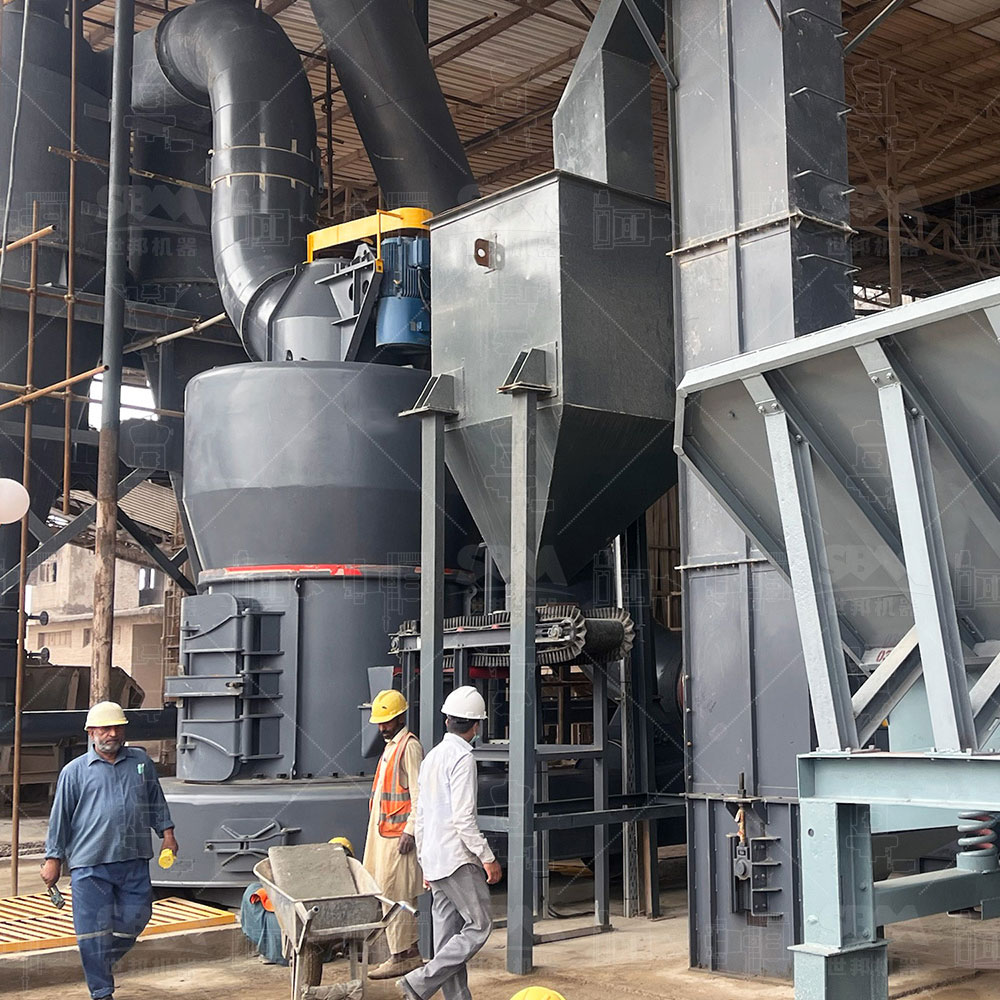
Resource saving also encompasses environmental stewardship and human resources. All advanced SBM mills are designed for closed-system, negative-pressure operation, virtually eliminating dust spillage. This protects the workplace, saves valuable product from becoming airborne waste, and ensures compliance with stringent environmental standards without the need for excessive secondary filtration. Furthermore, the integration of expert automatic control systems (like PLC/DCS) allows for remote operation and monitoring. This automation reduces the labor intensity of mill operation, allows for predictive maintenance based on real-time data, and enables precise control over grinding conditions, preventing energy waste from sub-optimal running. The stability of these mills—with features like balanced grinding chambers and advanced damping—results in low noise and vibration, preserving both equipment integrity and a better working environment.
Even mature technologies like the Ball Mill have been re-examined and optimized. By improving structural design and adopting wear-resistant materials, SBM has mitigated the classic pain points of high liner/ball wear and energy consumption, offering reliable dry and wet grinding solutions that extend service life and reduce consumable costs. In conclusion, modern grinding technology is no longer just about pulverizing rock; it is a strategic lever for resource conservation. By investing in mills engineered for lower energy draw, longer component life, intelligent control, and environmental containment, mining companies can achieve a more sustainable, cost-effective, and resilient operation, turning the grinding circuit from a resource drain into a pillar of efficiency.
Frequently Asked Questions (FAQs)
- Q: Our current grinding circuit has extremely high energy bills. Can new mill technology realistically make a significant difference?
A: Absolutely. Modern mills like the LM Vertical Roller Mill are designed specifically for energy efficiency, documented to reduce specific energy consumption by 30-40% compared to traditional ball mill systems. This translates directly into lower operational costs and a reduced carbon footprint. - Q: We experience frequent downtime due to the wear and tear of grinding rollers and rings. How can this be improved?
A: Advanced designs focus on wear reduction. The MTW Mill's segmented shovel blade allows for partial replacement, and both SCM and LUM mills use specially formulated materials for rollers and rings, offering several times the lifespan of conventional parts, drastically reducing downtime and spare parts costs. - Q: Dust control is a major environmental and housekeeping challenge for us. Are your mills sealed effectively?
A: Yes. Our vertical roller mills and ultrafine mills operate under negative pressure in a fully sealed system. This design principle prevents dust spillage at the source, ensuring a cleaner plant, protecting worker health, and helping you meet strict environmental regulations. - Q: We need to produce very fine powders, but our current equipment is inefficient and yields are inconsistent. What solutions exist?
A: For ultrafine grinding, the LUM Ultrafine Vertical Mill and SCM Ultrafine Mill are ideal. They feature high-precision classifiers that ensure consistent, on-spec product from the first pass, eliminating energy waste on re-grinding. The SCM mill, for instance, offers higher output and lower energy use than conventional jet mills. - Q: Is the shift to more automated, advanced mills complex and labor-intensive to manage?
A: On the contrary, these mills are designed for easier operation. They come equipped with expert automatic control systems (PLC/DCS) that allow for remote monitoring and control, simple parameter setting, and stable, automated operation. This reduces the manual labor required and enables optimization based on real-time data.


