

Difference: jet mills vs. mechanical mills
Published: October 26, 2023
In the world of industrial powder processing, selecting the right grinding technology is pivotal for operational efficiency, product quality, and cost-effectiveness. The core distinction lies between two fundamental principles: jet milling (or fluid energy milling) and mechanical milling. Jet mills utilize high-velocity compressed gas or steam to achieve particle-on-particle impact, excelling in producing ultra-fine, contamination-free powders with narrow particle size distributions. Mechanical mills, encompassing a broad category including ball mills, vertical roller mills, and Raymond mills, rely on physical forces—impact, compression, and attrition—generated by moving mechanical parts. As a total solution provider with equipment deployed in over 180 countries, SBM Machinery designs systems across both paradigms, understanding that the optimal choice is dictated by specific material properties, target fineness, capacity requirements, and total cost of ownership.
Jet mills operate on a simple yet highly effective principle. Material is fed into a chamber where it is entrained in streams of compressed air, steam, or inert gas. These streams are directed so that particles collide with each other at high velocities, resulting in size reduction primarily through inter-particle impact and attrition. The absence of moving grinding media or rotors that contact the material is its hallmark advantage, making it ideal for heat-sensitive, abrasive, or high-purity materials where contamination is a critical concern. The process inherently provides excellent cooling and can achieve very fine (sub-micron) and uniform particle sizes. However, this comes with relatively high energy consumption for gas compression and typically lower throughput capacities compared to large-scale mechanical systems.
Mechanical mills, the workhorses of mineral processing and bulk powder production, apply force through direct mechanical action. SBM's portfolio, such as the Ball Mill, LM Vertical Roller Mill, and MTW European Trapezium Mill, exemplifies this category. In a ball mill, for instance, the grinding media (metal or ceramic balls) tumble within a rotating cylinder, crushing and grinding the material through impact and attrition. The recently optimized designs from SBM focus on reducing wear and energy consumption—historical pain points for users. The Vertical Roller Mill (LM series) represents a significant advancement, integrating drying, grinding, and classification in a single compact unit. Its rollers grind material on a rotating table, offering energy savings of 30-40% compared to traditional ball milling systems, a direct response to the industry's drive for lower operating costs.
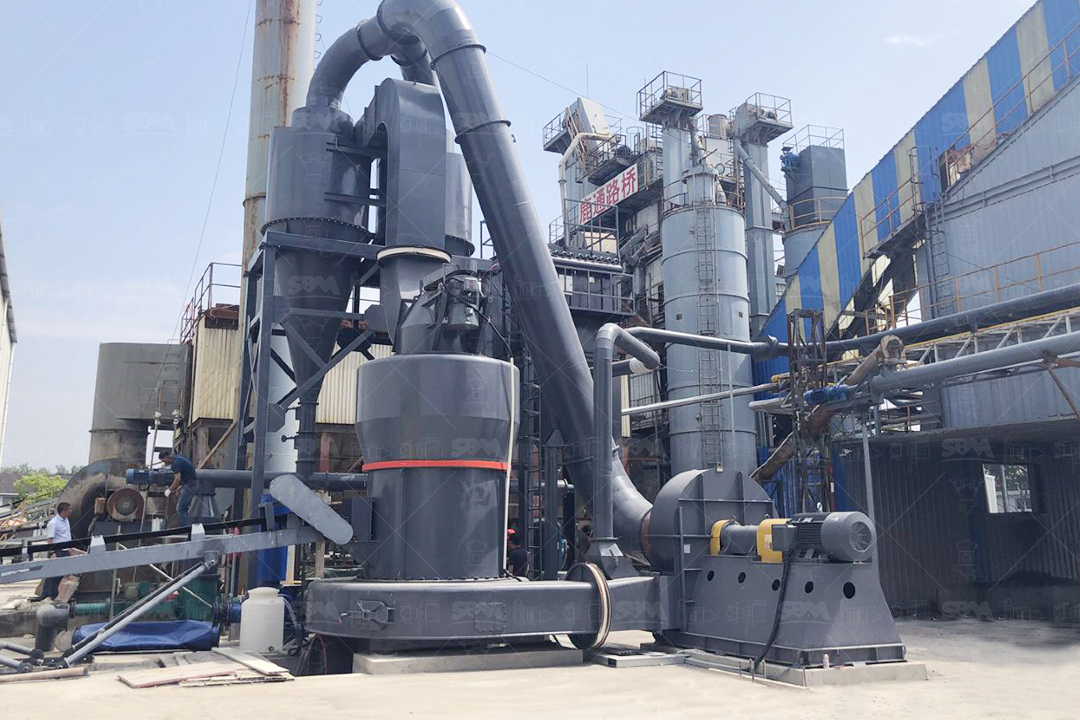
The choice between these technologies often boils down to the final product specification. For ultra-fine processing beyond 400 mesh (approximately 38 microns) and extending to 2500 mesh (5 microns), both jet mills and specialized mechanical mills like SBM's SCM Ultrafine Mill or LUM Ultrafine Vertical Mill are contenders. The SCM series, for example, achieves fineness up to D97≤5μm with a capacity more than twice that of typical jet mills while consuming 30% less energy. This highlights a key trend: modern mechanical mills are closing the performance gap in the ultrafine range while offering superior energy efficiency and higher throughput for many materials, from calcium carbonate to slag micro-powder.
Operational and economic considerations are equally decisive. Jet mills, with their minimal moving parts in contact with the product, offer lower maintenance on wear parts but incur high costs for gas generation and filtration. Their system is often simpler in layout. Mechanical mills, particularly advanced designs, present a different value proposition. The LM Vertical Roller Mill's integrated design reduces floor space by 50% and allows outdoor installation, lowering civil investment costs. Features like inner oil-absorption lubrication (MTW series) and special material rollers/linings dramatically extend service life, addressing the perennial customer pain point of frequent, costly part replacement. Furthermore, the widespread adoption of automatic control systems across SBM's mechanical mills enables remote operation, stable process control, and direct labor cost savings.
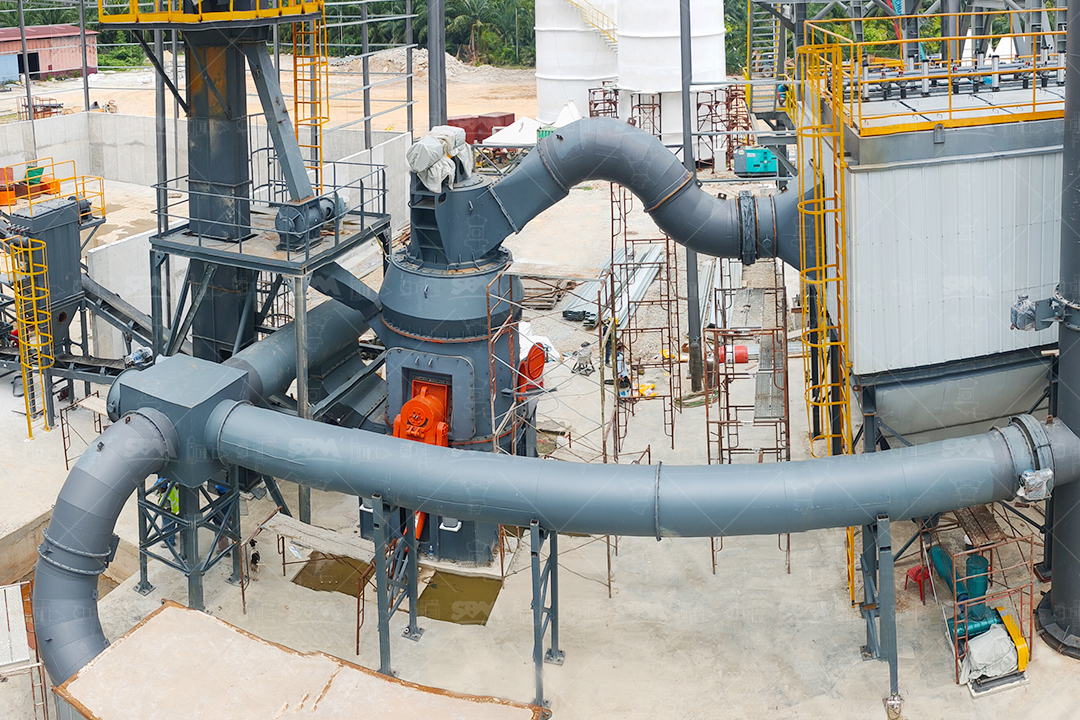
Ultimately, the decision is not merely jet versus mechanical but involves selecting the right mechanical mill type for the application. For heavy-duty, large-capacity grinding of limestone for desulfurization or raw materials in cement, the robust MTW or LM series is often optimal. For specialized, high-value ultrafine products in chemicals or new energy materials, the LUM or SCM series provides the precision and fineness. SBM's role as a total solution provider is to analyze the entire workflow—from feed size and moisture to desired capacity and fineness—to recommend a system that balances performance, longevity, and total operational cost, ensuring our clients remain competitive in the global powder processing industry.
Frequently Asked Questions (FAQs)
1. We need very fine powder but are concerned about the high energy cost of jet mills. Is there an alternative?
Yes. Modern ultrafine mechanical mills like the SCM Series or LUM Ultrafine Vertical Mill are designed specifically for this challenge. They can achieve comparable fineness (e.g., D97≤5μm) while offering significantly higher throughput and energy savings of up to 30-40% compared to many jet milling systems, making them a cost-effective solution for large-scale ultrafine production.
2. Wear part replacement in our old ball mill is frequent and expensive. How do newer mechanical mills address this?
Advanced designs directly target this pain point. For instance, our MTW Mill features a unique wear-proof shovel blade design where only the blade tip needs replacement, and its curved shape prolongs roller and ring life. Vertical Roller Mills use high-quality materials for rollers and grinding plates, and the roller does not directly contact the plate, reducing wear and extending service life considerably.
3. Can mechanical mills handle heat-sensitive materials as well as jet mills?
While jet mills excel with extreme heat sensitivity due to adiabatic cooling, many modern mechanical mills integrate effective drying and cooling functions. Vertical Roller Mills with integrated drying and grinding, and systems operating under negative pressure with controlled air flow, can successfully process many moderately heat-sensitive materials efficiently.
4. Our project has limited space. Are these grinding systems compact?
Absolutely. Integrated mechanical mills like the LM Vertical Roller Mill are champions of space efficiency. They combine crushing, drying, grinding, and separation in one unit, with a footprint about 50% of a traditional ball mill system. Their compact, vertical layout often allows for outdoor installation, freeing up valuable plant space.
5. How difficult is it to control fineness and ensure consistent product quality?
Today's mills are equipped with intelligent control systems to simplify this. Models like the LUM Ultrafine Vertical Mill use advanced multi-rotor classifiers and PLC/DCS control to allow precise, customizable fineness adjustment. Automated feedback systems maintain stable product quality with minimal manual intervention, ensuring consistent output batch after batch.


