

What is carbon black? its applications?
Published: October 26, 2023
Carbon black is a fine, powdered form of elemental carbon produced through the incomplete combustion or thermal decomposition of hydrocarbons. It is a critical industrial material prized for its reinforcing properties in rubber (especially tires), its pigmenting capabilities in inks, coatings, and plastics, and its conductive properties in batteries and other electronic applications. Processing carbon black to the required fineness and uniformity presents significant challenges, including high energy consumption, equipment wear, and dust control. This article explores the nature and uses of carbon black and examines how modern grinding technologies, such as those offered by SBM Machinery, provide efficient, reliable, and environmentally sound solutions for its production.
Understanding Carbon Black: More Than Just a Pigment
At its core, carbon black consists of aggregates of spherical carbon particles (nodules) fused into complex, three-dimensional structures. Its primary function is not merely coloration; it is a performance-enhancing additive. In rubber compounds, particularly for automotive tires, it dramatically improves tensile strength, abrasion resistance, and overall durability. In plastics, it provides UV protection and conductivity. In inks and coatings, it delivers deep jet-black color and stability. The value of carbon black is directly tied to its particle size, structure, and surface chemistry, all of which are influenced and refined during the milling and classification stages of production.
Key Applications Driving Demand
The versatility of carbon black ensures its place in a vast array of industries:
- Rubber Reinforcement: Consuming approximately 70% of global production, the tire industry is the largest user. Carbon black reinforces the rubber, increasing tread life and resistance to wear and tearing.
- Plastics and Polymers: Used as a pigment, UV stabilizer, and conductive filler in products ranging from automotive parts and pipes to electronic device housings.
- Inks and Coatings: Provides intense color, dispersion stability, and rheological control in printing inks, automotive paints, and industrial coatings.
- Specialty Applications: Includes use as a conductive agent in lithium-ion batteries, a component in toners, and a performance additive in construction materials like sealants and films.
The Processing Challenge: From Raw Material to Precision Powder
Transforming raw carbon black feedstock into a consistent, high-quality powder suitable for these demanding applications is non-trivial. The material can be abrasive, requiring robust equipment. Achieving ultra-fine fineness (often into the micron and sub-micron range) demands precise grinding and classification. Furthermore, the process must be energy-efficient and contained to prevent product loss and environmental contamination from black dust. This is where advanced milling technology becomes indispensable.
_1773246167689.jpg)
SBM Grinding Solutions: Engineered for Carbon Black Excellence
With decades of experience serving the global powder processing industry across over 180 countries, SBM Machinery has developed a suite of grinding mills that address the specific pain points in carbon black processing. Our equipment is designed to handle the entire workflow, from coarse grinding to ultra-fine pulverization, with a focus on reliability, lower operating costs, and environmental compliance.
1. For High-Capacity & Efficient Grinding: MTW European Trapezium Mill
Ideal for producing carbon black powders in the 30-400 mesh range for many rubber and plastic applications, the MTW Series mill incorporates patented technology to reduce operating costs. Its unique curved shovel blade design minimizes wear on critical parts, extending service life. The cone gear whole transmission ensures higher mechanical efficiency and stability, while the arc air duct design optimizes airflow to reduce energy loss during powder transport. This mill is a robust workhorse for consistent, high-volume production.
2. For Integrated Drying & Grinding: LM Vertical Roller Mill
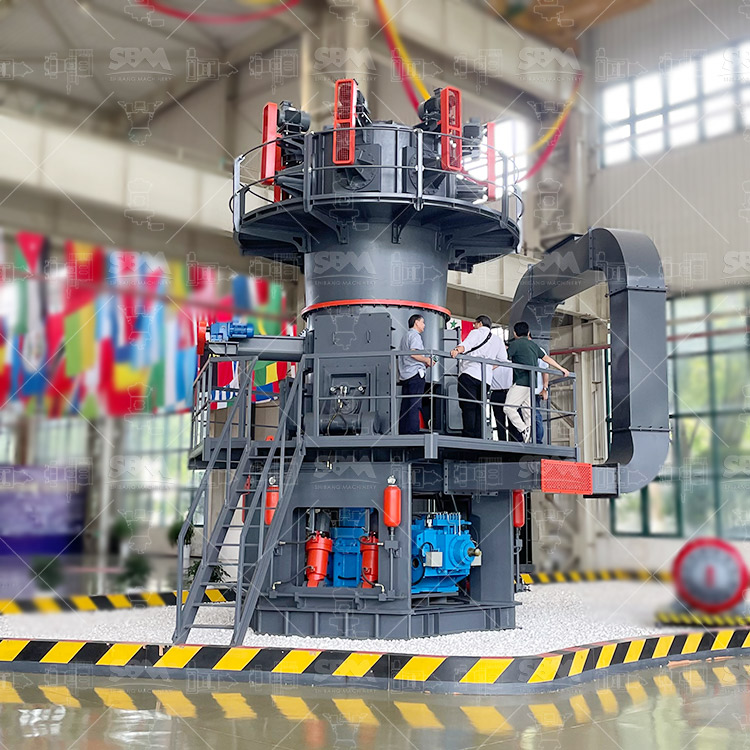
When processing requires simultaneous drying and grinding, the LM Vertical Roller Mill offers a compact, efficient solution. It integrates multiple functions into one unit, reducing floor space by up to 50% compared to traditional systems. Its grinding principle, where rollers grind material on a plate without direct metal-to-metal contact, results in significantly lower wear and energy consumption—up to 40% less than ball mills. The fully automated control system and sealed, negative-pressure operation make it a clean and labor-saving choice.
3. For Ultra-Fine and High-Value Products: SCM Ultrafine Mill & LUM Ultrafine Vertical Mill
For specialty carbon blacks requiring fineness from 325 to 4000 mesh (such as those for high-grade inks, coatings, or conductive applications), SBM's ultrafine solutions excel. The SCM Ultrafine Mill delivers high output with energy consumption about 30% lower than jet mills, featuring an intelligent control system for stable product quality. Its heavy-duty rotor and special material rollers ensure durability against abrasive materials.
The LUM Ultrafine Vertical Mill represents the pinnacle of technology, integrating German powder separation know-how. Its unique grinding curve design promotes efficient material-bed grinding, while the multi-rotor classifier allows precise, customizable cut points to ensure no coarse particles contaminate the final product. This level of control is essential for achieving the strict specifications of high-end applications.
4. For Proven Reliability: Optimized Ball Mill
For certain carbon black processing routes, a ball mill remains the preferred technology. SBM's optimized ball mills address traditional drawbacks like high liner/ball wear and energy consumption. Through structural improvements and advanced materials, we have extended component life and reduced maintenance costs, offering both dry and wet grinding configurations to suit specific process needs.
Conclusion: Partnering for Performance
Selecting the right grinding technology is paramount to unlocking the full value of carbon black in your end products. It's a balance of achieving target fineness, maximizing throughput, minimizing total cost of ownership, and ensuring a clean, safe operation. SBM Machinery, as a total solution provider, offers not just equipment but a partnership. Our range of mills, from the high-capacity MTW and LM series to the precision-focused SCM and LUM ultrafine mills, is backed by global expertise to help you navigate these challenges and build a competitive, future-ready carbon black processing line.
Frequently Asked Questions (FAQs)
Q1: Our current mill for carbon black suffers from rapid roller and ring wear, leading to frequent downtime and high spare parts costs. Is there a solution?
A: Absolutely. This is a common pain point. SBM's MTW and SCM mills feature special material rollers and rings, along with designs like the curved shovel blade that reduce abrasive wear. This can extend service life several times over, drastically lowering your operating costs and improving production continuity.
Q2: We need to produce very fine carbon black (below 5μm), but our existing equipment cannot reach this fineness consistently, and output is low.
A: For consistent ultra-fine grinding, our SCM Ultrafine Mill and LUM Ultrafine Vertical Mill are specifically engineered for this task. With advanced classifier technology, they can reliably achieve fineness up to 4000 mesh (D97 ≤ 5μm) while maintaining higher output and lower energy use compared to conventional jet mills.
Q3: Energy consumption is our biggest cost driver. Do your mills offer real efficiency improvements?
A: Yes. Technologies like the cone gear drive in the MTW mill, the material-bed grinding principle in the LM and LUM vertical mills, and optimized rotor designs can reduce energy consumption by 30% to 40% compared to traditional ball milling or Raymond mill systems, offering a significant reduction in your operational expenses.
Q4: Dust control in carbon black milling is a major environmental and housekeeping concern. How do your systems address this?
A: All SBM grinding systems are designed with environmental protection as a core principle. They operate under fully sealed, negative pressure conditions, preventing dust spillage. Coupled with efficient pulse dust collectors and bag filters, our systems ensure a clean workshop and emissions that meet stringent international environmental standards.
Q5: We are planning a new production line and are concerned about space constraints and the complexity of integrating multiple machines.
A: Our vertical roller mills (LM & LUM series) are ideal for space-saving. They integrate crushing, drying, grinding, and classification in a single, compact unit, occupying about 50% less space than a traditional ball mill system. Furthermore, as a total solution provider, SBM can deliver and integrate the complete system, simplifying your project and ensuring all components work together seamlessly.


