

Raymond mill for carbonate non-metallic minerals
Published: April 15, 2026
In the processing of carbonate non-metallic minerals such as calcite, marble, limestone, dolomite, and talc, the choice of grinding equipment directly impacts production efficiency, product quality, and operational cost. Traditional Raymond mills have long been the workhorse for fine powder production in the 30–400 mesh range, but modern industrial demands for higher throughput, finer fineness, lower energy consumption, and stricter environmental compliance have driven significant innovation. Shanghai SBM Machinery Co., Ltd. has addressed these challenges by developing a complete portfolio of grinding solutions, with the MTW European Trapezium Grinding Mill (often referred to as the MTW Raymond Mill) standing as a benchmark for carbonate non-metallic mineral processing. This article provides a detailed technical analysis of modern Raymond mill technology, compares it with complementary equipment such as vertical roller mills and ultrafine mills, and addresses the common pain points that plant operators face when selecting and operating milling systems for carbonate minerals.
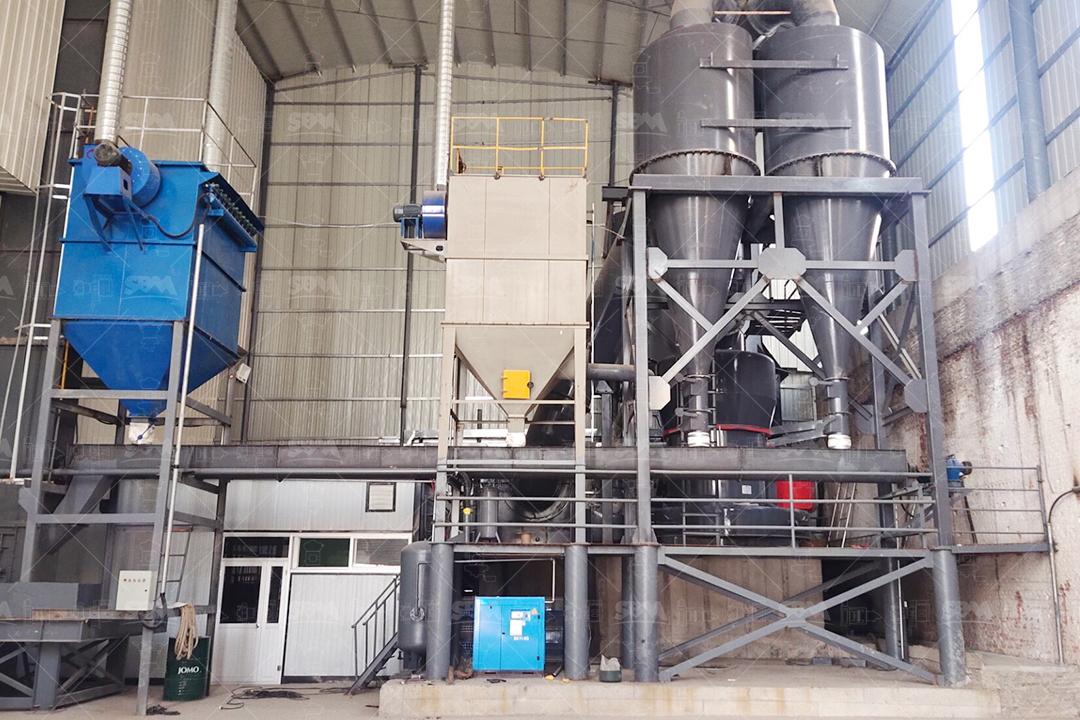
Technical Evolution of Raymond Mills for Carbonate Minerals
The grinding of carbonate non-metallic minerals presents unique challenges. These materials are typically soft to medium-hard (Mohs hardness 3–4 for calcite, 3.5–4 for dolomite) but can be abrasive due to quartz impurities. Traditional Raymond mills often suffered from high wear rates on grinding rollers and rings, low energy efficiency due to friction losses, and inconsistent product fineness. The MTW European Trapezium Grinding Mill directly addresses these issues through several patented innovations.
Cone Gear Whole Transmission replaces the traditional belt or gearbox drive with a bevel gear integral transmission. This design delivers higher transmission efficiency (above 98%), saves installation space, and reduces maintenance frequency. For carbonate mineral processors running 24/7 operations, this translates directly into higher uptime and lower investment in spare parts.
Unique Wear-Proof Perching Knife Design is another critical advancement. The combined-type shovel blade reduces replacement costs because only the blade itself needs changing during maintenance—not the entire assembly. Furthermore, the curved shovel blades optimize the feeding angle, ensuring that material is continuously directed between the roller and grinding ring. This design extends the service life of both rollers and rings, reducing operating costs by up to 15–20% compared to conventional Raymond mills.
Arc Air Duct Design minimizes air energy loss within the mill. The circular duct maintains efficient pneumatic material transport, while high-strength guard plates protect the air duct working surface from wear. This is particularly important for carbonate minerals, which can generate fine dust that accelerates abrasion in conventional straight-duct designs.
For applications requiring output sizes from 30 to 400 mesh with capacities between 3 and 40 tons per hour, the MTW Raymond mill offers an ideal balance of fineness control and throughput. Input size up to 50mm allows direct feeding from primary crushers, simplifying the circuit design.
Comparing Raymond Mill Technology with Alternative Solutions
While the MTW Raymond mill excels in the medium-fineness range (30–400 mesh), many carbonate mineral processors require finer products or higher capacities. SBM’s equipment lineup provides scalable solutions:
LM Vertical Roller Mill is designed for large-capacity operations (3–400 tph) with integrated drying, grinding, and powder selection. For carbonate minerals with surface moisture up to 15%, the LM mill can simultaneously dry and grind. Its compact layout occupies only about 50% of the floor space required by a ball mill system, and energy consumption is 30–40% lower. The automatic control system enables remote operation, reducing labor costs. This makes the LM mill ideal for large-scale GCC (ground calcium carbonate) plants producing fillers for paper, paint, and plastics.
SCM Ultrafine Mill targets the high-end market requiring product fineness between 325 and 2500 mesh (D97 ≤ 5μm). For carbonate minerals used in masterbatch, PVC, artificial stone, and non-woven fabrics, the SCM mill achieves twice the capacity of jet mills with 30% lower energy consumption. The efficient vertical turbine powder classifier ensures sharp cut sizes without coarse powder spillover—a common complaint with traditional ultrafine grinding systems.
LUM Ultrafine Vertical Mill combines vertical mill technology with Taiwan grinding roller technology and German powder classification technology. It handles input sizes up to 20mm and produces output from 325 to 4000 mesh with capacities up to 70 tph. The multi-rotor classifier design allows customization of finished product fineness, and the PLC/DCS automatic control system precisely manages grinding pressure, disc speed, and classifier speed.
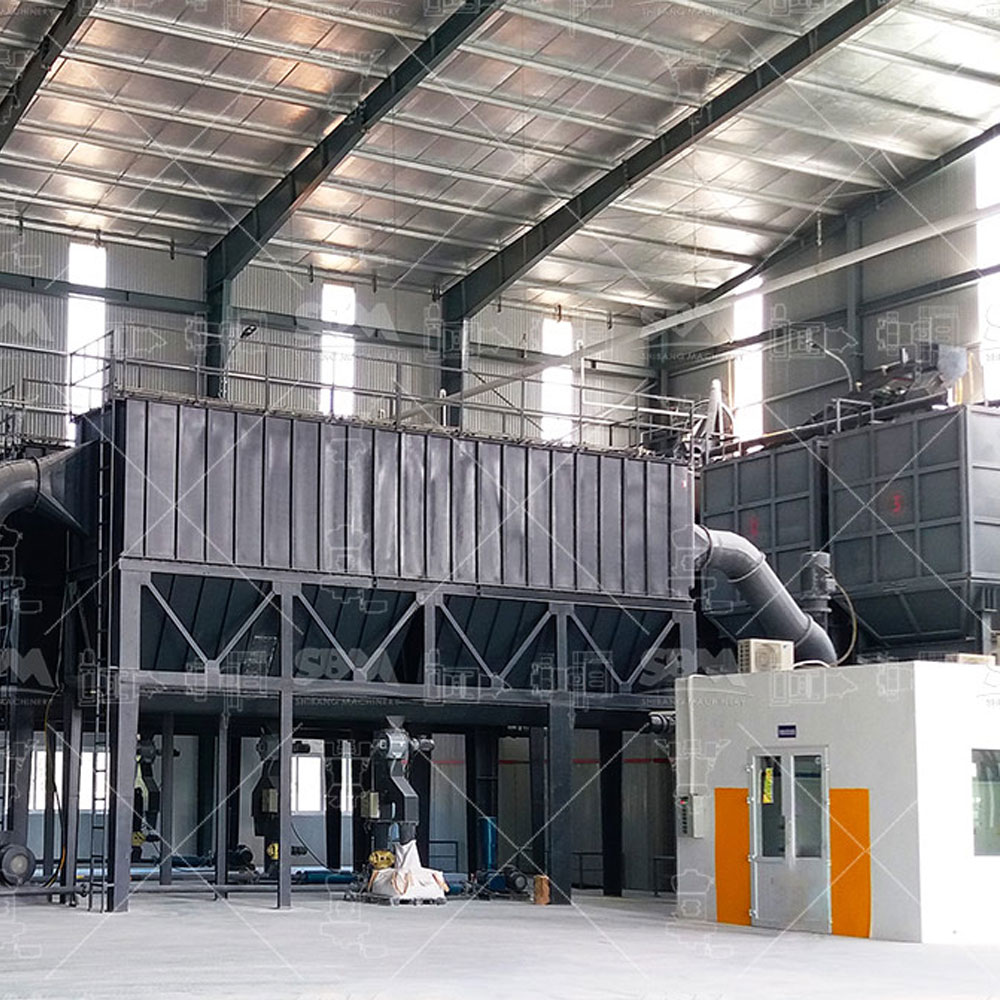
Addressing Common Pain Points in Carbonate Mineral Grinding
Through serving over 180 countries and regions, SBM has identified several recurring challenges faced by operators of Raymond mills and other grinding equipment for carbonate non-metallic minerals:
1. High Wear Parts Replacement Frequency – Traditional Raymond mills require frequent replacement of grinding rollers, rings, and shovel blades. The MTW mill’s combined-type shovel blade and curved design reduce this frequency by 30–50%. Additionally, the use of special wear-resistant materials in the LM and LUM mills extends roller and ring life several times compared to standard alloys.
2. Inconsistent Product Fineness – Many operators struggle with particle size distribution variations, especially when switching between different carbonate minerals. The MTW mill’s cone gear transmission ensures stable rotational speed, while the SCM and LUM mills feature frequency-conversion control for precise fineness adjustment. The efficient classifier systems eliminate the problem of coarse powder contamination.
3. High Energy Consumption – Ball mills, while mature technology, consume significant power. The LM vertical roller mill reduces energy consumption by 30–40% compared to ball mills, and the SCM ultrafine mill uses 30% less energy than jet mills for equivalent fineness. For a typical 10 tph GCC plant, this can translate into annual savings of tens of thousands of dollars.
4. Environmental Compliance – Dust emission and noise are major concerns in mineral processing. The LM, SCM, and LUM mills all operate under negative pressure with fully sealed systems. Pulse dust collectors and optimized sound insulation rooms ensure emissions meet or exceed international standards. The MTW mill’s volute design improves wind-driven transmission efficiency while reducing material buildup that can lead to fugitive dust.
5. Space and Installation Constraints – Many plants operate in limited spaces or require outdoor installation. The LM vertical roller mill’s compact footprint (50% of ball mill systems) and outdoor-capable design solve this problem. The MTW mill’s integral transmission also saves floor space compared to belt-driven alternatives.
For carbonate non-metallic mineral processors, the selection of a Raymond mill or alternative grinding system should be based on a detailed analysis of feed characteristics, target fineness, capacity requirements, and operational constraints. SBM’s comprehensive product line—from the reliable MTW European Trapezium Mill to the high-capacity LM Vertical Roller Mill and the precision-focused SCM and LUM Ultrafine Mills—ensures that there is an optimized solution for every application. With over 180 countries of field experience and continuous R&D investment, SBM remains a trusted partner in the global powder processing industry.
Frequently Asked Questions
Q1: Why does my traditional Raymond mill produce inconsistent fineness when grinding calcite and dolomite alternately?
A1: Inconsistent fineness often results from the classifier’s inability to handle variations in material density and hardness. The MTW European Trapezium Mill features an advanced volute design and cone gear transmission that maintain stable airflow and rotation speed, reducing fineness fluctuations. For frequent material changes, consider the SCM Ultrafine Mill with frequency-conversion control for real-time fineness adjustment.
Q2: How can I reduce the high wear rate of grinding rollers when processing marble with quartz impurities?
A2: Marble with quartz impurities accelerates roller wear due to abrasive silica particles. The MTW Raymond mill’s unique curved shovel blades optimize the feeding angle and minimize direct impact, extending roller and ring life. Additionally, the LM Vertical Roller Mill uses a no-contact design where rollers do not touch the grinding plate directly, significantly reducing wear. For severe cases, pre-screening to remove oversized quartz particles before feeding is recommended.
Q3: My plant needs to produce GCC powder with D97 ≤ 10μm for the plastic masterbatch industry. Can a Raymond mill achieve this?
A3: Standard Raymond mills typically achieve 30–400 mesh (400 mesh ≈ 37μm). For D97 ≤ 10μm, you need an ultrafine grinding system. The SCM Ultrafine Mill achieves D97 ≤ 5μm with disposable fineness adjustable from 325 to 2500 mesh, while the LUM Ultrafine Vertical Mill offers higher capacity (up to 70 tph) for industrial-scale ultrafine GCC production. Both are designed specifically for high-fineness carbonate mineral applications.
Q4: What is the most cost-effective solution for a small to medium-scale limestone grinding plant targeting 200 mesh product?
A4: For 200 mesh (≈74μm) limestone grinding with capacities of 3–20 tph, the MTW European Trapezium Grinding Mill offers the best balance of capital and operating costs. Its unique wear-proof shovel blades and cone gear transmission reduce maintenance costs, while the arc air duct maintains high pneumatic transport efficiency. For slightly higher capacities (up to 40 tph), the LM Vertical Roller Mill provides even lower energy consumption per ton.
Q5: How do I solve dust emission problems from my existing Raymond mill without replacing the entire system?
A5: While complete system replacement offers the best solution, there are retrofittable improvements. Install a negative pressure control system to seal the mill body and classifier. Add a high-efficiency pulse dust collector at the discharge point. The MTW mill’s arc air duct design inherently reduces air energy loss, minimizing fugitive dust. For comprehensive emission control, consider upgrading to the LM or LUM series which operate under fully sealed negative pressure systems.


