

Technical characteristics and application of raymond mill in talc powder processing
Published on: October 26, 2026
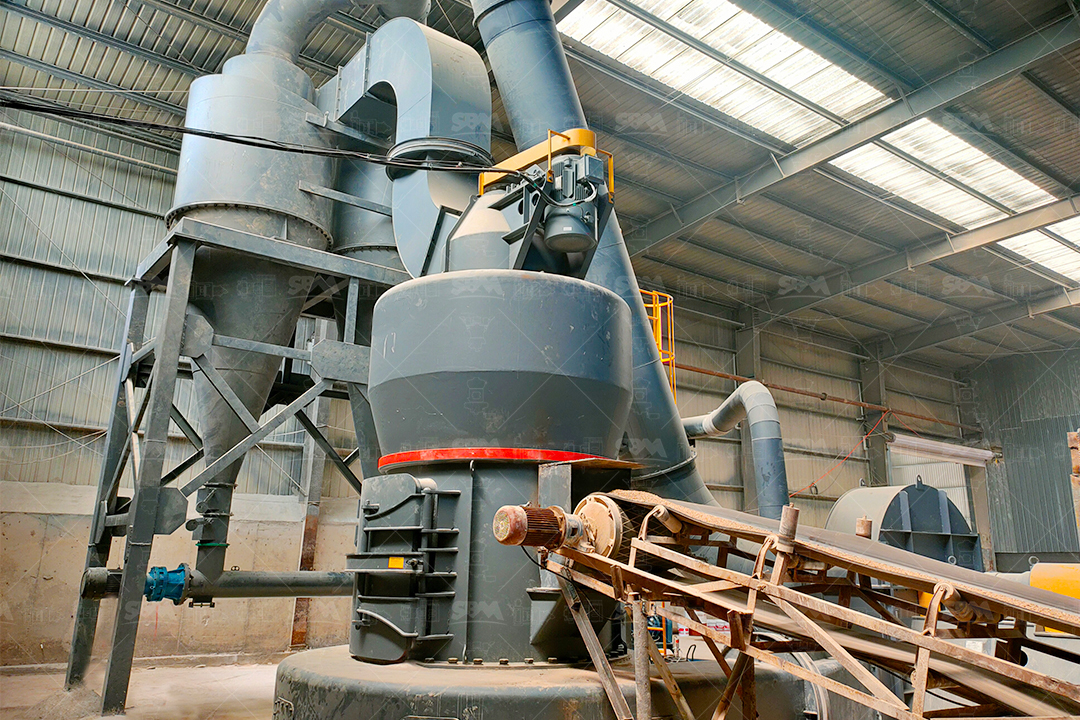
In the realm of industrial mineral processing, Raymond mill technology has been a cornerstone for decades, yet its evolution continues to address critical challenges in talc powder production. This article provides a comprehensive overview of how modern Raymond mill designs—particularly the MTW European Trapezium Grinding Mill—are tailored to meet the demanding requirements of talc processing. Key technical features such as cone gear whole transmission, arc air duct design, and unique wear-proof perching knife construction are examined in detail. We also explore application scenarios ranging from 30 to 400 mesh talc powder for industries like plastics, paper, cosmetics, and ceramics. Drawing on over 180 countries of field experience, this analysis reveals how proper mill selection can resolve common pain points including high energy consumption, frequent maintenance downtime, inconsistent particle size distribution, and poor powder flowability. The article concludes with practical insights for operators seeking to optimize throughput while minimizing operational costs.
Introduction to Talc Powder Processing with Raymond Mill
Talc, being the softest mineral on Earth, presents unique grinding challenges. Its lamellar structure requires careful handling to achieve desired fineness without excessive heat generation or particle agglomeration. The MTW Series European Trapezium Grinding Mill, developed from over 9,500 customer proposals and years of R&D, has emerged as a preferred solution. Unlike traditional Raymond mills, this new generation integrates international advanced technologies including bevel gear integral transmission and inner oil absorption lubrication. These innovations directly address talc's tendency to cause roller and ring wear due to its abrasive impurities.
For talc processing, the mill's input size capacity of 0-50mm is particularly advantageous. Crude talc lumps often contain varying moisture content, and the MTW mill's robust design handles feed inconsistencies effectively. The output range of 30-400 mesh covers the vast majority of commercial talc applications. Lower mesh products (100-200 mesh) suit rubber and plastic fillers, while finer grades (325-400 mesh) are essential for paper coating and cosmetic talc production.

Key Technical Characteristics Beneficial for Talc
1. Wear-Proof Perching Knife Design
The combined-type shovel blade is a game-changer for talc grinding. Talc's flaky particles tend to ride up on conventional blades, causing uneven feeding and accelerated wear. The curved shovel blades in the MTW mill change the feeding angle dynamically, ensuring material is consistently directed between the grinding roller and ring. This design extends roller and ring service life by up to 30% in talc applications compared to traditional straight blades. Maintenance becomes simpler—only the blade needs replacement, not the entire assembly, reducing downtime and spare parts inventory.
2. Arc Air Duct for Efficient Material Transport
Talc powder is notoriously lightweight and can easily become airborne, leading to energy losses in pneumatic transport. The circular air duct design minimizes air energy loss, maintaining consistent negative pressure throughout the system. This is critical for talc because air velocity directly influences particle classification efficiency. The high-strength guard plate protecting the air duct face ensures longevity even when processing talc with quartz impurities.
3. Cone Gear Whole Transmission
The bevel gear integral transmission system delivers power more efficiently than traditional belt-driven Raymond mills. For talc operations requiring 3-40 tph throughput, this translates to 15-20% energy savings. The compact transmission also saves floor space, an important consideration when retrofitting existing talc processing plants.
4. Volute Design for Enhanced Wind Separation
The unobstructed wear-resistant volute improves wind-driven particle separation within the mill. For talc, where particle shape affects bulk density and flow, consistent classification ensures that final powder meets strict specifications. The design also reduces material buildup on internal surfaces, a common problem with talc's natural hydrophobicity.
Application in Different Talc Industries
Talc powder finds diverse applications, each requiring specific particle characteristics:
Plastics industry: 1250-2500 mesh talc (with 2-5 micron median size) improves stiffness and heat resistance. The MTW mill's fineness control via frequency conversion ensures narrow particle distribution, eliminating coarse particles that cause surface defects in injection-molded parts.
Paper manufacturing: 325-600 mesh talc acts as a pitch control agent and filler. The mill's arc air duct prevents over-grinding, preserving the lamellar structure needed for paper smoothness.
Resolving Common Customer Pain Points
Based on extensive field data from over 180 countries, the most frequent challenges in talc Raymond mill operation include:
Frequent roller and ring wear: The unique material composition of MTW mill grinding elements (special alloy steel) provides 3-5 times longer durability compared to standard mills when processing talc with 5-8% SiO2 content.
Inconsistent fineness: The integrated classifier with frequency-controlled rotor ensures that even when feed size varies, output remains within ±5% of target mesh size.
High energy bills: The cone gear transmission and optimized air duct reduce specific power consumption to 18-25 kWh/t for 325 mesh talc, compared to 30-40 kWh/t for conventional mills.
Dust pollution: The mill operates under negative pressure with sealed system, meeting stringent environmental standards in Europe and Asia.
Difficult maintenance: The modular design allows access to grinding zone within 2 hours for routine inspection, reducing downtime significantly.
Selection Considerations
While the MTW mill excels for 30-400 mesh talc production, alternative solutions exist for specialized requirements. For capacities below 3 tph, the SCM Ultrafine Mill offers fineness up to 2500 mesh with energy savings of 30% versus jet mills. For operations requiring 10-70 tph of ultrafine talc (325-4000 mesh), the LUM Ultrafine Vertical Mill combines roller grinding with multi-rotor classification for consistent D97≤5μm products. The LM Vertical Roller Mill is suitable when integrated drying is needed for talc with >10% surface moisture. Ball mills remain viable for coarse talc (30-200 mesh) where capital cost is the primary constraint, though energy consumption is 30-40% higher than roller mills.
Conclusion
The Raymond mill's adaptation for talc powder processing has evolved from basic grinding to precision engineering. The MTW European Trapezium Mill exemplifies how targeted innovations—wear-resistant components, efficient transmission, optimized airflow—directly address the mineral's unique properties and industry demands. For operators facing escalating energy costs, strict quality requirements, and environmental regulations, modern Raymond mill technology offers a proven path to profitability and sustainability in talc processing.
FAQ
Why does my talc powder from Raymond mill often contain coarse particles that cause surface defects in plastic products? This issue typically arises from classifier inefficiency. The MTW mill's frequency-controlled rotor classifier ensures precise cut size; we recommend checking the rotor speed setting and condition of the classifier blades, as worn blades allow coarse particles to pass through.
Our talc mill keeps overheating when running at full capacity for more than 4 hours. What could be wrong? Overheating in talc grinding is often due to insufficient air flow or excessive feed moisture. The arc air duct in modern Raymond mills is designed to minimize energy loss; verify that the air duct lining is intact and that the feed moisture is below 6%. Installing a moisture analyzer on the feed belt can prevent this issue.
We are struggling with high wear on grinding rollers every 600 hours of operation when processing talc with 10% quartz impurities. Is there a solution? The wear-proof perching knife design and special alloy grinding elements in the MTW mill can extend roller life to over 2,000 hours under such conditions. If you are using an older mill, consider upgrading to the combined-type shovel blade and requesting the high-chrome roller option from your supplier.
Our talc powder bulk density is inconsistent between batches, affecting our downstream compounding process. How can Raymond mill operation improve consistency? Bulk density variation is often linked to particle shape and size distribution. The MTW mill's volute design provides stable wind separation, and combining it with a frequency-controlled feeder ensures constant material bed depth. We recommend installing an online particle size analyzer after the classifier to enable real-time adjustments.
Can we use the same Raymond mill for both talc and calcium carbonate without extensive cleaning downtime? While possible, cross-contamination is a significant concern. However, for production-grade switching, we recommend dedicating separate mills or using the LUM Ultrafine Vertical Mill, which has fewer internal surfaces where residual powder can accumulate.


