

What grinding mill is generally used for deep processing of ndfeb permanent magnets?
Published: October 16, 2023
When it comes to the deep processing of NdFeB (Neodymium-Iron-Boron) permanent magnets, selecting the right grinding mill is critical to achieving high-purity, fine, and consistent powder while maintaining cost-efficiency and operational reliability. NdFeB magnets, known for their exceptional magnetic strength, are widely used in electric vehicles, wind turbines, consumer electronics, and medical devices. During deep processing, these brittle materials are ground into fine powders for recycling or further manufacturing. Based on extensive industry experience and technical analysis, the most commonly recommended grinding mills for this application include the SBM European Trapezium Mill (MTW Series), the LM Vertical Roller Mill, the SCM Ultrafine Mill, and the LUM Ultrafine Vertical Mill. Each of these machines offers unique advantages in terms of fineness control, energy efficiency, wear resistance, and environmental compliance. Among them, the SCM Ultrafine Mill and LUM Ultrafine Vertical Mill are particularly favored for their ability to produce ultra-fine powders (325-2500 mesh) with high consistency, while the MTW Trapezium Mill and LM Vertical Roller Mill excel in medium-fineness grinding with higher throughput and lower operating costs. This article provides a comprehensive technical comparison of these mill types, addressing common customer pain points such as low yield, high energy consumption, frequent wear part replacement, and difficulty in maintaining product uniformity.
Deep processing of NdFeB permanent magnets typically involves crushing the sintered or bonded magnets into a coarse powder, followed by fine grinding to achieve the desired particle size distribution (PSD). The magnetic properties and downstream application—whether for magnetic powder injection molding, recycling into new magnets, or use in magnetic fluids—dictate the required fineness. For instance, recycling processes often demand powders in the range of 200-400 mesh, while high-performance magnetic coatings may require 800-2500 mesh. The grinding mill must not only achieve these specs but also minimize contamination from metallic wear, as impurities can severely degrade magnetic performance. SBM's grinding equipment portfolio addresses these challenges through advanced design features such as combined-type shovel blades, arc air ducts, cone gear transmission, and intelligent control systems, all of which are detailed below.
European Trapezium Mill (MTW Series)
The MTW Series European Trapezium Grinding Mill, also known as MTW Raymond Mill, is engineered for medium-fineness grinding of NdFeB magnets in the 30-400 mesh range. Its design integrates feedback from over 9500 customers, resulting in innovations like the cone gear whole transmission, which enhances transmission efficiency and reduces space requirements. The unique wear-proof perching knife design uses a combined-type shovel blade that allows only the blade to be replaced during maintenance, lowering wearing part costs by up to 30% compared to traditional Raymond mills. The arc air duct design prevents air energy loss, ensuring stable material transport even when processing dense magnetic materials. For NdFeB deep processing, this mill is ideal when the target output is between 3-40 tph and the feed size is under 50 mm. Customers using this model report a 15% reduction in downtime due to the volute design's improved wind-driven transmission and reduced material buildup. However, for ultra-fine grinding below 325 mesh, the MTW mill may require additional classification steps.
LM Vertical Roller Mill
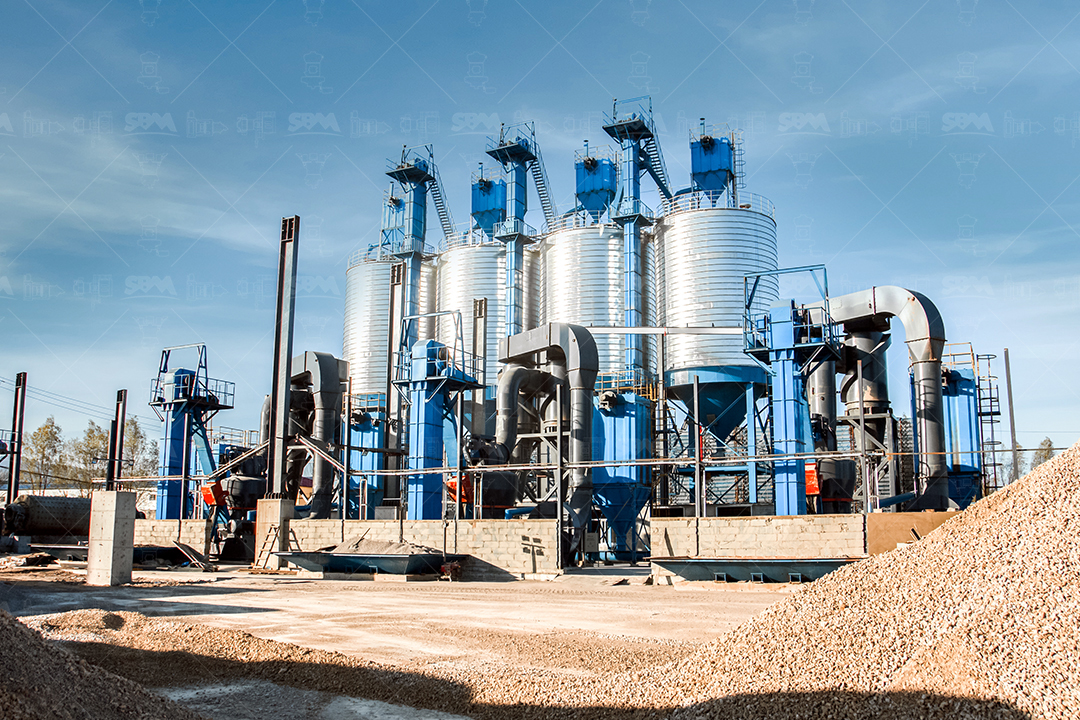
For customers requiring higher throughput (up to 400 tph) and integrated drying, grinding, and powder selection in a single unit, the LM Vertical Roller Mill is a robust solution. Its grinding rollers and plate are made from high-chrome alloy materials, significantly extending service life compared to ball mills. The roller does not directly contact the grinding plate, reducing wear by up to 40% in NdFeB applications. The automatic control system enables remote operation, which is a major advantage in automated processing plants. The enclosed system operates under negative pressure, meeting strict environmental standards—a common pain point for magnet recyclers facing dust and noise regulations. The LM mill can handle feed sizes up to 50 mm and produce fineness from 30-400 mesh, making it suitable for pre-grinding or medium-fineness applications. Its compact layout reduces floor space by 50% compared to ball mill systems, lowering civil engineering costs. However, for fineness above 400 mesh, the LM mill's classification efficiency decreases, and an ultrafine mill is recommended for the final stage.
SCM Ultrafine Mill
The SCM Series Ultrafine Grinding Mill is the primary choice for deep processing of NdFeB magnets requiring ultra-fine powders (325-2500 mesh). With a disposable fineness reaching D97≤5μm, it has ranked at the leading level in the industry. The mill's high-output, low-energy design delivers more than twice the capacity of jet mills with 30% lower energy consumption—addressing the common pain point of high operational costs in fine grinding. The frequency-conversion control allows precise adjustment of the classifier speed, ensuring that the finished product meets strict PSD specifications without coarse powder spillover. The heavy rotor and special material roller/ring extend durability several times over standard mills, reducing maintenance frequency. For NdFeB applications, the grinding chamber's bearing-free design and balance treatment ensure vibration-free operation, which is critical for maintaining magnetic powder consistency. The double powder collecting method using cyclones and pulse dust collectors achieves dust recovery rates exceeding 99.9%, satisfying the most stringent environmental standards. Customers in the magnetic materials sector often pair this mill with a pre-crusher to handle feed sizes up to 20 mm, achieving throughputs of 0.5-25 tph. One common issue—powder agglomeration due to magnetic attraction—is mitigated by the mill's optimized airflow and anti-clogging nozzle design.
LUM Ultrafine Vertical Mill
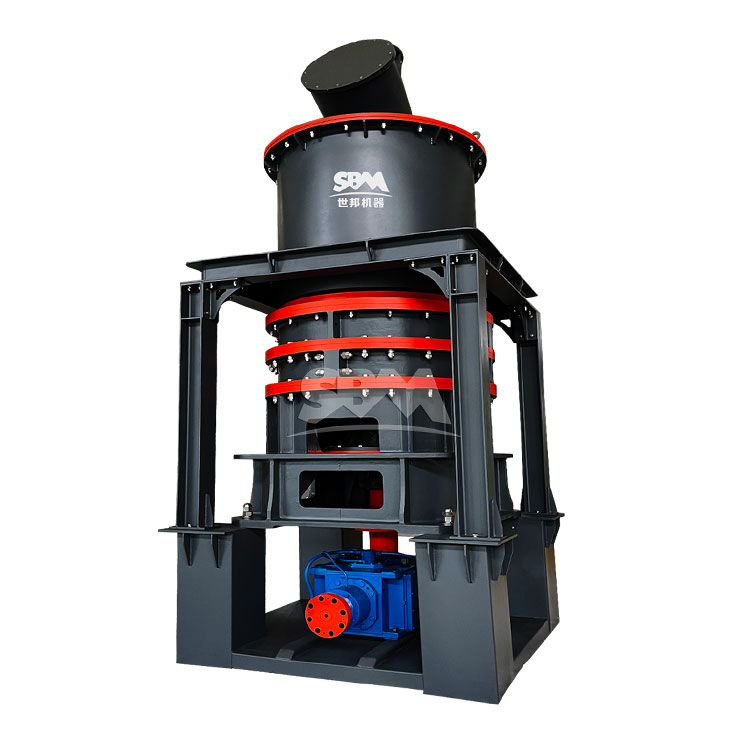
The LUM Series Ultrafine Vertical Mill combines Taiwan grinding roller technology and German powder separating technology, making it a premium solution for NdFeB magnet deep processing when ultra-fine grinding (325-4000 mesh) and high productivity (10-70 tph) are required. Its unique grinding curve design promotes material bed formation, improving grinding efficiency by 25% compared to conventional vertical mills. The multi-rotor powder classifier ensures that no low-grade material exists in the final product—a key advantage for magnet manufacturers who need uniform particle size to maintain consistent magnetic flux density. The PLC/DCS automatic control system allows precise adjustment of grinding pressure, disc speed, and classifier speed, enabling customers to switch between different fineness grades without manual recalibration. The sealed negative-pressure operation minimizes dust emissions and noise, with sound insulation rooms available for extreme noise-sensitive environments. For NdFeB recycling lines, the LUM mill's ability to handle abrasive materials with minimal wear is highly valued; the roller shell and lining plate are designed for easy replacement, with wear life extending up to 8000 hours under normal operation. However, the higher initial investment compared to the SCM mill may be a consideration for smaller operations.
Ball Mill (for Comparison)
While the ball mill remains a traditional choice for mineral processing, its application in NdFeB deep processing is declining due to high energy consumption (30-40% higher than vertical mills) and rapid wear of metal balls. SBM's optimized ball mill designs incorporate new materials to reduce spare part costs, but the typical output fineness (0.2-0.074 mm, equivalent to 70-200 mesh) limits its use to coarse grinding stages. For modern NdFeB deep processing requiring consistent superfine powders, the ball mill is generally not recommended as a standalone solution; instead, it can serve as a pre-mill in a two-stage grinding system combined with an ultrafine mill.
Selection Guide for NdFeB Deep Processing
To summarize, the appropriate grinding mill for NdFeB permanent magnet deep processing depends on the target fineness, capacity, and budget:
- For 30-400 mesh with moderate capacity (3-40 tph): Choose MTW European Trapezium Mill.
- For 30-400 mesh with high capacity (up to 400 tph) and integrated drying: Choose LM Vertical Roller Mill.
- For 325-2500 mesh ultra-fine grinding with low energy consumption: Choose SCM Ultrafine Mill.
- For 325-4000 mesh ultra-fine grinding with high throughput and automation: Choose LUM Ultrafine Vertical Mill.
Frequently Asked Questions (FAQ)
1. How do I prevent magnetic powder from clogging the grinding mill during NdFeB processing?
Magnetic agglomeration is a common issue. We recommend using an SCM or LUM mill with an anti-static coating on the grinding chamber and employing a continuous inert gas purge (e.g., nitrogen) to reduce particle attraction. Additionally, maintaining a consistent feed rate below the mill's rated capacity (e.g., 80% of max) helps avoid overloading and clogging.
2. What is the typical wear life of grinding rollers when processing NdFeB magnets?
For SBM's SCM Ultrafine Mill, the roller and ring made from special alloy steel typically last 6000-8000 hours when processing NdFeB magnets with a hardness of 5-7 Mohs. The combined-type shovel blade in the MTW mill needs blade replacement every 2000-3000 hours, while the roller and ring last 4000-6000 hours. Actual life depends on feed particle size and moisture content.
3. Can I achieve 2500 mesh fineness for NdFeB powder using the LUM Ultrafine Vertical Mill?
Yes, the LUM mill can achieve D97≤5μm (approximately 2500 mesh) with proper classifier speed settings. For consistent results, we recommend pre-crushing the NdFeB material below 10 mm and using a feed moisture content below 2%. The multi-rotor classifier can be tuned in real-time via the PLC system to maintain cutoff precision.
4. How do you reduce energy consumption during fine grinding of NdFeB magnets?
Our SCM Ultrafine Mill reduces energy consumption by 30% compared to jet mills, while the LM Vertical Roller Mill saves 30-40% compared to ball mill systems. For maximum efficiency, set the grinding pressure to the minimum required for your target fineness—typically 80-100 bar for NdFeB—and use the frequency converter to adjust the main motor speed to match the material feed rate.
5. Are there environmental concerns with grinding NdFeB magnets, and how does SBM address them?
NdFeB grinding generates fine dust that may contain hazardous rare earth elements. SBM mills feature fully sealed negative-pressure systems, pulse dust collectors with 99.9% efficiency, and optional sound insulation rooms to meet global environmental standards (e.g., EU and Chinese emission limits). We also offer explosion-proof designs for mills processing reactive powders, though NdFeB itself is non-explosive under normal conditions.


