

Titanium dioxide grinding equipment selection: application of raymond mill
Published on April 15, 2025
Selecting the right grinding equipment for titanium dioxide (TiO2) processing is a critical decision that directly impacts production efficiency, product quality, and operational costs. Titanium dioxide, widely used as a white pigment in paints, coatings, plastics, and paper, requires precise particle size distribution and high purity to meet industry standards. Among the various milling technologies available, the Raymond mill, particularly the advanced European trapezium mill (MTW series), has emerged as a preferred solution due to its proven reliability, energy efficiency, and ability to produce consistent fineness ranging from 30 to 400 mesh. This article provides a comprehensive guide to titanium dioxide grinding equipment selection, focusing on the application of Raymond mills, and addresses common customer pain points such as low output, high energy consumption, wear part longevity, and product contamination. By analyzing technical specifications, operational advantages, and real-world performance data, we aim to help plant managers and procurement professionals make informed decisions that balance capital investment with long-term operational excellence.
Understanding Titanium Dioxide Grinding Requirements
Titanium dioxide (TiO2) is a notoriously abrasive material due to its high hardness and crystalline structure. During grinding, the material's abrasive nature accelerates wear on mill components, leading to frequent maintenance and downtime. Additionally, TiO2's tendency to agglomerate requires mills with efficient classification systems to ensure uniform particle size. The ideal grinding solution must offer robust construction, precise particle size control, and minimal metal contamination, as impurities can degrade pigment whiteness and opacity.
Common pain points in TiO2 grinding include:
- Wear and tear: Rapid degradation of grinding rollers and rings increases replacement costs and production interruptions.
- Energy inefficiency: Older mill designs consume excessive power, driving up operational expenses.
- Inconsistent product quality: Variation in fineness or contamination affects downstream applications.
- Low throughput: Insufficient capacity to meet production targets.
- Environmental compliance: Dust emissions and noise levels must meet regulatory standards.
SBM's grinding equipment portfolio, including the MTW European Trapezium Mill (Raymond mill), LM Vertical Roller Mill, SCM Ultrafine Mill, LUM Ultrafine Vertical Mill, and Ball Mill, offers tailored solutions to address these challenges. For titanium dioxide, the MTW Raymond mill and LM vertical roller mill are most commonly deployed due to their balance of fineness, capacity, and durability.
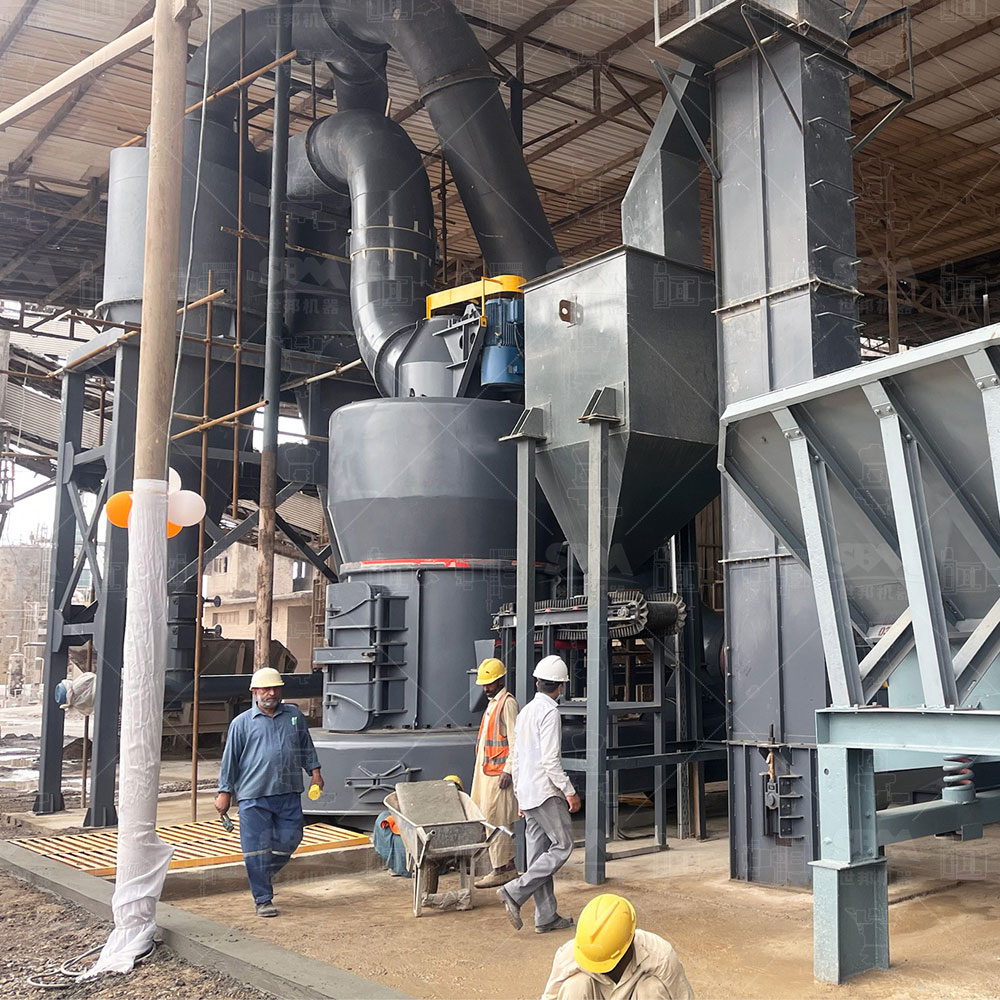
Raymond Mill (MTW Series): Core Technology for TiO2 Grinding
The MTW European Trapezium Grinding Mill, often referred to as the MTW Raymond mill, represents the evolution of traditional Raymond mill technology. Developed from over 9,500 customer feedback inputs and years of R&D by SBM's engineering team, this mill incorporates several innovations that directly benefit titanium dioxide processing.
Key Technical Advantages for TiO2
- Unique wear-proof perching knife design: The combined-type shovel blade reduces replacement costs by requiring only the blade to be changed, not the entire assembly. The curved blade design also optimizes the feeding angle, extending roller and ring life by up to 30% in abrasive applications like TiO2.
- Arc air duct design: Circular ducts minimize air energy loss, ensuring consistent material transport and preventing blockages. High-strength guard plates protect duct surfaces from abrasive wear.
- Cone gear whole transmission: The bevel gear integral transmission delivers higher efficiency (up to 15% improvement over traditional gear systems) while saving space and reducing initial investment.
- Volute design: Unobstructed wear-resistant volutes improve wind-driven transmission efficiency and reduce material maintenance frequency.
Performance Specifications
For TiO2 grinding, the MTW Raymond mill typically operates with an input size of 0-50mm, producing a fineness of 30-400 mesh (adjustable via classifier speed). Capacity ranges from 3 to 40 tph depending on material hardness and target fineness. The mill's ability to handle feed moisture up to 6% without external drying makes it suitable for TiO2 feedstocks that may contain residual moisture from earlier processing steps.
Compared to ball mills, the MTW Raymond mill reduces energy consumption by 30-40% while achieving higher throughput per unit floor area. This is particularly advantageous for plants looking to expand capacity without significant civil construction.
LM Vertical Roller Mill: Complementing Raymond Mill for Large-Scale Operations
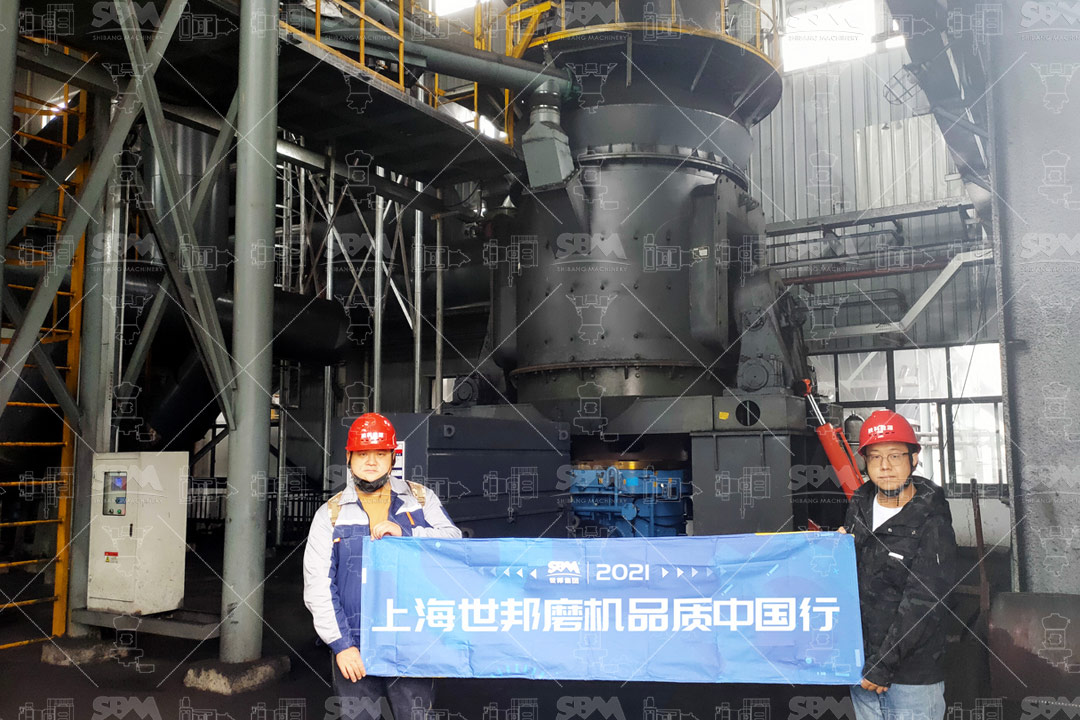
For high-capacity titanium dioxide grinding (up to 400 tph), the LM Vertical Roller Mill offers an attractive alternative. While the MTW Raymond mill excels in mid-range capacities, the LM mill's integrated drying, grinding, and classification functions allow for a more compact system layout—occupying about 50% less floor space than a comparable ball mill system.
Advantages for TiO2 Processing
- Low wear: The roller and grinding plate are made of high-quality materials and do not contact directly, reducing friction and extending service life.
- Automatic control: The PLC/DCS system enables remote operation, reducing labor costs and ensuring consistent product quality.
- Environmental protection: Negative pressure operation and full sealing prevent dust spillover, meeting strict emission standards.
However, for TiO2 applications requiring ultra-fine fineness (below 325 mesh), the SCM Ultrafine Mill or LUM Ultrafine Vertical Mill may be preferred due to their ability to reach D97≤5μm.
Comparing Raymond Mill with Other Mills for TiO2
| Parameter | MTW Raymond Mill | LM Vertical Roller Mill | SCM Ultrafine Mill | Ball Mill |
|---|---|---|---|---|
| Fineness Range | 30-400 mesh | 30-400 mesh | 325-4000 mesh | 0.2-0.074 mm |
| Capacity | 3-40 tph | 3-400 tph | 0.5-25 tph | 3-65 tph |
| Energy Consumption | Low | Very low | Ultra-low | High |
| Wear Resistance | Good | Excellent | Excellent | Moderate |
| Best Use Case | Mid-scale TiO2 grinding | Large-scale, coarse to medium | Ultra-fine TiO2 | Standard applications |
For typical TiO2 pigment production targeting 325 mesh (44 μm), the MTW Raymond mill provides an optimal balance of cost, performance, and reliability. Its wear-proof features directly address the pain point of high spare part replacement, while the arc air duct ensures stable operation even with abrasive feed.
Addressing Customer Pain Points with SBM Raymond Mill
Pain Point 1: High Wear and Frequent Replacement
The combined shovel blade and curved design in MTW mills drastically reduce wear on rollers and rings. Customers report up to 40% longer service life compared to conventional Raymond mills when grinding TiO2. The cone gear transmission also eliminates gearbox oil leakage issues common in older designs.
Pain Point 2: Energy Costs
With energy consumption 30-40% lower than ball mills, the MTW Raymond mill helps facilities reduce electricity bills without sacrificing throughput. The volute design further optimizes airflow, reducing fan power requirements.
Pain Point 3: Product Contamination
High-quality alloy steel used in grinding components minimizes metal contamination, preserving TiO2 whiteness. The negative pressure system prevents external dust from entering the product stream.
Pain Point 4: Low Throughput
The MTW mill's capacity of up to 40 tph is sufficient for most mid-sized TiO2 plants. For larger operations, the LM vertical roller mill can scale to 400 tph while maintaining fineness.
Pain Point 5: Environmental Compliance
Both MTW and LM mills feature sealed systems operating under negative pressure, with pulse dust collectors ensuring emissions below 20 mg/Nm³. Noise levels are kept under 85 dB with optional soundproof enclosures.
Conclusion
Selecting the right titanium dioxide grinding equipment requires careful evaluation of material characteristics, production targets, and operational constraints. The MTW European Trapezium Mill (Raymond mill) stands out as a versatile and cost-effective solution for TiO2 grinding, offering proven wear resistance, energy efficiency, and product quality consistency. For ultra-fine applications, the SCM or LUM ultrafine mills provide specialized capabilities. SBM's extensive installation base across 180+ countries and decades of application experience ensure that customers receive not just a machine, but a complete solution tailored to their specific needs.
Frequently Asked Questions (FAQs)
- Q: My current Raymond mill wears out grinding rollers within months when processing titanium dioxide. How does the MTW mill address this?
A: The MTW mill features combined-type shovel blades with curved design that optimize feeding angles, reducing roller and ring wear by up to 40% compared to traditional Raymond mills. Only the blade tip needs replacement, lowering maintenance costs. - Q: We need to produce 325 mesh TiO2 powder but our ball mill struggles with energy consumption. What capacity can an MTW Raymond mill achieve?
A: For 325 mesh TiO2, the MTW mill can process 3-40 tph depending on feed size and hardness. Energy consumption is 30-40% lower than ball mills, with consistent fineness and no over-grinding. - Q: Can the Raymond mill handle feed moisture in TiO2 feedstock without pre-drying?
A: Yes, the MTW mill can handle feed moisture up to 6% due to its integrated hot air circulation system. However, for higher moisture, a separate dryer or the LM vertical roller mill with integrated drying may be recommended. - Q: What guarantees do you offer regarding product contamination from metal wear?
A: All grinding components are made from high-chromium alloy steel, tested for minimal metal shedding. The mill operates under negative pressure, preventing external contamination, and the classifier ensures only target-sized particles exit. - Q: How do I decide between an MTW Raymond mill and an LM vertical roller mill for my TiO2 project?
A: Choose MTW for capacities below 40 tph with fineness requirements between 30-400 mesh, especially if floor space is limited. Choose LM for capacities above 40 tph, when integrated drying is needed, or when automatic control and lowest energy consumption are priorities.


