

Application of raymond mill in building materials industry—building the invisible cornerstone of cities
2025-03-29
In the modern urban landscape, towering skyscrapers, sprawling bridges, and durable roadways rely on a silent yet essential foundation: high-quality building materials. At the heart of producing these materials—such as cement, gypsum, lime, and mineral powders—is advanced grinding technology. Raymond mills, particularly the next-generation models developed by Shanghai SBM Machinery Equipment Co., Ltd., serve as the invisible cornerstone of cities by enabling efficient, precise, and sustainable material processing. These machines transform raw minerals into fine powders that are critical for construction, infrastructure, and environmental protection. This article explores how SBM's Raymond mill series—including the MTW European Trapezium Mill, LM Vertical Roller Mill, SCM Ultrafine Mill, LUM Ultrafine Vertical Mill, and Ball Mill—are revolutionizing the building materials industry, addressing common client pain points such as high energy consumption, frequent wear part replacement, inconsistent product fineness, and environmental compliance.
_1777997925150.jpg)
Overview of Raymond Mill Applications in Building Materials
Raymond mills are indispensable in the building materials sector for grinding non-metallic minerals like limestone, calcite, marble, talc, and gypsum into powders used in cement production, wall putty, artificial stone, and desulfurized gypsum blocks. SBM's Raymond mill series is designed to handle input sizes up to 50mm and output fineness ranging from 30 mesh to 4000 mesh, catering to diverse requirements from coarse cement clinker to ultrafine filler powders. The machines integrate crushing, drying, grinding, and powder selection in one system, significantly reducing the footprint and investment costs compared to traditional ball mill systems. With over 180 countries served, SBM's grinding equipment has become the preferred choice for global powder processing, offering solutions that boost productivity while lowering operational expenses.
Key Pain Points in the Building Materials Industry and How SBM Raymond Mills Address Them
1. High Energy Consumption and Low Output
Traditional grinding mills often suffer from excessive energy use and insufficient capacity, directly increasing production costs. SBM's LM Vertical Roller Mill tackles this with a 30-40% reduction in energy consumption compared to ball mills, thanks to direct grinding of materials on the grinding plate by rollers. The MTW European Trapezium Mill further enhances efficiency through cone gear whole transmission, which minimizes energy loss and maximizes power transfer. For ultrafine applications, the LUM Ultrafine Vertical Mill adopts advanced multi-rotor powder classifiers to achieve precise separation with minimal energy waste.
2. Frequent Wear of Parts and High Maintenance Costs
Worn rollers, rings, and blades are common headaches that cause downtime and raise maintenance budgets. SBM's Raymond mills incorporate unique wear-proof designs. The MTW mill features a combined-type shovel blade that allows replacing only the blade during maintenance, not the entire assembly, cutting spare part costs. The curved shovel blades also optimize the feeding angle to prolong roller and ring life. The LM Vertical Roller Mill uses high-quality materials for rollers and grinding tables, ensuring they do not contact directly to reduce wear rates. This extends service life by several times, as seen in the SCM Ultrafine Mill's heavy rotor design with special alloys.
3. Inconsistent Product Fineness and Quality
Meeting strict building material specifications requires uniform particle size distribution. Clients often struggle with mills that produce coarse or inconsistent powders. SBM's MTW mill uses arc air duct design to ensure stable air flow and efficient powder transportation, preventing coarse particles from contaminating the final product. The LM mill incorporates an expert automatic control system that adjusts grinding parameters in real time to maintain target fineness. For ultra-fine applications, the SCM mill achieves D97≤5μm with a single pass, backed by frequency-conversion control and an efficient vertical turbine classifier that accurately cuts particle size without spillover of coarse powder.
4. Environmental Compliance and Dust Control
Stringent environmental regulations demand clean operations with minimal dust and noise. Traditional mills often leak powder or generate excessive noise, leading to fines or shutdowns. SBM's entire product line addresses this. The LM Vertical Roller Mill operates under negative pressure with a fully sealed system, eliminating dust spillover. Its low-vibration design reduces noise output to levels below national standards. The LUM Ultrafine Vertical Mill integrates sound insulation rooms and mufflers, while the SCM Ultrafine Mill uses a double powder collection method combining powder collectors and pulse dust collectors to exceed international dust control requirements. These features help clients maintain eco-friendly operations without sacrificing efficiency.
5. Large Floor Space and High Initial Investment
Building materials plants face space constraints, especially in urban areas. Traditional ball mill systems require extensive floor area and complex civil works. SBM's Raymond mills offer compact designs. The LM Vertical Roller Mill integrates crushing, drying, grinding, and selection in one unit, occupying only about 50% of the floor space compared to ball mill systems. It can be arranged outdoors, further reducing construction costs. The MTW mill's volute design improves wind-driven transmission efficiency while minimizing equipment footprint. The LUM mill also boasts a small footprint with high throughput, making it ideal for space-limited facilities.
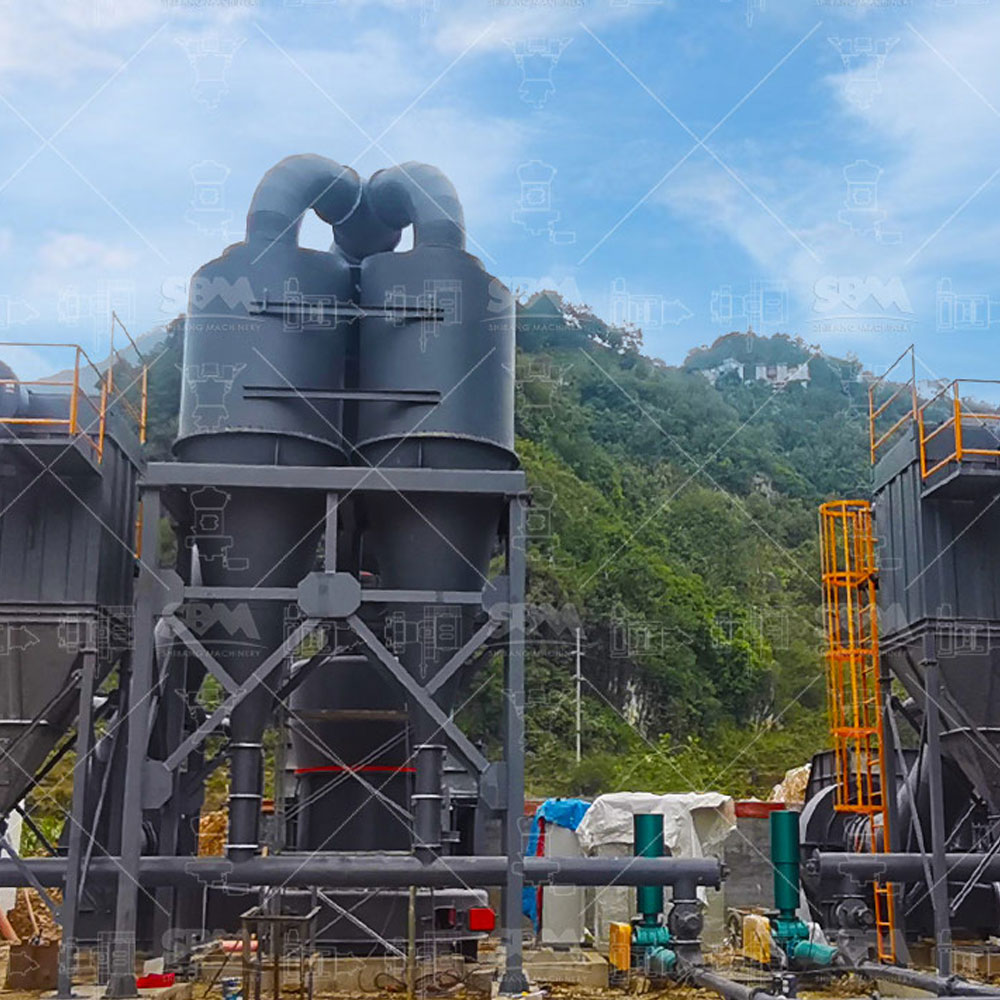
Case Studies and Performance Highlights
In cement plants, SBM's LM Vertical Roller Mill processes limestone and coal powder simultaneously, achieving capacities up to 400 tph with a 30-400 mesh output. The MTW European Trapezium Mill excels in gypsum grinding for plasterboard production, delivering consistent 100 mesh powder at 10 tph with wear part replacement intervals extended by 40%. For artificial stone manufacturers, the LUM Ultrafine Vertical Mill grinds calcite and marble to 1250 mesh, ensuring premium surface finish and color consistency. In waste desulfurization applications, the SCM Ultrafine Mill produces 325 mesh limestone powder used in FGD systems, helping power plants meet emission standards while reducing energy costs by 30% compared to jet mills. These real-world results demonstrate how SBM's Raymond mills build the invisible cornerstone of cities—one fine powder at a time.
Conclusion
SBM Raymond mills are not just grinding machines; they are engineering solutions that address the core challenges of the building materials industry. By combining proven German and Taiwanese technologies with decades of R&D, SBM delivers equipment that reduces energy use, minimizes wear, ensures product quality, complies with environmental standards, and optimizes space. As urbanization accelerates globally, these mills will continue to play a pivotal role in transforming raw minerals into the foundation of modern infrastructure. For any building materials producer looking to enhance efficiency and sustainability, SBM offers a complete grinding system tailored to their needs.
Frequently Asked Questions (FAQs)
Q1: How can I reduce the high wear rate of grinding rollers in my Raymond mill?
A: SBM's Raymond mills feature wear-proof designs such as combined-type shovel blades and curved blades that extend roller and ring life. Only the blade needs replacement during maintenance, lowering spare part costs and downtime. Regular inspection and proper feeding material size (0-50mm) also help minimize wear.
Q2: My current mill has inconsistent fineness and produces frequent oversize particles. What solution do you offer?
A: SBM mills integrate advanced classification systems. The MTW mill uses arc air duct design to ensure stable air flow, while the LM mill features expert automatic control for real-time fineness adjustment. For ultra-fine needs, the SCM mill's vertical turbine classifier accurately cuts particle size without coarse powder spillover, guaranteeing consistent D97≤5μm output.
Q3: How can I lower my energy consumption without sacrificing production capacity?
A: Upgrade to SBM's LM Vertical Roller Mill, which saves 30-40% energy compared to ball mills through direct roller-to-plate grinding. The MTW mill's cone gear transmission also maximizes efficiency. For high-volume operations, the LUM Ultrafine Vertical Mill incorporates multi-rotor classifiers to boost throughput while keeping energy use low.
Q4: We face strict environmental regulations—how can I ensure my mill operates dust-free and with low noise?
A: All SBM mills are designed for environmental compliance. The LM mill operates under negative pressure with full sealing, preventing dust leakage. Sound insulation rooms and mufflers are standard on models like the SCM and LUM. The double powder collection system (pulse dust collector plus powder collector) ensures emissions far below national standards.
Q5: What mill is best for processing ultrafine fillers for artificial stone, and how do I control the fineness?
A: The LUM Ultrafine Vertical Mill is ideal, offering output fineness from 325 to 4000 mesh. It uses German powder separation technology and PLC control to customize fineness via grinding pressure, disc speed, and classifier speed. For higher capacity (10-70 tph), it delivers consistent quality with no low-grade material, perfect for plastic masterbatch and artificial stone industries.


