

Calcium carbonate mini class: understanding the “calcium” element around us
Published: October 2023
Calcium is one of the most abundant elements on Earth, and its most common industrial form—calcium carbonate (CaCO₃)—is literally the foundation of countless products we use daily. From the paper you write on to the pharmaceuticals you take, calcium carbonate in its ground form (GCC) or precipitated form (PCC) plays a silent but essential role. Yet, for many processing professionals, achieving the right particle size, purity, and consistency from raw limestone or marble can be a persistent challenge. This mini class breaks down the fundamentals of calcium carbonate, its industrial journey from mine to micron, and the key equipment that transforms it. Whether your pain point is high energy consumption, inconsistent fineness, or excessive wear on machinery, understanding the element around us—and how to process it efficiently—is the first step toward solving those problems. SBM Machinery, with over 180 countries served and decades of grinding expertise, offers tailored solutions that turn these challenges into operational advantages.
What Is Calcium Carbonate and Why Does It Matter?
Calcium carbonate is a chemical compound found in rocks such as limestone, marble, and chalk. It is the main component of shells, pearls, and even eggshells. In industrial terms, it is classified into two types: Ground Calcium Carbonate (GCC), which is mechanically crushed and ground, and Precipitated Calcium Carbonate (PCC), which is chemically produced for higher purity and controlled particle shape. GCC is the more cost-effective and widely used variant, especially in construction, plastics, paints, and agriculture. Understanding the source and desired end-use determines which grinding technology is best suited—whether it is a Raymond mill, vertical roller mill, or ultrafine mill.
Common Pain Points in Calcium Carbonate Processing
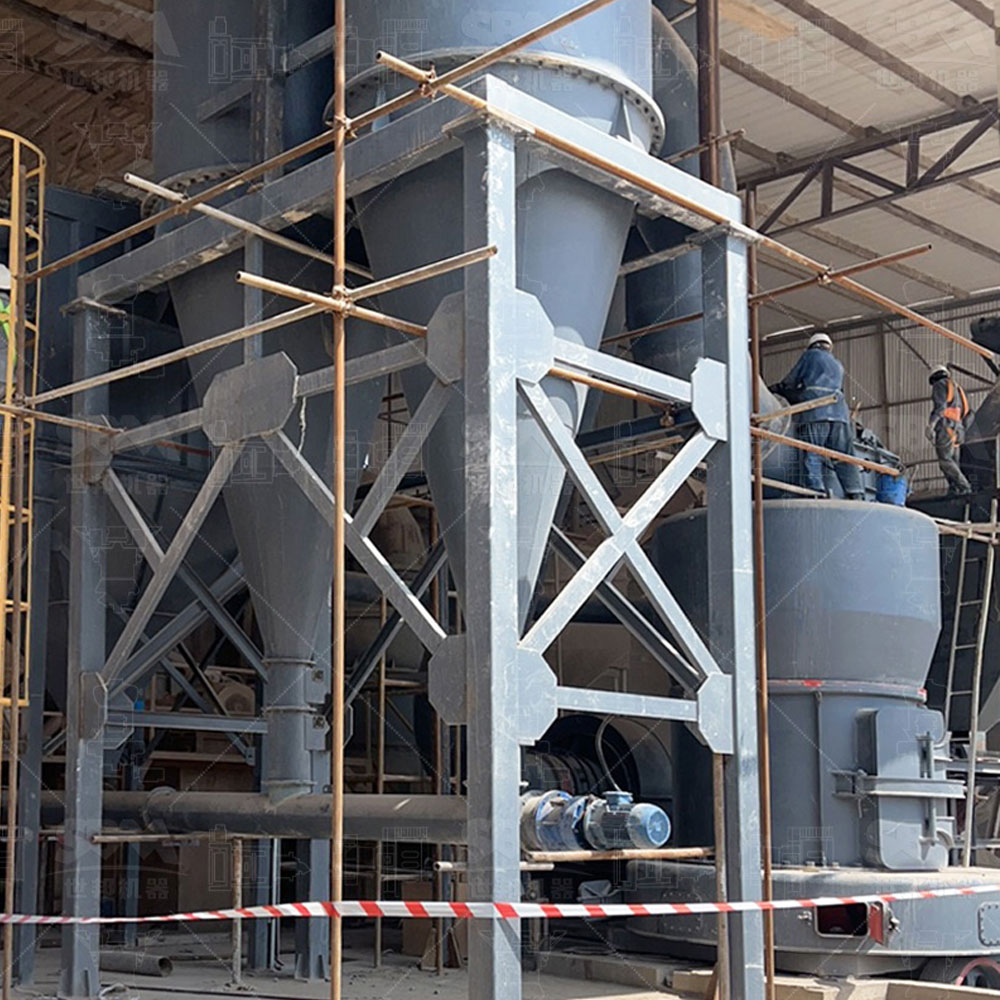
Customers across the globe share recurring frustrations: high energy bills when running ball mills, limited fineness range in traditional Raymond mills, frequent roller and ring replacements due to abrasive calcium carbonate, and dust emission concerns that fail environmental audits. For example, if you are producing 325-mesh GCC for paper filler but need occasional batches at 1250 mesh for paint, a single mill may not handle both efficiently. Another common issue is moisture content: wet limestone requires drying, which many mills cannot integrate. These pain points demand equipment with flexibility, low wear, and integrated drying capabilities. SBM’s LM Vertical Roller Mill, for instance, combines drying, grinding, and classifying in one system, reducing both footprint and energy use.
The Grinding Solutions: From Coarse to Ultrafine
Below is a breakdown of the main mill types SBM offers for calcium carbonate, each designed to solve specific customer pain points.
MTW European Trapezium Mill (Raymond Mill Upgrade)
For clients needing a reliable, cost-effective solution for 30–400 mesh GCC, the MTW series is an evolution of traditional Raymond mills. Its cone gear whole transmission cuts energy loss, while the curved shovel blade reduces wear costs—only the blade needs replacing, not the entire assembly. The arc air duct design prevents energy waste during pneumatic transport. This mill excels in limestone desulfurization for power plants and building materials. A typical client pain point: “My Raymond mill consumes too much power and the rollers wear out every month.” The MTW’s wear-proof perching knife design extends roller and ring life significantly, lowering operating costs.
LM Vertical Roller Mill
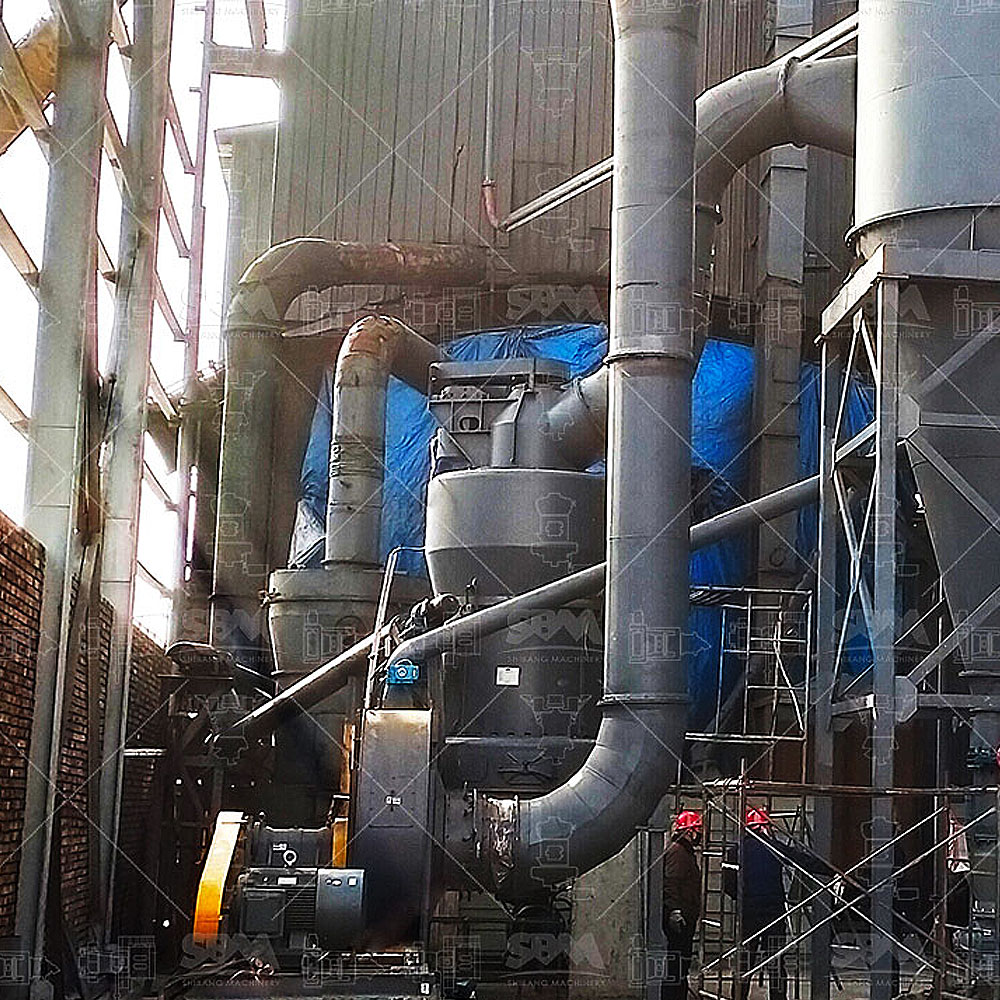
When throughput demands increase or when raw materials contain moisture, the LM vertical roller mill is the recommended choice. It handles input sizes up to 50mm and produces 30–400 mesh products with capacities up to 400 tph. Its integrated drying function solves the pain point of wet limestone. The grinding rollers do not contact the grinding plate directly, reducing wear. The system operates under negative pressure with a sealed design, addressing environmental concerns. For a cement plant needing both fine GCC and slag powder, LM offers versatility with automatic control.
SCM Ultrafine Mill
For customers requiring ultra-fine powders (325–2500 mesh, or even D97≤5μm), the SCM series is the answer. A common frustration: “We need high fineness for our plastic masterbatch, but jet mills are too expensive and consume too much energy.” The SCM mill delivers more than double the capacity of a jet mill with 30% less energy. Its vertical turbine classifier ensures precise cut size with no coarse powder overflow. The heavy rotor and special material for rollers and rings increase durability several times, directly addressing wear downtime.
LUM Ultrafine Vertical Mill
When the target fineness is ultrafine (325–4000 mesh) and the feed is fine (0–20mm), LUM integrates German and Taiwanese separation technology for high-end applications like PVC, artificial stone, and non-woven fabrics. Its grinding curves are designed to form a stable material bed, boosting grinding efficiency. The PLC/DCS control system ensures stable operation, solving the pain point of inconsistent product quality across shifts. Environmental compliance is built in, with low noise and zero dust spillover.
Ball Mill (Improved Version)
While ball mills are mature technology, traditional models suffer from high metal ball wear and energy waste. SBM’s improved ball mill uses new materials to reduce spare parts cost and offers both dry and wet configurations. Dry ball mills are ideal for common powder production (0.2–0.074 mm), while wet ball mills suit mineral dressing. For customers who already have ball mills but want to lower operational costs, SBM’s upgrades can be retrofitted to existing units.
Key Technical Advantages That Solve Real Problems
- Energy Efficiency: LM vertical mill uses 30-40% less energy than ball mill systems, cutting electricity bills directly.
- Wear Reduction: Combined-type shovel blades (MTW) and non-contact rollers (LM) reduce downtime and replacement costs.
- Fineness Flexibility: Frequency-conversion control on SCM and LUM mills allows quick adjustment between 325 and 2500 mesh without changing parts.
- Environmental Protection: Negative pressure systems and pulse dust collectors ensure emissions meet national standards, eliminating fines.
- Automation: PLC/DCS remote control reduces labor costs and improves consistency.
Application Scenarios in Daily Life
Calcium carbonate processed by SBM equipment ends up in everyday products: the smooth coating on glossy magazines (ultrafine GCC), the bright white of toothpaste (PCC), the rigidity of PVC pipes (GCC filler), and even the acid-neutralizing power of antacids. Each application demands specific particle size and purity. For example, desulfurization in coal-fired power plants requires 250-mesh limestone powder with high reactivity, best produced by MTW or LM mills. Meanwhile, the production of artificial marble demands 1250–2500 mesh with consistent whiteness, achievable with LUM or SCM mills.
Conclusion
Understanding calcium carbonate means understanding that no single mill fits all scenarios. The key is matching the equipment to the feed material, desired output, and budget constraints. SBM’s portfolio—from the economical MTW to the high-end LUM—covers every industrial need. By focusing on energy savings, wear reduction, and environmental compliance, these mills directly address the most common customer pain points. The next time you see a printed page, a plastic bottle, or a piece of chalk, remember the ‘calcium’ journey that made it possible—and the grinding technology that refined it.
Frequently Asked Questions (FAQ)
- Why does my calcium carbonate powder sometimes have inconsistent fineness between batches?
Inconsistent fineness often results from unstable classifier speed or feed variation. SBM’s LUM and SCM mills use frequency-conversion control for precise cut size, and automatic feedback loops adjust parameters in real-time to maintain consistency. Upgrading to a mill with PLC control can eliminate this pain point. - My current ball mill consumes too much power and the steel balls wear out every few weeks. What is a more durable alternative?
Consider switching to an LM Vertical Roller Mill, where rollers do not contact the grinding plate directly, reducing wear significantly. Additionally, LM uses 30-40% less energy than ball mills. For existing ball mills, retrofitting with wear-resistant liners and high-chrome balls offered by SBM can extend service life. - I need to produce both 325-mesh GCC for plastic filler and 1250-mesh for paint. Can one machine handle both?
Yes. The SCM Ultrafine Mill and LUM Ultrafine Vertical Mill both offer adjustable fineness via frequency-conversion control. You can switch between 325 and 1250 mesh without changing grinding parts. For coarser ranges (30-400 mesh), the MTW Trapezium Mill also allows adjustment through classifier speed. - Our limestone feed has up to 10% moisture, causing clogs in our current mill. How can we solve this?
The LM Vertical Roller Mill integrates a drying function within the grinding chamber. Hot air is introduced to evaporate moisture during grinding, up to 15-20% feed moisture. No pre-drying step is needed. This eliminates clogging and saves energy. - We are facing environmental fines due to dust emissions from our grinding line. What equipment can help us meet emission standards?
SBM’s LUM and LM mills operate under negative pressure with fully sealed systems and pulse dust collectors. Their dust emission levels are far below national standards. Additionally, the MTW model includes an arc air duct design that prevents dust leakage at air inlets. Upgrading to these mills typically solves compliance issues.


