

Grinding equipment selection for producing 80–2500 mesh talc powder
Published on: October 5, 2023
Selecting the right grinding equipment for talc powder production within the 80–2500 mesh range is a critical decision that directly impacts product quality, operational efficiency, and overall profitability. Talc, being a soft but abrasive mineral, requires mills that balance gentle grinding action with wear resistance to avoid contamination and excessive downtime. Based on decades of field experience and feedback from over 9,500 customers worldwide, SBM Machinery offers a comprehensive suite of grinding solutions—from European trapezium mills and vertical roller mills to ultrafine mills and ball mills—each tailored to specific fineness, capacity, and energy-efficiency requirements. This article provides a structured comparison of available equipment, highlighting technical advantages and real-world considerations for producers aiming for consistent output between 80 mesh (coarse) and 2500 mesh (ultra-fine). Whether your priority is low operating cost, high throughput, or ultra-fine precision, understanding the strengths and limitations of each mill type is essential for making a cost-effective, future-proof investment.
Understanding the Talc Grinding Challenge
Talc powder is widely used in plastics, ceramics, paints, paper, and cosmetics. The required fineness varies significantly by application: 80–400 mesh for filler in plastics and rubber, 400–1250 mesh for coated paper and paint extenders, and 1250–2500 mesh for high-end cosmetic and pharmaceutical grades. Each mesh range imposes different demands on grinding equipment. Common operational pain points include:
- Wear and contamination: Talc's abrasive nature accelerates wear on grinding parts, leading to metal contamination and frequent maintenance stops.
- Energy consumption: Over-grinding or using inefficient mills can double energy costs per ton of product.
- Fineness inconsistency: Fluctuations in feed size and moisture content can cause wide particle size distribution, rejecting batches.
- Space and integration: Compact plants often struggle to accommodate bulky systems with separate crushers, dryers, and classifiers.
Grinding Equipment Overview for 80–2500 Mesh Talc
1. MTW European Trapezium Mill (80–400 mesh)
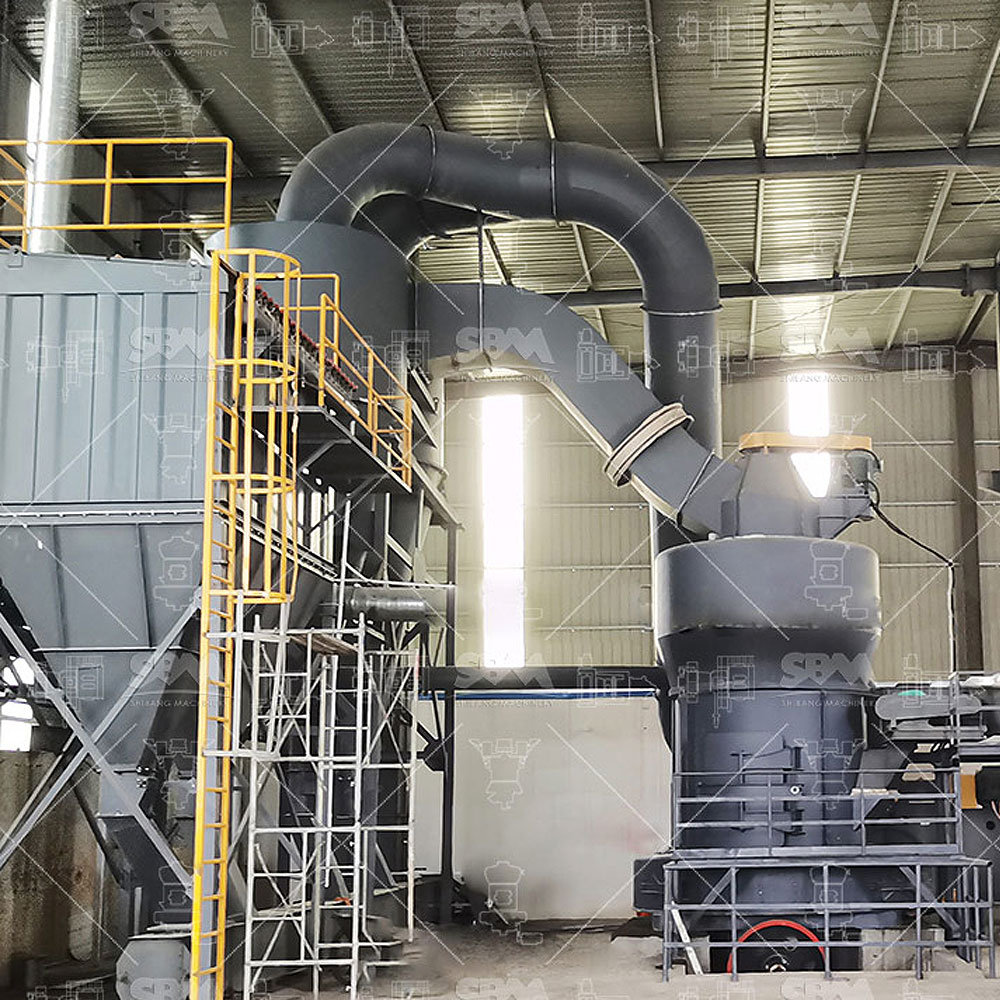
The MTW series is a modernized Raymond mill designed for medium-fine grinding. It accepts feed sizes up to 50mm and delivers outputs from 30 to 400 mesh. Key advantages include the cone gear whole transmission for higher efficiency and reduced space, and the arc air duct that minimizes energy loss. The combined-type shovel blade is a unique wear-proof feature—only the blade needs replacement, lowering maintenance costs. This mill is ideal for coarse talc production (80–200 mesh) where high throughput and low operational cost are priorities. Capacity ranges from 3 to 40 t/h.
2. LM Vertical Roller Mill (80–400 mesh, high capacity)
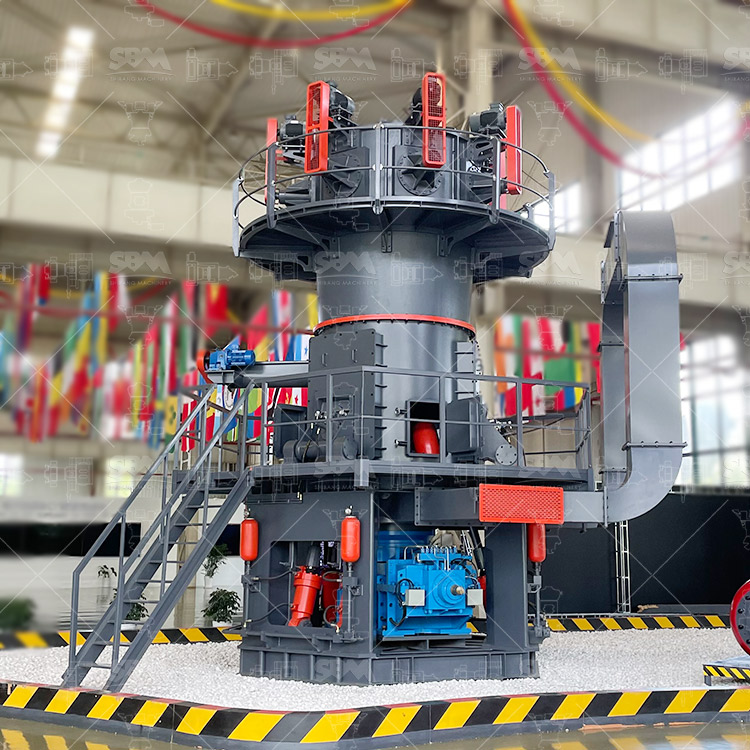
For large-scale talc powder production, the LM vertical roller mill integrates crushing, drying, grinding, and classifying into one unit. It handles feed up to 50mm and produces 30–400 mesh powder with capacities from 3 to 400 t/h. The system footprint is about 50% smaller than ball mill systems, and energy consumption is 30–40% lower. The grinding rollers do not contact the grinding plate directly, reducing wear and extending service life. Its automatic control system allows remote operation, saving labor costs. This mill is best for producers needing consistent coarse-to-medium fineness with minimal floor space and high environmental compliance—the sealed system operates under negative pressure with low noise.
3. SCM Ultrafine Mill (325–2500 mesh)
When the target fineness exceeds 400 mesh, the SCM ultrafine grinding mill becomes the preferred choice. It accepts feed up to 20mm and achieves a disposable fineness of D97 ≤ 5µm, with partial maximum reach of 2500 mesh through repeated experimentation. Capacity ranges from 0.5 to 25 t/h. The efficient vertical turbine powder classifier ensures accurate cutting size without coarse powder spillover. Heavy rotor design and special material for rollers and rings multiply durability several times. Energy consumption is 30% lower than jet mills with more than double the capacity. This mill is ideal for high-value talc products in cosmetics and fine chemicals.
4. LUM Ultrafine Vertical Mill (325–2500 mesh, high throughput)
For ultrafine talc production at higher capacities (10–70 t/h), the LUM ultrafine vertical mill combines Taiwan’s grinding roller technology and Germany’s powder classifying technology. It is designed specifically for non-metallic minerals like talc, calcite, and marble. The unique grinding curves of roller shell and lining plate improve material bed formation and grinding efficiency. The multi-rotor powder classifier allows customized fineness within the selected range, eliminating low-grade material. PLC/DCS automatic control ensures stable operation and remote monitoring. This mill is best suited for medium-to-high-end processing industries such as plastic masterbatch, PVC, and artificial stone.
5. Ball Mill (80–200 mesh, wet or dry)
Ball mills remain a mature technology for coarse talc grinding, especially in wet processes for mineral dressing. Input size up to 25mm, output 0.074–0.2mm (80–200 mesh), capacity 3–65 t/h. SBM optimized the ball mill with improved structural design and new wear-resistant materials to reduce spare part costs and energy consumption. However, ball mills generally have higher energy use and larger footprint compared to vertical mills, making them less ideal for fine or ultrafine talc. They are a fallback option for operations already using ball mills for other minerals and seeking commonality in spare parts.
Selection Decision Matrix
| Equipment | Mesh Range | Capacity (t/h) | Best For | Key Strength |
|---|---|---|---|---|
| MTW Trapezium Mill | 30–400 | 3–40 | Coarse talc, low cost | Wear-proof shovel, low maintenance |
| LM Vertical Roller Mill | 30–400 | 3–400 | Large-scale, low energy | Integrated system, 50% smaller footprint |
| SCM Ultrafine Mill | 325–2500 | 0.5–25 | Ultra-fine talc, high purity | D97 ≤ 5µm, low energy vs jet mill |
| LUM Ultrafine Vertical Mill | 325–2500 | 10–70 | Ultra-fine high throughput | Multi-rotor classifier, PLC control |
| Ball Mill | 80–200 | 3–65 | Wet grinding, commonality | Mature technology, optimized wear parts |
Common Customer Pain Points and Solutions
Over the years, SBM has addressed several recurring issues in talc grinding projects:
- Pain point: Frequent roller and ring replacement due to talc abrasiveness. Solution: MTW's curved shovel blade and SCM's heavy rotor design extend roller life by several times. LM and LUM have non-contact roller designs to minimize wear.
- Pain point: High energy bills from over-grinding. Solution: LM vertical mill reduces energy by 30–40% vs ball mills; SCM cuts energy 30% vs jet mills.
- Pain point: Inconsistent particle size, especially in fine grades. Solution: LUM's multi-rotor classifier and SCM's frequency-conversion control ensure precise D97 ≤ 5µm without coarse spillover.
- Pain point: Dust emissions and noise complaints. Solution: All SBM mills feature sealed systems under negative pressure, with pulse dust collectors and sound insulation options that exceed international standards.
- Pain point: Limited space for new equipment. Solution: LM and LUM integrate multiple functions, reducing floor space by up to 50% compared to traditional ball mill systems.
Conclusion
Choosing the right grinding equipment for 80–2500 mesh talc powder requires a clear understanding of your target fineness, capacity, and operational constraints. SBM's portfolio—from the robust MTW trapezium mill for coarse grinding to the high-precision LUM ultrafine vertical mill for ultra-fine applications—covers the entire spectrum with proven, customer-validated designs. By focusing on wear reduction, energy efficiency, and automation, each mill type addresses specific pain points, ensuring consistent product quality and lower total cost of ownership. For a tailored recommendation, consult SBM's technical team with your specific material properties and production goals.
Frequently Asked Questions (FAQ)
Q1: What equipment should I choose for producing 1250 mesh talc powder at 5 t/h capacity?
A: For 1250 mesh, the SCM ultrafine mill or LUM ultrafine vertical mill are both suitable. The SCM offers higher fineness precision (D97 ≤ 5µm) at lower capacities (0.5–25 t/h), while the LUM is better for higher throughput. For 5 t/h, the SCM would be a cost-effective choice with lower energy consumption than jet mills.
Q2: How can I reduce wear and metal contamination when grinding talc?
A: Use mills with wear-resistant materials and non-contact grinding elements. The MTW trapezium mill's combined-type shovel blade (only blade replaced) and LM/LUM roller designs minimize metal-to-metal contact. Additionally, liners and rollers made of special alloys or ceramics extend service life and reduce contamination.
Q3: My current ball mill consumes too much energy for coarse talc grinding. What is a better option?
A: The LM vertical roller mill is the best alternative. It reduces energy consumption by 30–40% compared to ball mills, integrates drying and classifying, and has a smaller footprint. For coarse talc (80–200 mesh), it achieves comparable throughput with significantly lower operating costs.
Q4: Can I use the same mill for both 200 mesh and 2000 mesh products without frequent adjustments?
A: Yes, but with limitations. The SCM and LUM mills allow easy fineness adjustment via frequency-conversion control and classifier speed changes. However, switching between extreme mesh ranges may require changing classifier rotors or grinding parameters. A two-mill configuration (MTW for coarse, SCM for fine) is often more efficient for diverse product lines.
Q5: How does SBM ensure environmental compliance during talc grinding?
A: All SBM mills are designed with fully sealed systems operating under negative pressure to prevent dust spillover. They feature efficient pulse dust collectors and sound insulation rooms that reduce noise. Emission levels meet or exceed national environmental standards, and the optimized air ducts minimize energy waste.


