

Innovative application of vertical roller mill in dry talc processing
Published: October 2025
The dry processing of talc, a soft mineral prized for its chemical inertness, high thermal conductivity, and platy morphology, has long been dominated by traditional ball mills and Raymond mills. However, these conventional systems often struggle with high energy consumption, excessive wear, and inconsistent product fineness—particularly when targeting the ultra-fine grades demanded by the plastics, cosmetics, and paper industries. The vertical roller mill (VRM), specifically designed for dry talc grinding, offers a transformative solution. By integrating crushing, grinding, drying, and classification into a single compact unit, the VRM reduces energy consumption by 30–40% compared to ball milling, delivers a narrower particle size distribution, and lowers operating costs through reduced wear and simplified maintenance. This article explores the technical advantages, operational innovations, and real-world applications of vertical roller mill technology in dry talc processing, drawing on product expertise from a leading global grinding equipment manufacturer.
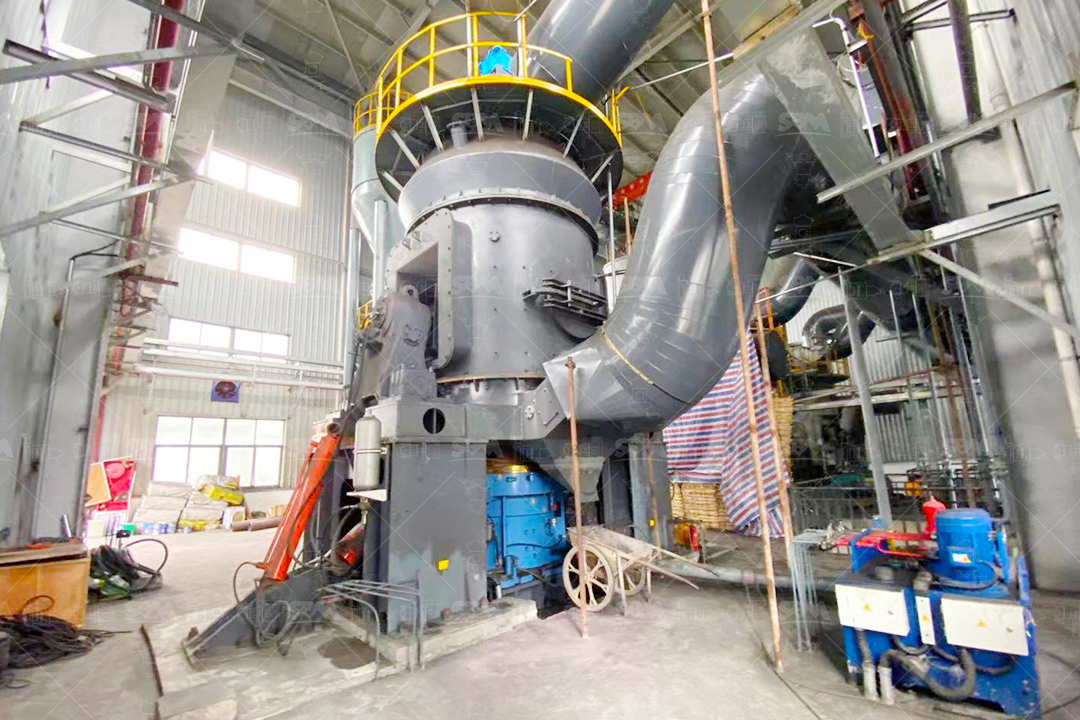
Why conventional grinding fails for talc
Talc's natural softness (Mohs hardness 1) and lamellar structure make it prone to over-grinding and particle damage in high-impact mills. Traditional ball mills, for instance, use tumbling steel balls that crush talc indiscriminately, generating excessive fines and consuming 30–50% more energy than necessary. Raymond mills, while better, suffer from high roller and ring wear due to material sliding, and their limited classification efficiency leads to inconsistent product fineness. These issues translate into higher spare parts costs, frequent downtime, and difficulty meeting tight specifications for applications like masterbatch or paper coating—where a D97 of 10–20 μm is critical. The industry needed a machine that could handle talc's abrasive flakes gently, efficiently, and with precise control.
How vertical roller mill redefines dry talc grinding
The vertical roller mill operates on a fundamentally different principle: material is fed onto a rotating grinding table, where hydraulic or pneumatic pressure forces one or more rollers against the material bed. This compressive and shearing action grinds talc without the impact forces that cause over-grinding. Key design innovations make it ideal for talc:
1. Integrated drying and classification
Talc often contains residual moisture from mining (up to 5%), which can cause clumping in conventional mills. The VRM uses hot gases from an external source or recirculated air to dry the material in-situ during grinding. The integrated dynamic classifier—often a multi-rotor design—sorts particles by size, returning coarse fractions for re-grinding while extracting finished product. This eliminates the need for separate dryers and classifiers, cutting capital expenditure by up to 50% and floor space by 50% compared to ball mill systems.
2. Low wear design for abrasive minerals
Unlike Raymond mills where rollers and rings contact under high stress, VRM rollers and grinding table are separated by a material bed. This reduces direct metal-to-metal wear. High-chrome alloy liners and rollers further extend service life—often 2–3 times longer than in traditional mills. For talc, which can contain abrasive silica impurities, this means fewer stoppages for roller replacement and lower maintenance costs. Some VRM models also feature segmented rollers that can be rotated or replaced individually, minimizing downtime.
3. Energy efficiency at scale
By grinding in a vertical orientation with optimized airflow, the VRM achieves 30–40% lower energy consumption than ball mills for the same throughput. For a 10 tph talc grinding line, this translates to savings of 2–3 MWh per day. Additionally, the VRM's ability to produce a narrower particle size distribution means less over-grinding and higher yield of prime-grade product—improving overall plant profitability.
4. Automatic control and consistent quality
Advanced PLC/DCS systems monitor grinding pressure, table speed, classifier rotor speed, and airflow in real time. Operators can adjust fineness from 30 mesh to 400 mesh (or finer with ultra-fine VRM variants) without mechanical changes. This automation ensures repeatable quality batch after batch, crucial for industries like plastics where particle size directly affects tensile strength and surface finish of the final product.
Case study: dry talc processing with high-volume VRM
A major Chinese talc processor producing 200,000 tons annually for the paper and paint markets upgraded from a ball mill system to a VRM with 40 tph capacity. Results after six months:
- Energy consumption reduced from 42 kWh/t to 28 kWh/t (33% savings).
- Roller life extended from 4,000 hours to 12,000 hours.
- Product fineness consistency improved: D97 variability dropped from ±5 μm to ±1.5 μm.
- Downtime for maintenance reduced by 60%, increasing effective production hours.
The VRM's ability to handle feed sizes up to 50 mm and moisture levels up to 5% eliminated the need for a pre-dryer, further simplifying the process line.
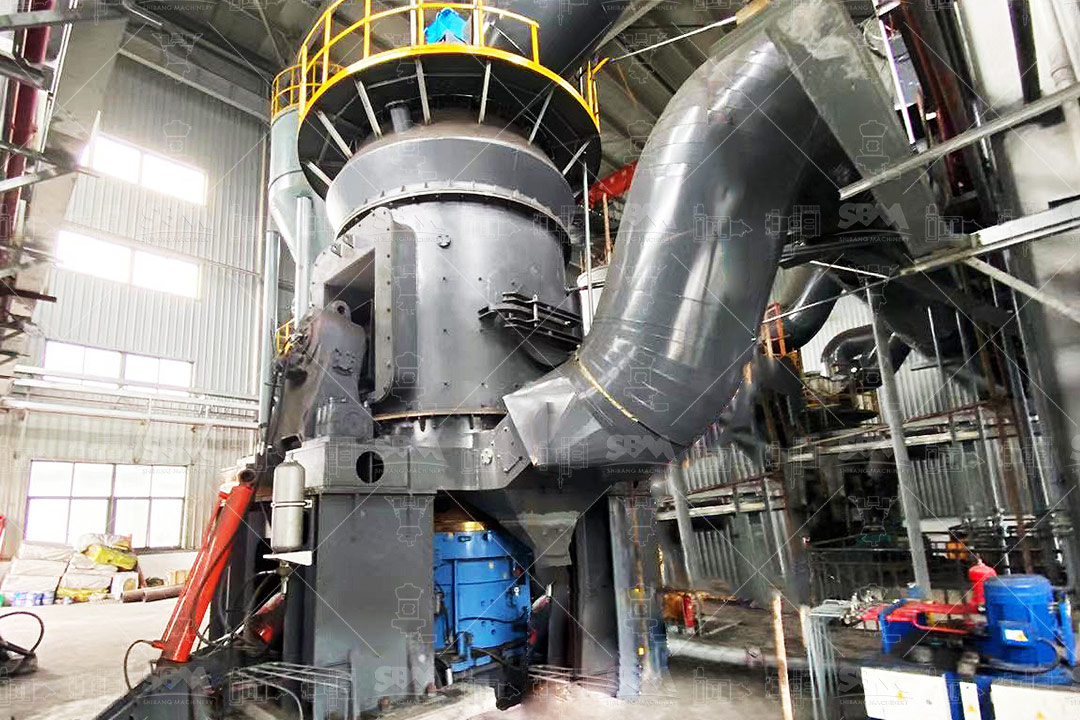
Ultra-fine talc: the next frontier
For applications requiring superfine talc (D97 ≤ 5 μm, 2,500+ mesh), the LUM ultrafine vertical mill is purpose-built. It combines Taiwan's grinding roller technology with Germany's powder classification system, achieving a one-time fineness of D97 ≤ 5 μm. Its heavy rotor design and special alloy rollers withstand the higher pressures needed for ultra-fine grinding, while the multi-rotor classifier ensures no coarse powder bleed-through. Output ranges from 10 to 70 tph for talc, making it suitable for high-volume production of masterbatch filler, cosmetic talc, and high-end paper coating pigments.
Operational considerations and best practices
To maximize VRM performance in talc processing, operators should:
- Maintain stable feed rate – variations cause bed height fluctuations and poor grinding efficiency.
- Monitor gas temperature and flow – too hot can dehydrate talc and alter its rheology; too cold reduces drying capacity.
- Schedule roller rotation – even wear across the roller profile ensures consistent gap and product quality.
- Use laser particle size analyzers for real-time fineness feedback to the classifier.
With proper operation, VRM liners and rollers can last 8,000–15,000 hours depending on talc purity and throughput. Spare parts—like the combined-type shovel blades in some VRM designs—can be replaced individually, reducing waste and cost.
Conclusion
Vertical roller mill technology has transformed dry talc processing from a high-energy, high-wear operation to a streamlined, efficient, and precise manufacturing process. By integrating multiple unit operations into one machine, it reduces capital and operating expenses while improving product quality and consistency. As global demand for high-purity, ultra-fine talc continues to grow—driven by plastics, automotive, and pharmaceutical sectors—the VRM stands out as the most innovative and sustainable solution. Equipment like the MTW European trapezium mill, LM vertical mill, and LUM ultrafine mill from leading manufacturers offer tailored options for every throughput and fineness requirement, backed by decades of application expertise across 180+ countries.
FAQ – common customer pain points in dry talc grinding
1. Why does my current ball mill produce inconsistent talc fineness from batch to batch?
Ball mills inherently produce a wide particle size distribution due to random impact forces and poor classification. Upgrading to a vertical roller mill with a dynamic classifier allows you to control particle size precisely (e.g., D97 ± 1 μm), ensuring consistent quality for applications like plastics masterbatch or paper coating.
2. How do I reduce maintenance downtime caused by roller and ring wear when grinding abrasive talc?
Use a vertical roller mill with segmented roller shells and high-chrome alloy materials. Some models offer perching knife designs where only the blade needs replacement during maintenance, cutting service time by up to 50%. Bed-grinding principle further reduces metal-to-metal contact, extending wear parts life by 2–3 times.
3. Can a VRM handle talc feed with high moisture (>5%) without pre-drying?
Yes, most VRMs integrate hot gas drying within the grinding chamber. They can handle feed moisture up to 10% by using recirculated exhaust gases or external heaters, eliminating the need for a separate dryer. This simplifies the process line and reduces energy costs.
4. What is the smallest fineness I can achieve with a single-pass VRM for talc?
Standard vertical roller mills reach D97 30–400 mesh (approx. 38–600 μm). For ultra-fine talc (D97 ≤ 5 μm, 2,500 mesh), you need a specialized ultra-fine vertical mill like the LUM series, which uses multi-rotor classifiers and higher grinding pressures. It can achieve D97 5–10 μm in a single pass without two-stage grinding.
5. I need to produce 50 tph of talc powder but have limited floor space. Is VRM a viable option?
Absolutely. A VRM requires about 50% less floor space than a ball mill system because it integrates grinding, drying, classification, and conveying in one compact unit. It can also be installed outdoors, further saving building costs. A 50–70 tph VRM setup fits in roughly the footprint of a single ball mill, while consuming 30–40% less energy per ton produced.


