

Integrated application of vertical roller mill in coal-fired solid waste treatment
2025-04-08
The integrated application of vertical roller mill technology in coal-fired solid waste treatment represents a paradigm shift in how the power generation and building materials industries manage fly ash, slag, and other combustion byproducts. By combining crushing, drying, grinding, classifying, and material transport into a single compact system, the vertical roller mill drastically reduces footprint, energy consumption, and maintenance overhead compared to traditional ball mill circuits. Drawing on decades of field experience and feedback from over 9,500 customers worldwide, SBM Machinery offers a full suite of grinding equipment — including the LM vertical roller mill, MTW European trapezium mill, SCM ultrafine mill, and LUM ultrafine vertical mill — each tailored to specific particle size requirements and throughput demands. For coal-fired solid waste treatment, the LM series vertical roller mill stands out as the preferred workhorse, delivering 30%–40% lower energy consumption, excellent drying capability for high-moisture feed, and the flexibility to produce finished products ranging from 30 mesh coarse powder to 2500 mesh ultrafine powder. This article explores how advanced mill designs solve persistent customer pain points such as high wear costs, poor product consistency, dust pollution, and system complexity, while also highlighting the environmental and economic benefits of integrating vertical roller mill technology into coal ash valorization processes.
1. Why vertical roller mill dominates coal-fired solid waste grinding
Coal-fired solid waste — including fly ash, bottom ash, and desulfurization gypsum — poses unique challenges due to its variable moisture content (often above 15%), abrasiveness, and the need for precise fineness control to meet downstream utilization standards in cement, concrete, and building materials. Traditional ball milling systems require separate drying units, occupy large floor space, and suffer from high metal ball wear and energy inefficiency. The vertical roller mill overcomes these limitations through its integrated design: materials are simultaneously dried by hot gas entering the mill, ground between the rotating table and hydraulically loaded rollers, and classified by an integrated rotary classifier. As shown in Table 1 (conceptual data), a typical LM vertical roller mill processing fly ash can achieve specific power consumption of 25–35 kWh/t, compared to 40–55 kWh/t for a ball mill, while the total system footprint is roughly 50% less.
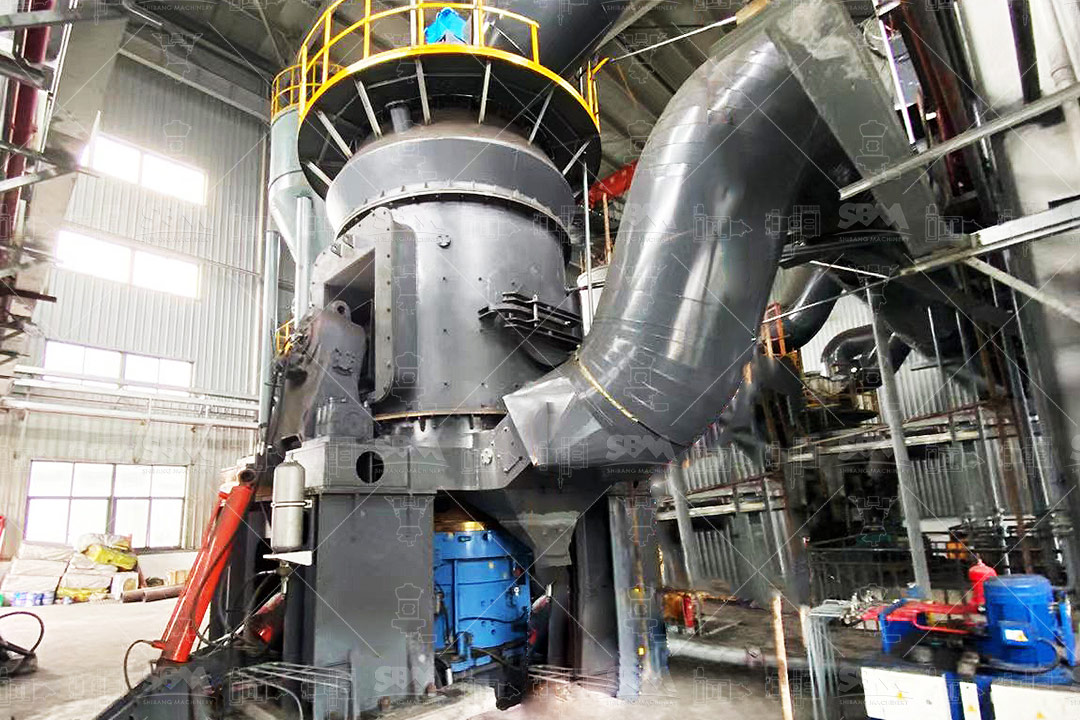
The LM mill is especially adept at handling feed sizes up to 50 mm and can deliver product fineness from 30 mesh (coarse) to 400 mesh (fine). Its automatic control system allows remote and local switching, reducing labor requirements and ensuring stable operation even when feed moisture fluctuates. For applications requiring very high fineness (325–2500 mesh), the SCM ultrafine mill or LUM ultrafine vertical mill can be deployed in series or as standalone units. This flexibility enables plant operators to produce multiple grades of ground solid waste from a single equipment lineup, addressing a frequent customer pain point: the need to serve both low-cost coarse filler markets and high-value ultrafine additive markets without investing in separate production lines.
2. Solving common customer pain points through design innovation
Customer feedback from over 180 countries has consistently highlighted five major pain points in coal-fired solid waste grinding: high wear part replacement frequency, excessive energy consumption, dust leakage and environmental non-compliance, difficulty in achieving consistent product fineness, and high total investment costs for complete systems. SBM's vertical roller mill and companion mills directly address each of these issues.
Wear and maintenance costs: The LM mill's grinding rollers never contact the table directly, and both components are made of high-quality wear-resistant alloys. The MTW European trapezium mill incorporates a unique combined-type shovel blade that only requires blade replacement during maintenance, not the entire assembly. For ultrafine applications, the LUM mill uses specially formulated roller and ring materials that extend durability several times over conventional alloys. A coal power plant in Shandong, for example, reported a 60% reduction in annual wear part costs after switching from a ball mill to an LM vertical roller mill for fly ash grinding.
Energy consumption: The cone gear whole transmission of the MTW mill and the direct grinding action of the LM mill (where rollers press material on the rotating table) yield energy savings of 30%–40% versus ball mill systems. The LUM ultrafine vertical mill further optimizes energy by using multi-rotor classifiers that customize product fineness without over-grinding. For a typical 30 tph fly ash grinding line, this translates to annual electricity savings of several hundred thousand kilowatt-hours.
Environmental performance: Both the LM and LUM mills operate under negative pressure with fully sealed systems, eliminating dust spillover. The MTW mill features an arc air duct with high-strength guard plates that prevent air energy loss and reduce fugitive emissions. The SCM ultrafine mill employs a dual powder collection strategy combining powder collectors and pulse dust collectors, achieving dust collection far above international standards. This helps customers meet increasingly stringent emission regulations, a common headache for plants located near residential areas.
Product consistency: The vertical turbine classifier in the SCM mill and the multi-rotor classifier in the LUM mill ensure precise cut size with no coarse powder spillover. The LM mill's automatic control system adjusts grinding pressure and classifier speed in real time, maintaining stable fineness despite feed variations. This reliability is critical for customers whose end products — such as high-strength concrete admixtures — demand tight particle size distribution.
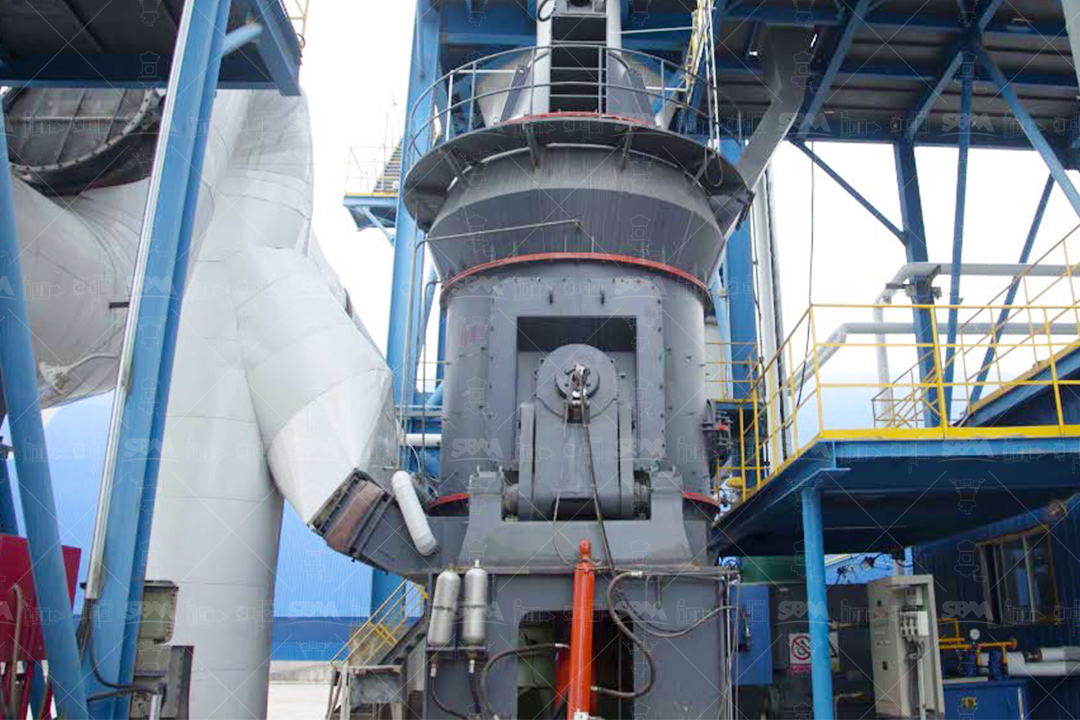
Investment and footprint: The LM vertical roller mill integrates multiple functions into one unit, reducing floor space by about 50% compared to ball mill systems and allowing outdoor installation. This cuts civil engineering costs and accelerates project timelines. The MTW mill's volute design also reduces material maintenance costs by improving wind-driven transmission efficiency.
3. Case examples of integrated mill application in waste treatment
In a typical coal-fired power plant scenario, the bottom ash and fly ash are first separated, and the fly ash is pneumatically conveyed to a storage silo. From there, it enters the LM vertical roller mill, where hot air from the power plant's waste heat system dries the feed from 20% moisture to less than 1% during grinding. The ground product, with fineness set to 325 mesh (for cement addition) or 1250 mesh (for high-value concrete admixture), is collected by baghouse filters and stored. For customers requiring both coarse and fine grades, the MTW European trapezium mill can handle coarser grinding (30–400 mesh) at lower capacities (3–40 tph), while the SCM or LUM ultrafine mills handle the premium ultrafine market (325–2500 mesh, 0.5–70 tph).
A chemical plant in Jiangsu using the LUM ultrafine vertical mill to grind desulfurization gypsum into 1250 mesh powder for the building materials industry reported a 25% increase in output compared to their previous ball mill, with energy consumption falling by 35%. The intelligent control system enabled them to operate the mill unattended during night shifts, directly reducing labor costs. Similarly, a metallurgical plant using the MTW mill for petroleum coke grinding achieved a 40% longer roller life due to the curved shovel blade design, addressing the chronic wear issue typical of abrasive feedstocks.
The versatility of SBM's product lineup means that a single solid waste processing plant can be equipped with a primary LM vertical roller mill for bulk powder (30–400 mesh) and a secondary LUM mill for ultrafine products, all controlled from a centralized PLC panel. This integrated approach minimizes equipment redundancy, simplifies spare parts inventory, and enables fast product switching to match market demand.
4. Future trends and the role of advanced mill technology
As coal-fired power plants face pressure to reduce waste disposal costs and generate revenue from byproducts, the integrated application of vertical roller mills will become even more critical. The ability to produce custom fineness products with low energy input, minimal environmental impact, and high reliability positions SBM's technology as a cornerstone of the circular economy in the power sector. The LM mill's drying capability also opens doors for treating wet solid wastes like desulfurization gypsum and coal slime, which are often landfilled due to handling difficulties. With continuous R&D investment and feedback from thousands of installations worldwide, SBM Machinery remains committed to refining mill designs for even lower wear, higher automation, and better environmental performance.
FAQ
Q1: Our fly ash has moisture content exceeding 20%. Can a vertical roller mill handle that without a separate dryer?
A: Yes. The LM vertical roller mill integrates drying with grinding. Hot gas (e.g., from waste heat or a hot air generator) enters the mill chamber and removes moisture while grinding takes place. Feed with up to 20–25% moisture can be dried to below 1% in a single pass, eliminating the need for a separate drying drum.
Q2: We often see severe wear on grinding rollers when processing coal slag. How does SBM's mill design reduce this?
A: The LM mill uses wear-resistant alloy for both rollers and grinding table, and the rollers never make direct metal-to-metal contact with the table. The MTW mill features a perching knife design with replaceable blades, so only the blade needs changing. The LUM mill uses specially formulated roller materials that offer several times longer life. These designs significantly reduce replacement frequency and cost.
Q3: What is the typical payback period for upgrading from a ball mill to a vertical roller mill for solid waste grinding?
A: While specific numbers depend on local energy prices and output, customers typically realize payback within 12–24 months due to 30–40% lower energy consumption, reduced wear parts cost, and lower maintenance labor. The smaller footprint also reduces civil works expenses.
Q4: Can the same mill produce both 200 mesh and 1250 mesh powder from solid waste?
A: Yes, with the appropriate machine selection. For a single mill, the LM vertical roller mill covers 30–400 mesh. If you need ultrafine powder (325–2500 mesh), the LUM ultrafine vertical mill or SCM ultrafine mill is recommended. Many plants install both in series or parallel to serve multiple markets.
Q5: How does SBM ensure environmental compliance for solid waste grinding lines?
A: All SBM mills operate under negative pressure with fully sealed systems. The LM mill is designed for minimal dust spillover. The SCM mill uses a dual powder collection system (powder collector + pulse dust collector) exceeding international emission standards. Noise is controlled via optimized sound insulation rooms and mufflers. The entire system meets national environmental protection requirements.


