

Application of raymond mill in non-metallic mineral processing
Published: 2025-10-01
In the field of non-metallic mineral processing, Raymond mill has long been a cornerstone equipment for grinding materials such as limestone, calcite, barite, dolomite, marble, talc, kaolin, gypsum, and feldspar. As industries demand higher fineness, lower energy consumption, and greater environmental compliance, traditional Raymond mills have been upgraded to meet modern challenges. SBM Machinery offers a comprehensive range of grinding solutions including MTW European Trapezium Mill, LM Vertical Roller Mill, SCM Ultrafine Mill, LUM Ultrafine Vertical Mill, and Ball Mill, covering output sizes from 30 mesh to 4000 mesh and capacities from 0.5 tph to 400 tph. These mills are designed to address common customer pain points such as low output, high energy consumption, excessive wear, high maintenance costs, and dust pollution. With over 180 countries served, SBM grinding equipment has become the preferred choice for global powder processing. This article explores the technical advantages, application scenarios, and selection considerations of Raymond mill in non-metallic mineral processing, providing practical insights for industry professionals.
Introduction to Raymond Mill in Non-Metallic Minerals
Non-metallic minerals, including calcium carbonate, talc, barite, kaolin, and wollastonite, are widely used in industries such as construction, plastics, rubber, paints, ceramics, and papermaking. The grinding process is critical to achieving the desired particle size distribution and purity. Raymond mill, originally designed for medium-hard materials, has evolved into a versatile family of mills capable of handling various non-metallic ores. SBM's product line addresses the limitations of traditional Raymond mills by incorporating advanced technologies such as cone gear transmission, arc air ducts, and intelligent control systems.
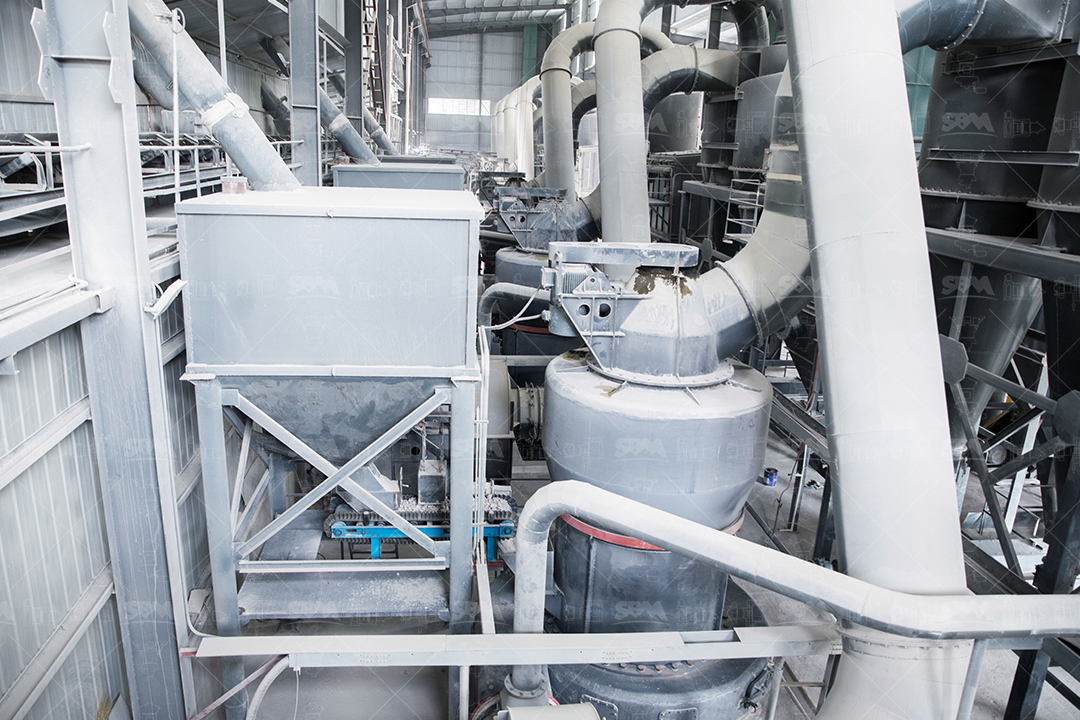
Key Equipment & Their Applications
MTW European Trapezium Mill (MTW Raymond Mill)
This mill is the result of extensive R&D based on feedback from over 9500 customers. Its cone gear whole transmission ensures higher efficiency and lower investment costs. The arc air duct design minimizes energy loss, while the unique wear-proof perching knife design reduces operating costs by allowing only the blade to be replaced. With input size up to 50mm and output range of 30-400 mesh (capacity 3-40 tph), the MTW mill is ideal for processing limestone for desulfurization, barite for oil drilling, and gypsum for construction.
LM Vertical Roller Mill
LM Vertical Roller Mill integrates crushing, drying, grinding, and powder selection. Its compact layout saves about 50% floor space compared to ball mill systems. The rollers do not contact the grinding plate directly, reducing wear. Energy consumption is 30-40% lower than ball mills. With capacity up to 400 tph, it is suitable for large-scale processing of limestone, coal, and slag. The automatic control system enables remote operation, reducing labor costs.
SCM Ultrafine Mill
For ultra-fine grinding, the SCM mill achieves D97≤5μm and adjustable fineness from 325 to 2500 mesh. It features high output (twice that of jet mills) with 30% lower energy consumption. The efficient vertical turbine classifier ensures accurate cutting size. This mill is used for high-value materials like kaolin for paper coating, talc for cosmetics, and GCC for plastics.
LUM Ultrafine Vertical Mill
Combining Taiwan roller technology and German classifier technology, LUM mill is designed for ultra-fine grinding of non-metallic ores. Its multi-rotor classifier allows customized fineness (325-4000 mesh) with no low-grade material. Capacity ranges from 10 to 70 tph, making it suitable for medium-to-high-end applications in PVC masterbatch, artificial stone, and non-woven fabrics.

Ball Mill (Optimized Version)
Although traditional ball mills suffer from high wear and energy consumption, SBM's optimized ball mill uses improved structural design and new materials to reduce spare part costs. Dry ball mills produce common powder, while wet ball mills are used in mineral dressing. Output size is 0.074-0.2mm with capacity 3-65 tph.
Selection Criteria for Non-Metallic Minerals
Choosing the right Raymond mill depends on several factors:
- Feed size: MTW and LM mills accept up to 50mm; SCM and LUM require ≤20mm.
- Target fineness: For 30-400 mesh, MTW or LM is suitable; for 325-2500 mesh, SCM is ideal; for 325-4000 mesh, LUM is recommended.
- Capacity requirement: Small to medium (3-40 tph) use MTW; large scale (up to 400 tph) use LM; ultra-fine with moderate capacity (0.5-25 tph) use SCM; ultra-fine with high capacity (10-70 tph) use LUM.
- Material hardness: All mills handle Mohs hardness below 7, except for ball mill which can handle harder materials.
- Moisture content: LM and LUM have drying functions for materials with up to 15% moisture.
Customer Pain Points & Solutions
Low Output and High Energy Consumption
Traditional Raymond mills often suffer from low throughput and high power consumption. SBM's LM Vertical Roller Mill solves this by integrating multiple processes and reducing energy usage by 30-40%. The MTW mill's cone gear transmission also improves efficiency.
High Wear and Maintenance Costs
Worn rollers and rings are common complaints. SBM's combined-type shovel blade in MTW mill allows only blade replacement, cutting costs. LM mill's non-contact rollers reduce wear. SCM and LUM mills use special materials for roller and ring, increasing durability several times.
Dust Pollution and Environmental Issues
Open systems cause dust spillover. All SBM mills feature sealed systems operating under negative pressure, with pulse dust collectors and noise insulation. LM and LUM mills meet national environmental standards.
Difficulty in Fineness Control
Customers need precise particle size distribution. SCM and LUM mills use frequency-conversion control and efficient classifiers to achieve D97≤5μm without coarse powder overflow.
Large Floor Space Requirement
Ball mill systems occupy large areas. LM Vertical Roller Mill reduces floor space by 50% and can be installed outdoors, lowering civil construction costs.
Conclusion
Raymond mill remains a vital tool in non-metallic mineral processing, but modern demands require advanced features. SBM's product portfolio offers tailored solutions for fineness, capacity, energy saving, and environmental compliance. By selecting the appropriate mill based on material characteristics and production targets, operators can achieve optimal efficiency and product quality. With proven success in over 180 countries, SBM continues to innovate and support the global powder processing industry.
FAQ
1. Why does my Raymond mill produce low output for limestone grinding?
Low output often results from improper feed size, high moisture content, or worn grinding elements. Check feed size (should be ≤50mm for MTW and LM mills). If moisture exceeds 15%, consider using LM or LUM mill with drying function. Also, inspect the shovel blade and roller ring – if worn, replace using SBM's combined-type blade to restore efficiency.
2. How can I reduce energy consumption in my grinding process?
Switching to LM Vertical Roller Mill can lower energy consumption by 30-40% compared to ball mills. For ultra-fine grinding, SCM Ultrafine Mill uses 30% less energy than jet mills. Also, ensure your mill's arc air duct (in MTW) is not blocked, as it affects air transport efficiency.
3. My current mill causes dust pollution – what SBM solution is best for environmental compliance?
SBM mills operate under negative pressure with sealed systems. For high environmental standards, choose LM or LUM mill, which include pulse dust collectors and noise insulation. The entire system is enclosed, preventing dust spillover and meeting national emission standards.
4. I need to grind talc to 1250 mesh, but the finished product contains coarse particles. What should I do?
For talc grinding to 1250 mesh, the SCM Ultrafine Mill or LUM Ultrafine Vertical Mill is recommended. They feature efficient vertical turbine classifiers that ensure accurate cutting size without coarse powder overflow. Use frequency conversion to adjust classifier speed for precise control.
5. My grinding mill wears out rollers and rings too quickly – any cost-saving solution?
SBM's MTW mill uses a combined-type shovel blade design – only the blade needs replacement, reducing wear part cost. For LM and LUM mills, rollers and grinding plates are made of high-quality materials and do not contact directly, extending service life. SCM mill's heavy rotor design and special roller/ring material offer several times higher durability. Regular maintenance and proper feed material screening also help.


