

Complete guide to lithium ore: properties, distribution, types, and uses
Published: October 26, 2023
Lithium ore, the primary source of one of the most sought-after elements in modern industry, is a complex and diverse group of minerals. This comprehensive guide explores the fundamental properties of lithium ore, its global distribution, main types, and extensive applications. With its exceptional electrochemical reactivity and low density, lithium has become indispensable for rechargeable batteries, energy storage systems, electric vehicles, aerospace alloys, glass, ceramics, and pharmaceuticals. SBM Machinery, a total solution provider for grinding equipment, leverages decades of expertise in mineral processing to offer state-of-the-art pulverizing solutions tailored to lithium ore processing. This document serves as an authoritative resource for industry professionals seeking a deep understanding of lithium ore, from geological origins to final powder applications.
Properties of lithium ore
Lithium is a soft, silvery-white alkali metal with the lowest density of all solid elements at 0.534 g/cm³. It exhibits remarkable electrochemical potential, making it ideal for high-energy-density batteries. Lithium ores typically occur in pegmatitic deposits or as brines. Key physical properties include high specific heat capacity, low thermal expansion coefficient, and strong reactivity with water and air. In mineral form, lithium appears in silicates, phosphates, and chlorides. Its chemical stability varies by host mineral, influencing processing methods. For example, spodumene requires thermal transformation from alpha to beta phase for efficient extraction, while lepidolite presents a more refractory nature. Understanding these properties is critical for selecting appropriate grinding technology, as hardness, abrasiveness, and liberation size dictate equipment choice.
Global distribution of lithium resources
Lithium resources are concentrated in a handful of countries, with the 'Lithium Triangle' in South America—comprising Chile, Argentina, and Bolivia—holding over 50% of global reserves in brine form. Australia leads in hard-rock lithium production, primarily from pegmatite deposits in Western Australia. Other significant producers include China (with major deposits in Sichuan, Jiangxi, and Qinghai), the United States (notably from the Kings Mountain pegmatite in North Carolina and Clayton Valley brines in Nevada), Canada (Quebec and Manitoba), Portugal, Zimbabwe, and Brazil. The growing demand for lithium-ion batteries has spurred exploration in new regions, including Serbia, Finland, and Mexico. Each deposit type—whether brine, pegmatite, or sedimentary—demands tailored processing techniques, including specialized grinding and classification systems from providers like SBM Machinery, which serves over 180 countries with customized powder processing solutions.
_1780158232325.jpg)
Types of lithium ore
1. Spodumene (LiAlSi₂O₆)
The most economically important lithium-bearing mineral, spodumene contains about 8% Li₂O. It crystallizes in the monoclinic system and typically occurs in lithium-rich pegmatites. Natural spodumene is alpha-spodumene, resistant to acid attack, requiring heat treatment at ~1100°C to convert to beta-spodumene for easier extraction. Its hardness (6.5–7 Mohs) demands robust grinding mills, such as the LM Vertical Roller Mill, which handles input sizes up to 50mm with throughput up to 400 tph, ideal for high-volume spodumene processing.
2. Lepidolite (KLi₂Al(Al,Si)₃O₁₀(F,OH)₂)
A lithium-rich mica with typically 3.5–4.5% Li₂O. Lepidolite appears in pegmatites and greisens, often associated with tin and tantalum. Its flaky habit and moderate hardness (2.5–4 Mohs) make it suitable for processing with the European Trapezium Mill (MTW series), whose curved shovel blade design optimizes feeding angle for layered minerals.
3. Petalite (LiAlSi₄O₁₀)
Contains approximately 4.5% Li₂O. It is less common than spodumene but offers advantages in glass-ceramics due to its low thermal expansion. Petalite's hardness (6–6.5 Mohs) and cleavage characteristics influence mill selection, often benefiting from the ball mill for coarse grinding or the ultrafine vertical mill for specialty applications requiring fineness down to D97≤5μm.
4. Amblygonite (LiAlPO₄F)
A lithium-aluminum phosphate with up to 10% Li₂O, making it one of the richest lithium ores. However, its rarity and complex processing limit commercial use. When encountered, the SCM Ultrafine Mill can achieve precise fineness control from 325 to 2500 mesh for complete liberation.
5. Brine deposits
Lithium-rich salt brines in salt flats (salars) of Chile, Argentina, and Bolivia contain lithium chloride. While brines undergo evaporation and chemical precipitation rather than grinding, the resulting lithium carbonate or hydroxide often requires micronization for battery-grade materials, a task suited to the LUM Ultrafine Vertical Mill.
Uses of lithium ore
Lithium's applications span from traditional industries to cutting-edge technology. Approximately 70% of lithium consumption now goes to batteries—lithium-ion, lithium-polymer, and lithium iron phosphate—powering smartphones, laptops, electric vehicles, and grid storage. Glass and ceramics industries use lithium compounds to reduce melting temperature, improve strength, and enhance thermal shock resistance (e.g., cooktop panels). The aerospace sector employs lithium-aluminum alloys for lightweight structural components. Lithium greases provide stable lubrication over wide temperature ranges. Medical applications include bipolar disorder treatment and battery implants. Emerging uses involve lithium in carbon capture, nuclear fusion (tritium breeding), and advanced ceramics. All these applications demand consistent powder quality, achievable through SBM Machinery's integrated grinding systems, from the MTW European Trapezium Mill for medium-fineness production to the SCM Ultrafine Mill for sub-micron precision.
Processing challenges and solutions
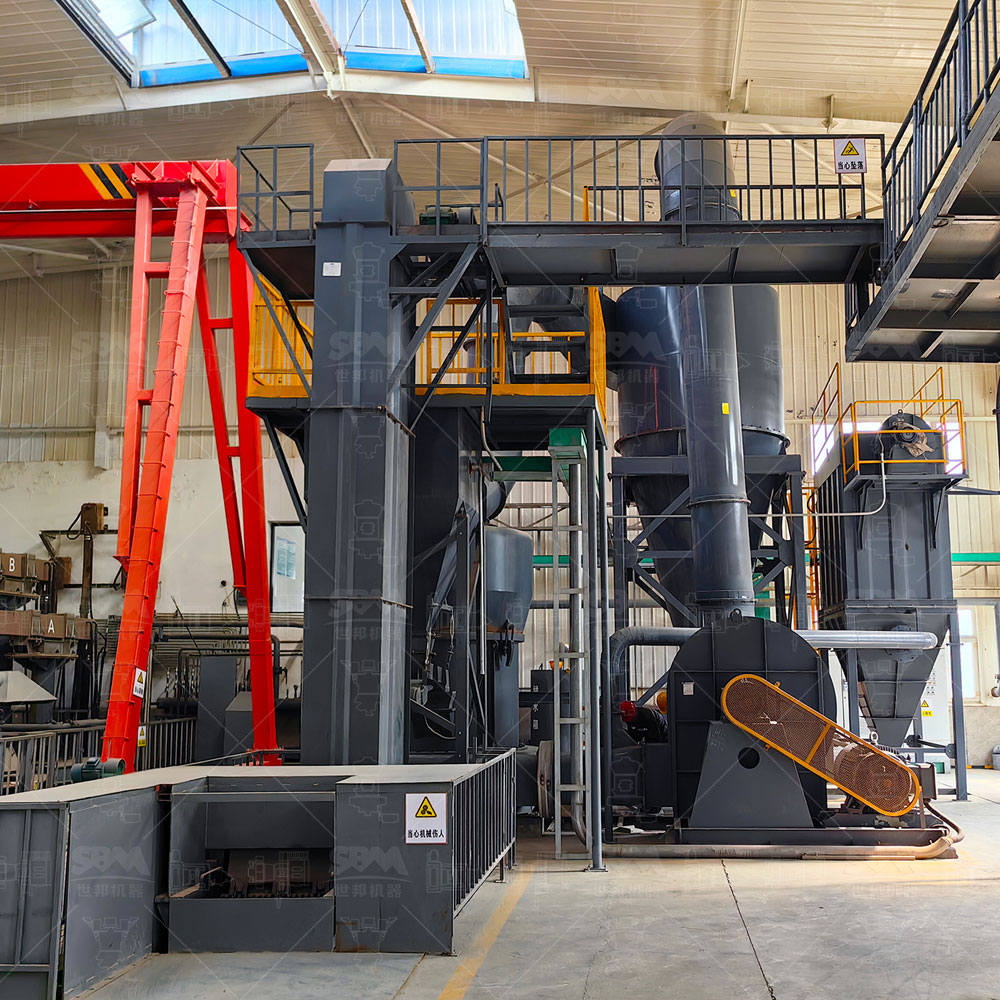
Lithium ore processing presents significant challenges: high abrasiveness requires wear-resistant components; varying liberation sizes demand flexible grinding solutions; strict purity standards (especially for battery-grade materials) necessitate contamination-free milling. SBM Machinery addresses these issues through advanced designs. The LM Vertical Roller Mill features rollers and grinding plates made of high-quality materials with no direct contact, reducing wear and extending service life by 30–40% compared to traditional ball mills. The SCM Ultrafine Mill employs heavy rotors and special material for rollers and rings, achieving durability several times higher than standard mills. Environmental concerns are met with sealed systems operating under negative pressure, meeting national emission standards. The automatic control systems—PLC/DCS-based—allow remote operation and precise adjustment of fineness, ensuring consistent output for lithium concentrate, lithium carbonate, or downstream products.
Conclusion
Lithium ore will remain pivotal in the global transition to sustainable energy. Understanding its properties, geographical sources, mineral types, and end-use applications is essential for stakeholders in mining, processing, and manufacturing. With advanced grinding technology from experienced providers like SBM Machinery, the industry can overcome processing hurdles to produce high-purity lithium powders efficiently and responsibly.
Frequently Asked Questions (FAQ)
1. Why is my lithium ore grinding mill not achieving the desired fineness?
Many clients face this issue due to incorrect mill settings or unsuitable equipment for the specific lithium mineral type. For example, processing tough spodumene with a general-purpose Raymond mill may yield coarse output. We recommend using the SCM Ultrafine Mill for fineness requirements from 325 to 2500 mesh, or the LUM Ultrafine Vertical Mill for ultrafine (D97≤5μm) production, both featuring precision classification and frequency-conversion control to meet strict specifications.
2. How can I reduce high energy costs in lithium ore grinding?
Energy consumption is a common pain point, especially with outdated ball mill systems. Our LM Vertical Roller Mill integrates crushing, drying, grinding, and separation in one unit, reducing energy usage by 30–40% compared to ball mills. Alternatively, the MTW European Trapezium Mill with cone gear whole transmission achieves higher efficiency and lower power consumption per ton of lithium ore processed.
3. My grinding mill experiences frequent roller and ring wear. What solution do you offer?
Lithium ores like spodumene and petalite are highly abrasive, causing rapid wear in conventional mills. SBM Machinery addresses this with unique wear-proof perching knife designs (MTW series) and heavy rotor designs with special material rollers and rings (SCM series). These components extend service life several times over, reducing downtime and replacement costs.
4. Can your grinding equipment handle both dry and wet processing of lithium ore?
Yes. While dry ball mills are standard for common powder production, we also provide wet ball mills widely used in mineral dressing for lithium ore beneficiation. For specific needs like fine grinding of lithium carbonate or hydroxide, the LUM Ultrafine Vertical Mill operates efficiently in dry mode with integrated drying functions for moisture-containing feed.
5. How do I ensure environmental compliance for my lithium grinding plant?
Environmental regulations are tightening globally. Our grinding system emphasizes full sealing and negative pressure operation to prevent dust spillover. The SCM Ultrafine Mill incorporates an efficient double powder collection method combining powder collectors and pulse dust collectors, far exceeding international standards. Sound insulation rooms and mufflers also reduce noise pollution, helping your facility meet local requirements.


