

Types of building materials and the key role of vertical roller mill
Published on: October 2023
Building materials are the foundation of modern infrastructure, and their production efficiency directly impacts construction timelines, cost control, and final quality. From cement and gypsum to limestone filler and slag powder, each material requires specific grinding technologies to achieve optimal particle size, uniformity, and performance. Among the various grinding equipment available today, the vertical roller mill stands out as a transformative solution that addresses the most persistent pain points faced by building material producers: high energy consumption, frequent downtime due to wear, inconsistent product fineness, and excessive floor space requirements. Unlike traditional ball mills or Raymond mills, the vertical roller mill integrates crushing, drying, grinding, and powder selection into a single compact system, offering up to 40% lower energy consumption and a footprint only half that of ball mill systems. This article explores the major categories of building materials and explains why the vertical roller mill, especially models like the LM Vertical Roller Mill and LUM Ultrafine Vertical Mill, has become the backbone of modern mineral processing for the building materials industry.
Types of Building Materials and Their Processing Requirements
Building materials can be broadly classified into natural stone materials, cementitious materials, gypsum products, and industrial by-product powders such as slag and fly ash. Each type presents unique challenges during grinding and processing.
Cement and Clinker – Cement production demands ultra-fine grinding of clinker with gypsum to achieve high specific surface area for proper hydration. The hardness and abrasiveness of clinker cause severe wear in conventional mills, leading to frequent replacement of grinding media. Vertical roller mills, with their roller-and-table design that avoids direct metal-to-metal contact, significantly reduce wear and operating costs.
Limestone and Calcium Carbonate – Limestone is the primary raw material for cement, lime, and GCC (ground calcium carbonate) production. The required fineness typically ranges from 100 to 400 mesh for cement raw meal, while GCC applications for paints, plastics, and paper demand up to 2500 mesh. Traditional Raymond mills struggle with high moisture content in limestone, often causing clogging. The LM Vertical Roller Mill integrates a drying function that handles feed moisture up to 20%, solving this issue directly.
Gypsum – Natural gypsum and FGD gypsum (from power plants) require grinding to 80-120 mesh for plasterboard manufacturing. The key pain point is the stickiness of gypsum when heated, which leads to buildup on mill internals. The arc air duct design and volute structure of European trapezium mills and vertical roller mills minimize material adhesion and maintain stable operation.
Slag and Fly Ash – These industrial by-products are increasingly used as cement replacements or additives. Slag is extremely hard and abrasive; conventional ball mills consume enormous power (often 70-80 kWh/t) and have high maintenance costs. Vertical roller mills lower energy consumption by 30-40% and enable finer grinding (400-500 m²/kg Blaine) with less vibration.
Non-Metallic Minerals (Talc, Barite, Kaolin, etc.) – Used in fillers, extenders, and waterproofing materials, these minerals require ultrafine grinding. The LUM Ultrafine Vertical Mill, combining Taiwan grinding roller technology and German powder classification, achieves D97 < 5 µm in one pass, far exceeding what traditional mills can deliver without secondary classification circuits.
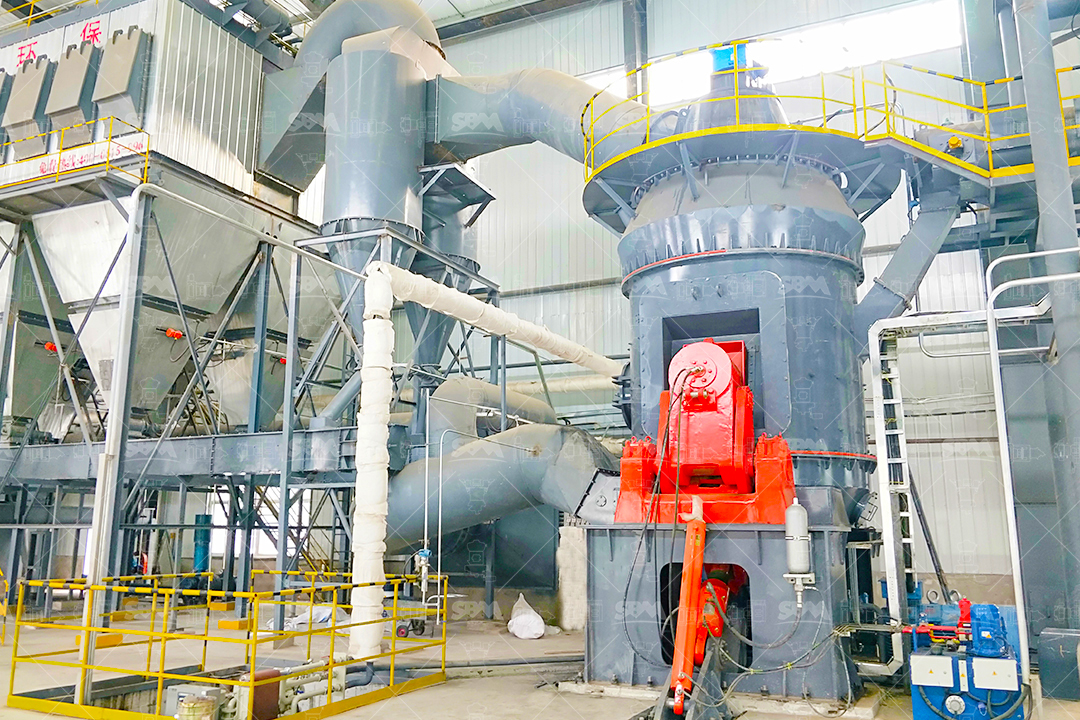
The Key Role of Vertical Roller Mill in Building Materials Production
The vertical roller mill has emerged as the core equipment in building material grinding for several compelling reasons that directly address the shortcomings of older technologies.
1. Integration of Multiple Functions Saves Capital and Space
Traditional grinding systems require separate crushers, dryers, conveyors, and classifiers. The LM Vertical Roller Mill combines crushing, drying, grinding, and powder selection in one unit, with a compact layout occupying only about 50% of the floor space required by a ball mill system. This integration reduces civil engineering costs, simplifies material handling, and allows outdoor installation, drastically lowering the total investment for building material plants.
2. Energy Efficiency and Lower Operating Costs
In the building materials industry, energy can represent over 60% of total production costs. The vertical roller mill’s grinding principle—where material is compressed and sheared between rollers and a rotating table—consumes 30-40% less energy than ball mills. The LM series specifically eliminates the heavy steel balls that cause both high power draw and wear. Additionally, the rollers do not contact the grinding table directly, and both components are made of high-alloy wear-resistant materials, extending service life and reducing spare part costs. For operators who frequently complain about ball mill liners lasting only 6-12 months, VRM rollers and tables can last 3-5 years under proper operation conditions.
3. Superior Product Quality with Precise Control
Building material standards demand consistent particle size distribution and specific surface areas. The vertical roller mill uses an integrated rotary classifier that provides precise cut points and automatic fineness adjustment via frequency conversion control. Whether producing 30 mesh coarse powder for road base or 2500 mesh ultrafine powder for sealants, the mill maintains uniformity without the common problem of oversize particles contaminating the product. The automatic control system (PLC/DCS based) enables unattended operation, reducing labor costs and human error—a major pain point for plants struggling with skilled labor shortages.
4. Environmental Compliance and Dust Control
Strict environmental regulations in the building materials sector make dust suppression a priority. Vertical roller mills operate under negative pressure with fully sealed systems, preventing any dust spillage. The high-efficiency pulse dust collectors, combined with sound insulation, ensure emissions meet national standards and noise levels stay low. For companies facing fines or shutdowns due to dust pollution, upgrading to VRM technology often solves compliance issues in one step.
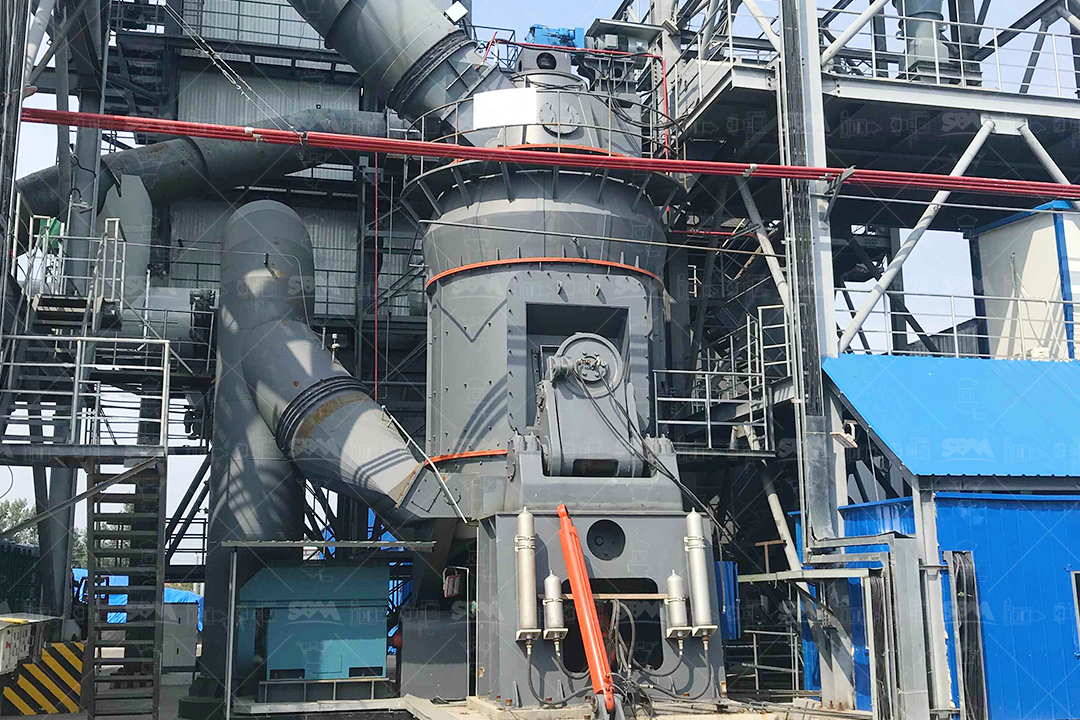
5. Handling Moisture and Difficult Materials
Many building materials, such as wet limestone or desulfurized gypsum, enter the mill with high moisture content. The LM Vertical Roller Mill uses hot gas from the kiln or a separate air heater to dry the material during grinding, handling moisture up to 20% without clogging. This eliminates the need for pre-drying equipment, simplifying the process and reducing capital expenditure.
6. Ultrafine Capabilities for Specialized Products
For high-value applications like artificial stone, PVC fillers, and cable insulation compounds, the LUM Ultrafine Vertical Mill achieves fineness down to 5 µm (D97). This is critical because coarser particles can cause surface defects, reduced mechanical strength, or poor dispersion. The multi-rotor classifier technology ensures no coarse powder passes through, guaranteeing consistent quality.
Conclusion
Building materials processing has evolved from simple crushing to sophisticated grinding requiring high efficiency, precision, and environmental responsibility. The vertical roller mill, particularly the LM and LUM series from SBM, has proven to be the most versatile tool in addressing the five critical challenges: high energy costs, equipment wear, maintenance downtime, product quality inconsistency, and environmental compliance. With installations in over 180 countries and continuous innovation in roller geometry, classifier design, and automation, the vertical roller mill will remain the cornerstone of building material production for years to come.
Frequently Asked Questions
Q1: Our cement plant is using a ball mill but the energy cost is too high. How much can we save by switching to a vertical roller mill?
A: Vertical roller mills typically consume 30% to 40% less energy than ball mills for the same production capacity. For example, a ball mill grinding clinker may require 70-75 kWh/t, while a VRM of similar capacity operates at about 45-50 kWh/t. Many users recover their investment within 2-3 years purely from energy savings and reduced wear part costs.
Q2: We process limestone with moisture content sometimes reaching 15%. Our current Raymond mill often clogs. Can a vertical roller mill handle wet feed?
A: Yes. The LM Vertical Roller Mill is designed to dry and grind simultaneously by introducing hot gas into the mill. It can handle feed materials with moisture up to 20% without clogging. This eliminates the need for a separate dryer, simplifying your process and reducing equipment costs.
Q3: Our customers require very fine gypsum powder (325 mesh) but our existing mill produces too many coarse particles. What solution do you recommend?
A: The LUM Ultrafine Vertical Mill or the SCM Ultrafine Grinding Mill would be ideal. The LUM uses a multi-rotor classifier that provides accurate cut sizing, ensuring no coarse particles leak into the product. It achieves D97 ≤ 5 µm with consistent quality, and the fineness is adjustable via frequency control.
Q4: We are concerned about the maintenance requirements of a vertical roller mill. Are the rollers and liners difficult to replace?
A: Modern VRMs are designed for easy maintenance. The combined-type shovel blade (as in the MTW trapezium mill) only requires replacing the blade portion, not the entire assembly. On LM and LUM mills, rollers can be hydraulically tilted out for inspection or replacement, and wear liners are segmented for quick swap. Average downtime for roller replacement is about 8-12 hours with a trained team.
Q5: Can we use a vertical roller mill to produce both coarse and ultrafine powder from the same equipment, or do we need two different machines?
A: While the LM series is optimized for 30-400 mesh and the LUM series for 325-4000 mesh, you can achieve a broad range by adjusting the classifier speed and grinding pressure. However, for optimal efficiency and product quality, we recommend using the LM mill for coarse-to-medium fineness and the LUM mill for ultrafine applications. Many plants operate both in tandem for maximum flexibility.


