

Introduction to regenerated activated carbon equipment and production methods
Published on: October 26, 2023
Regenerated activated carbon equipment plays a critical role in extending the lifecycle of spent activated carbon, reducing waste, and lowering operational costs for industries such as water treatment, food processing, pharmaceuticals, and chemical manufacturing. The process of regeneration involves thermal or chemical treatment to restore the adsorptive capacity of activated carbon, allowing it to be reused multiple times without significant performance loss. Modern equipment, such as that offered by Shanghai SBM Machinery Equipment Co., Ltd., integrates advanced grinding, classifying, and material handling technologies to achieve high efficiency, low energy consumption, and consistent product quality. This article provides a comprehensive overview of regenerated activated carbon equipment and production methods, focusing on key machinery like the MTW European Trapezium Grinding Mill, LM Vertical Roller Mill, SCM Ultrafine Mill, LUM Ultrafine Vertical Mill, and Ball Mill, all of which can be adapted for carbon processing. We will explore how these systems address common customer pain points, including high energy usage, product fineness inconsistency, equipment wear, and environmental compliance.
Understanding Regenerated Activated Carbon
Activated carbon is a porous material with a high surface area, used for adsorption of impurities from gases and liquids. After prolonged use, its pores become clogged with adsorbates, reducing efficiency. Regeneration restores the carbon's properties, making it a cost-effective alternative to disposal and replacement. The primary methods include thermal regeneration (using rotary kilns or multiple hearth furnaces), chemical regeneration, and biological regeneration. However, the success of regeneration heavily depends on the pre-processing of spent carbon—specifically, grinding and classification to achieve uniform particle size and remove contaminants. SBM Machinery's grinding equipment, such as the MTW Series European Trapezium Grinding Mill, is ideally suited for this task, offering input sizes up to 50mm and output fineness from 30 to 400 mesh, with capacities ranging from 3 to 40 tph. The mill's cone gear whole transmission and arc air duct design ensure efficient energy transfer and material transport, directly addressing the pain point of high operational costs.
Key Equipment for Activated Carbon Regeneration
The regeneration process involves multiple stages: pre-crushing, grinding, classification, thermal treatment, and post-grinding. SBM's product portfolio covers each stage with specialized machinery:
MTW European Trapezium Grinding Mill
The MTW mill is a versatile solution for pre-grinding spent carbon. Its unique wear-proof perching knife design reduces maintenance costs, as only the blade requires replacement during servicing. The curved shovel blades improve the feeding angle, extending the service life of rollers and rings. This is particularly beneficial for customers dealing with abrasive spent carbon, a common pain point. Additionally, the arc air duct minimizes air energy loss, ensuring consistent transport of ground material to the classifier. For regeneration applications, the mill's ability to handle input sizes up to 50mm and produce fine powders (30–400 mesh) makes it suitable for homogenizing carbon before thermal treatment.
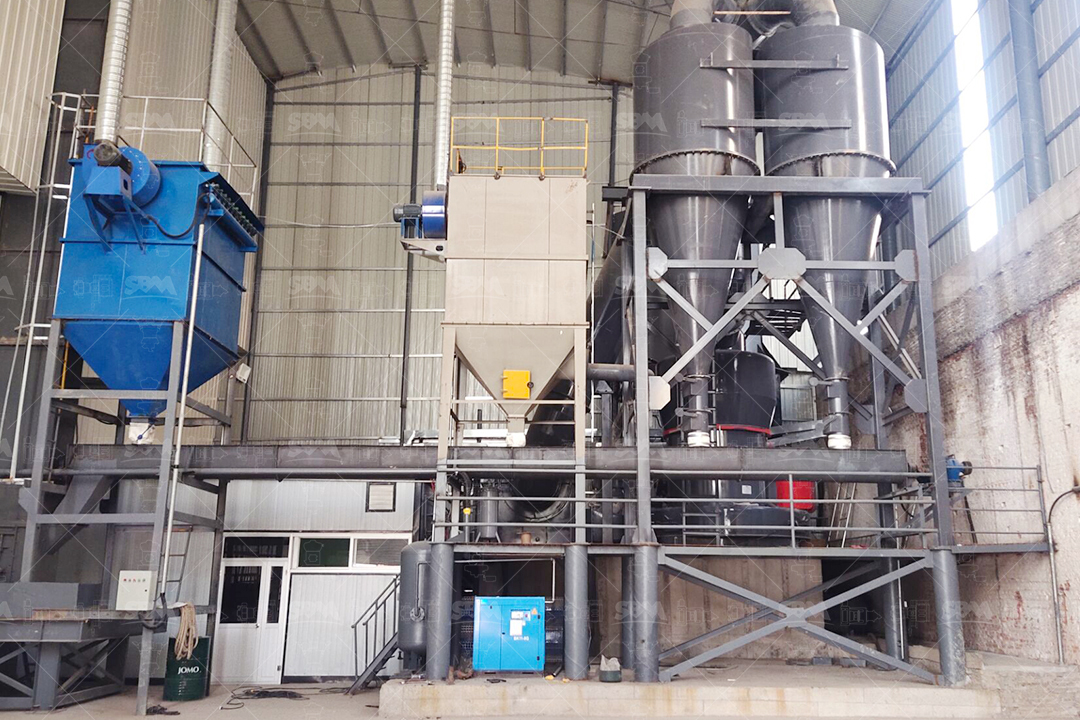
LM Vertical Roller Mill
For higher capacity requirements (up to 400 tph), the LM Vertical Roller Mill excels. It integrates crushing, drying, grinding, and powder separation in one unit, reducing floor space by 50% compared to ball mill systems. This is a key advantage for clients with limited installation space. The mill's low operating costs (30–40% lower energy consumption than ball mills) and automatic control system address two major pain points: high energy bills and labor expenses. The roller and grinding plate are made of high-quality materials, minimizing wear even when processing hard carbon particles. For regeneration plants, the LM mill can be used for fine grinding of thermally treated carbon, ensuring the final product meets specific fineness requirements (30–400 mesh).
SCM Ultrafine Mill
When the regeneration process demands ultrafine powders (325–2500 mesh), the SCM Ultrafine Mill is the preferred choice. Its frequency-conversion control allows precise adjustment of product fineness, with a one-time finishing capability of D97≤5μm. This is critical for customers in high-end applications like pharmaceutical or battery material purification, where particle size consistency is paramount. The mill's high output (0.5–25 tph) and low energy consumption (30% less than jet mills) directly counter the complaint of low throughput and high energy use. The efficient vertical turbine powder classifier ensures no coarse powder spillover, which is a common quality issue in regenerated carbon production.
LUM Ultrafine Vertical Mill
For medium to high-end regeneration applications, the LUM Ultrafine Vertical Mill offers advanced separation technology based on multi-rotor classifiers. It can produce fineness from 325 to 4000 mesh, with capacities up to 70 tph. The PLC control system ensures stable operation and precise adjustment of grinding pressure and disc speed, addressing the pain point of inconsistent product quality. The mill's environmentally-friendly design—sealed system operating under negative pressure—meets strict emission standards, a growing concern for carbon regeneration facilities handling fine dust. Its application in plastics, PVC, and non-woven fabric industries also demonstrates its versatility for regenerated carbon used in specialized sectors.
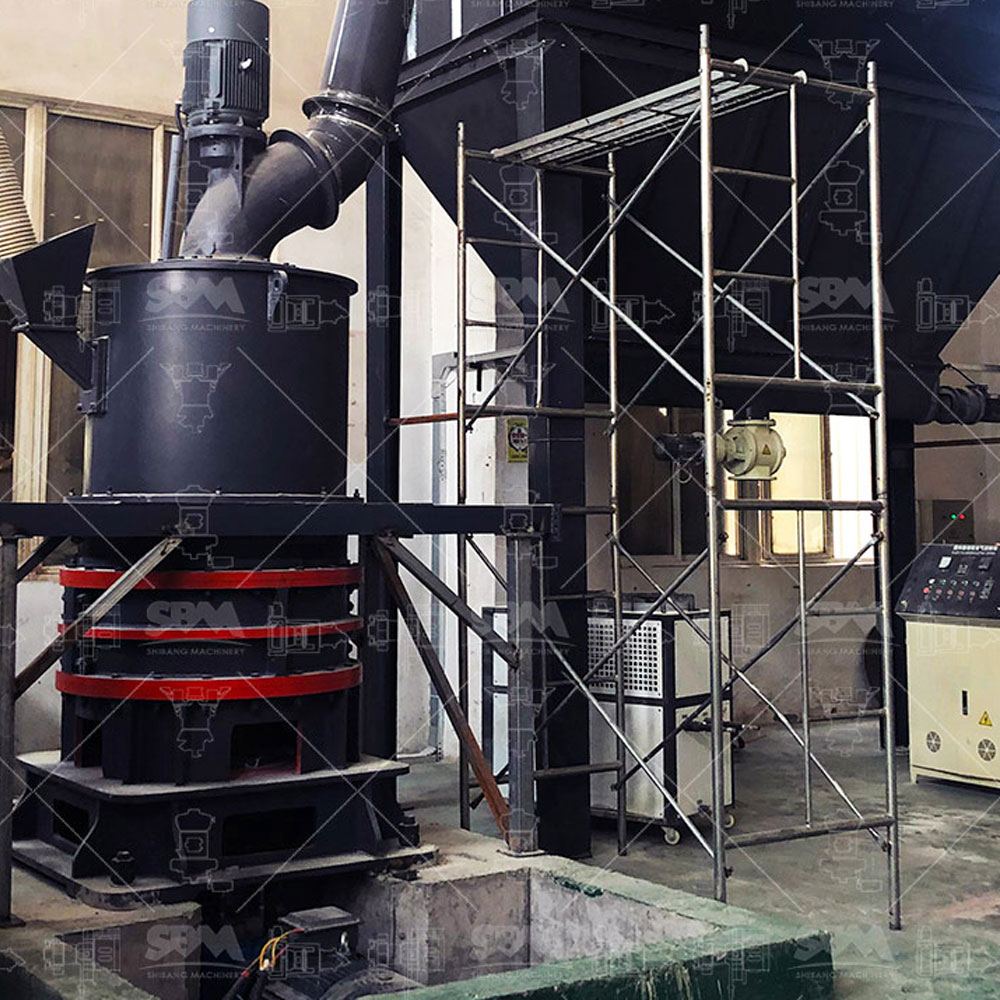
Ball Mill
Although traditional ball mills have high wear and energy issues, SBM's optimized design—using new materials and improved structure—reduces spare part costs by up to 30%. The dry ball mill is suitable for producing common powder (0.2–0.074 mm), while the wet ball mill is widely used in mineral dressing for carbon slurry preparation. For regeneration, the ball mill can be employed for coarse grinding of spent carbon before thermal treatment, especially when dealing with high-moisture feed. However, for modern regeneration facilities, vertical roller mills and ultrafine mills are often preferred due to better energy efficiency and smaller footprints.
Production Methods for Regenerated Activated Carbon
The typical production flow for regenerated activated carbon using SBM equipment includes: 1) Pre-processing: Spent carbon is crushed to <50mm using a jaw crusher or impact crusher. 2) Grinding: The crushed material is fed into a mill (e.g., MTW or LM) for size reduction to 30–400 mesh. 3) Classification: Fine particles are separated via an air classifier, with oversize returned for regrinding. 4) Thermal regeneration: The ground carbon is heated in a rotary kiln (not supplied by SBM but compatible) at 800–1000°C to volatilize adsorbed organics. 5) Post-grinding: The regenerated carbon may be further ground using an SCM or LUM mill to achieve ultrafine specifications. 6) Dust collection: Pulse dust collectors are used to capture fines, meeting environmental standards. SBM's equipment can be configured as a complete system, with automated control reducing manual intervention.
Addressing Customer Pain Points
Common issues faced by clients include: high energy consumption (solved by LM mill's 30–40% lower energy use), rapid wear of parts (addressed by MTW's wear-proof design), inconsistent fineness (managed by SCM's frequency-conversion control), large floor space requirements (reduced by LM mill's compact layout), and environmental non-compliance (resolved by LUM's sealed negative-pressure system). By integrating SBM's grinding solutions, regeneration plants can achieve higher throughput, lower operating costs, and better product uniformity.
Conclusion
Regenerated activated carbon equipment is essential for sustainable industrial operations, and SBM Machinery provides a complete range of grinding mills tailored to this application. From the robust MTW mill for coarse grinding to the ultrafine LUM mill for high-precision processing, each machine offers unique advantages that address specific customer needs. By leveraging these technologies, businesses can reduce waste, lower costs, and improve environmental performance, making regeneration a viable and profitable strategy.
Frequently Asked Questions (FAQs)
Q1: Why does my regenerated activated carbon have inconsistent particle size, leading to poor adsorption performance?
A: Inconsistent particle size often results from inadequate grinding or classifier settings. Using a mill with precise frequency-conversion control, like the SCM Ultrafine Mill, can achieve a uniform fineness of D97≤5μm. Also, ensure the classifier (e.g., vertical turbine type) is properly calibrated to prevent coarse powder spillover.
Q2: Our regeneration plant has high energy bills—how can we reduce power consumption?
A: High energy consumption is a common pain point. Switching to a vertical roller mill like the LM Series can lower energy use by 30–40% compared to traditional ball mills. The LM mill also integrates multiple functions (crushing, drying, grinding) in one system, reducing auxiliary equipment power draw.
Q3: The grinding parts in our mill wear out too quickly when processing spent carbon—what can we do?
A: Wear is a major issue with abrasive spent carbon. The MTW European Trapezium Mill features a unique wear-proof perching knife design with replaceable blades, and its roller and ring are made of special materials for longer life. For vertical mills, the LM and LUM series use high-quality alloys for rollers and grinding plates.
Q4: We need to reduce floor space for our regeneration line—any compact solutions?
A: Yes, the LM Vertical Roller Mill has a footprint about 50% smaller than a ball mill system and can be arranged outdoors. It combines crushing, grinding, and classification in one unit, saving space and reducing civil construction costs.
Q5: How can we meet stricter environmental regulations for dust emissions from our carbon regeneration process?
A: For environmental compliance, choose equipment with sealed systems operating under negative pressure, like the LUM Ultrafine Vertical Mill. SBM also recommends integrating pulse dust collectors and sound insulation rooms to minimize dust and noise pollution.


