

Compared with raymond mill, advantages and disadvantages of ultrafine vertical mill for 325 mesh wollastonite
发布时间:2025-03-25
When processing 325 mesh wollastonite, the ultrafine vertical mill (e.g., LUM series) offers significantly higher efficiency, lower energy consumption, and better product fineness control compared to traditional Raymond mill (e.g., MTW European Trapezium Mill). However, it comes with higher initial investment and is more suitable for large-scale continuous production. This article provides a detailed comparison to help you make an informed decision based on your specific wollastonite grinding needs.
Overview of Wollastonite Grinding
Wollastonite is a calcium inosilicate mineral (CaSiO₃) widely used in ceramics, plastics, paints, and metallurgy. For 325 mesh (44 micron) applications, both Raymond mill and ultrafine vertical mill are viable options, but their performance characteristics differ substantially. The choice depends on factors such as required throughput, energy costs, maintenance capabilities, and product quality demands.
Raymond Mill (MTW Series) – Advantages
- Lower Initial Investment: Raymond mills have a lower purchase price and simpler installation, making them accessible for small to medium operations.
- Proven Technology: Decades of use across industries have established reliable operation and easy access to spare parts.
- Good for Medium Fineness: For 325 mesh (44 micron), Raymond mill can achieve acceptable output with proper adjustment.
- Lower Maintenance Skill Requirements: Maintenance tasks like replacing grinding rollers and rings are straightforward.
Raymond Mill – Disadvantages
- Higher Energy Consumption: Energy usage per ton of finished product is typically 30–40% higher than vertical mill systems.
- Limited Capacity: Maximum capacity for MTW series is around 40 tph, which may limit large-scale production.
- Frequent Wear Part Replacement: Grinding rollers and rings wear faster, leading to higher operating costs over time.
- Lower Sieving Efficiency: The classification system may allow oversize particles to pass, affecting product consistency.
- Noise and Dust Issues: Older designs may require additional dust collection equipment to meet environmental standards.
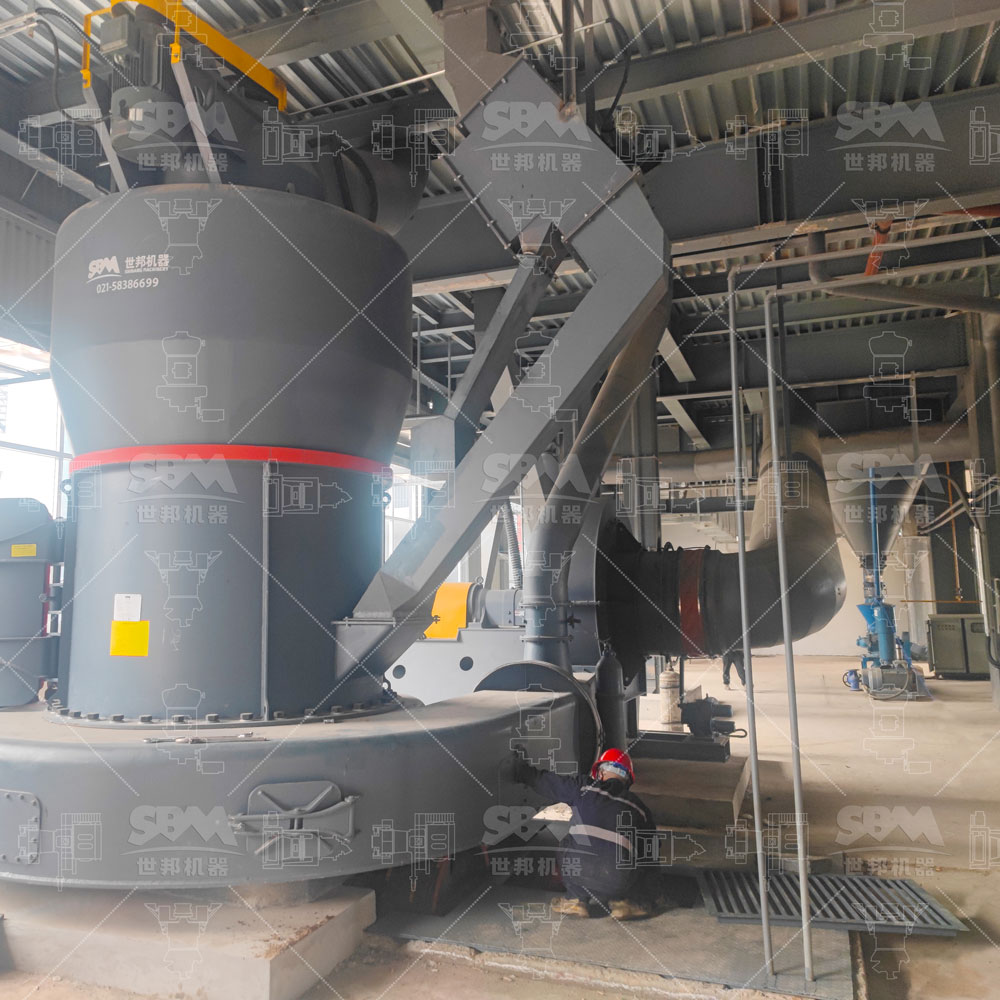
Ultrafine Vertical Mill (LUM Series) – Advantages
- Superior Energy Efficiency: Consumes up to 30% less energy than Raymond mill for the same fineness, significantly reducing operating costs.
- Higher Capacity per Unit: LUM vertical mill can handle up to 70 tph, suited for large-scale wollastonite grinding.
- Better Product Quality: Advanced classifier technology ensures precise 325 mesh cut with minimal oversize particles, improving final product consistency.
- Integrated Drying and Grinding: Handles materials with moisture content up to 15% without pre-drying, saving energy and equipment.
- Lower Noise and Dust Emission: Sealed negative pressure system meets strict environmental regulations with little dust leakage.
- Automatic Control: PLC/DCS system enables remote monitoring and precise adjustment of grinding parameters.
Ultrafine Vertical Mill – Disadvantages
- Higher Initial Capital Cost: Purchase and installation costs are 30–50% higher than equivalent Raymond mill systems.
- More Complex Operation: Requires trained operators and more sophisticated maintenance for the hydraulic system and classifier.
- Sensitive to Feed Size: Maximum feed size is 20 mm (vs. 50 mm for Raymond), requiring a finer crusher upstream.
- Higher Power Infrastructure Needs: Larger motors and control panels may require electrical upgrades in existing facilities.
- Longer Maintenance Downtime: Replacing grinding roller tires or liners can be more time-consuming due to heavy components.
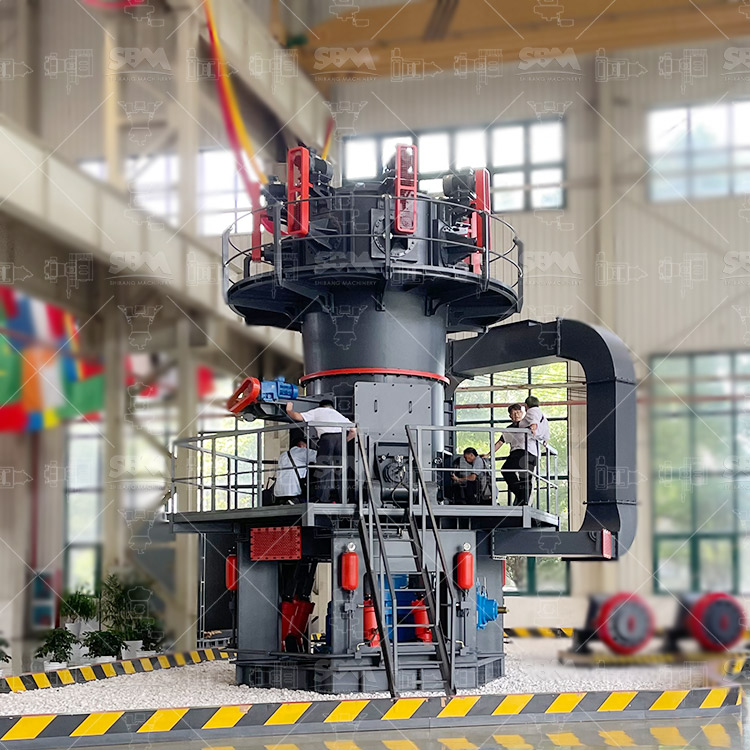
Key Considerations for 325 Mesh Wollastonite
1. Throughput Requirements
If your daily production target is under 200 tons, a Raymond mill may be more cost-effective. For larger volumes (300+ tons/day), vertical mill advantages in energy and labor costs become compelling.
2. Fineness Control
325 mesh is borderline for Raymond mill classification efficiency. Vertical mill with multi-rotor classifier delivers more consistent D97 values (typically 5–10% narrower particle size distribution).
3. Operating Budget
Calculate total cost of ownership over 5 years: vertical mill often breaks even within 2–3 years due to energy savings and lower wear part costs per ton.
4. Environmental Compliance
For regions with strict emission standards, vertical mill’s sealed operation provides easier compliance without additional baghouse investment.
Conclusion
For 325 mesh wollastonite processing, the ultrafine vertical mill (LUM series) is the recommended choice for medium to large producers prioritizing efficiency, product quality, and environmental compliance. Raymond mill remains a viable option for smaller operations with limited capital and lower throughput needs. SBM Machinery offers both solutions with proven performance in over 180 countries, and our technical team can help you select and configure the optimal system for your specific raw material and production goals.
FAQ – Common Customer Pain Points
Q1: My wollastonite feed has moisture up to 12%. Can Raymond mill handle it?
Raymond mill can handle feed moisture up to about 6–8% without issues. Above that, material may cake on grinding surfaces, reducing capacity and causing blockages. For high-moisture wollastonite, LUM vertical mill with integrated drying is recommended, as it can process up to 15% moisture without pre-drying.
Q2: We need to frequently change between 200 mesh and 325 mesh products. Which mill is more flexible?
Vertical mill (LUM series) offers easier fineness adjustment via frequency converter on the classifier, allowing product changes within minutes without mechanical modification. Raymond mill requires changing classifier speed and occasionally replacing screens, which can take 30–60 minutes.
Q3: Our electricity cost is very high. How do energy savings of vertical mill translate to actual savings?
For a 20 tph operation producing 325 mesh, vertical mill typically consumes 25–30% fewer kWh per ton compared to Raymond mill. At $0.10/kWh, this can save $40,000–$60,000 annually for a 5,000 ton/month plant, significantly improving profit margins.
Q4: We are concerned about downtime for maintenance. Which mill has faster replacement of wear parts?
Raymond mill allows faster roller and ring replacement (typically 2–4 hours) due to lighter components and simpler access. Vertical mill roller replacement takes 6–8 hours but requires replacement less frequently (every 6,000–8,000 hours vs. 2,000–3,000 hours for Raymond). Overall annual downtime is often lower for vertical mill.
Q5: Can I use existing crusher with 40 mm max output for vertical mill?
No, vertical mill requires feed size ≤20 mm. You would need a secondary crusher (e.g., hammer crusher) to reduce material before the mill. Raymond mill can accept 50 mm feed, so your existing crusher setup may be adequate. SBM can provide a complete pre-grinding solution if you choose vertical mill.


