

Basalt: from volcanic rock to multifunctional powder
Published: October 26, 2023
Basalt, a common volcanic rock formed from the rapid cooling of lava, has long been valued for its durability and abundance. However, its true potential is unlocked when it is transformed into a fine powder through advanced grinding technologies. This article explores how basalt is processed into a multifunctional powder used across industries such as construction, mining, chemicals, and new energy materials. By leveraging state-of-the-art equipment like the MTW European Trapezium Mill, LM Vertical Roller Mill, SCM Ultrafine Mill, LUM Ultrafine Vertical Mill, and Ball Mill, SBM Machinery provides complete grinding solutions that address common client challenges, including low output, high energy consumption, and inconsistent fineness. From environmental desulfurization to heavy calcium carbonate processing, basalt powder offers a sustainable and versatile alternative. The following sections detail the technical advantages of these mills, answer frequently asked questions, and demonstrate how SBM’s expertise ensures high efficiency, low operating costs, and environmental compliance.
Introduction to basalt powder processing
Basalt is an igneous rock rich in minerals like plagioclase and pyroxene, making it ideal for producing high-strength aggregates, fibers, and fine powders. When ground to specific mesh sizes, basalt powder becomes a key ingredient in industries such as building materials (for cement and asphalt), metallurgy (as a flux), and environmental protection (for desulfurization). The challenge lies in achieving consistent fineness while minimizing energy use and equipment wear. SBM’s grinding mills are designed to meet these demands, with capacities ranging from 0.5 to 400 tons per hour and output sizes from 30 to 4000 mesh.
Key grinding equipment for basalt
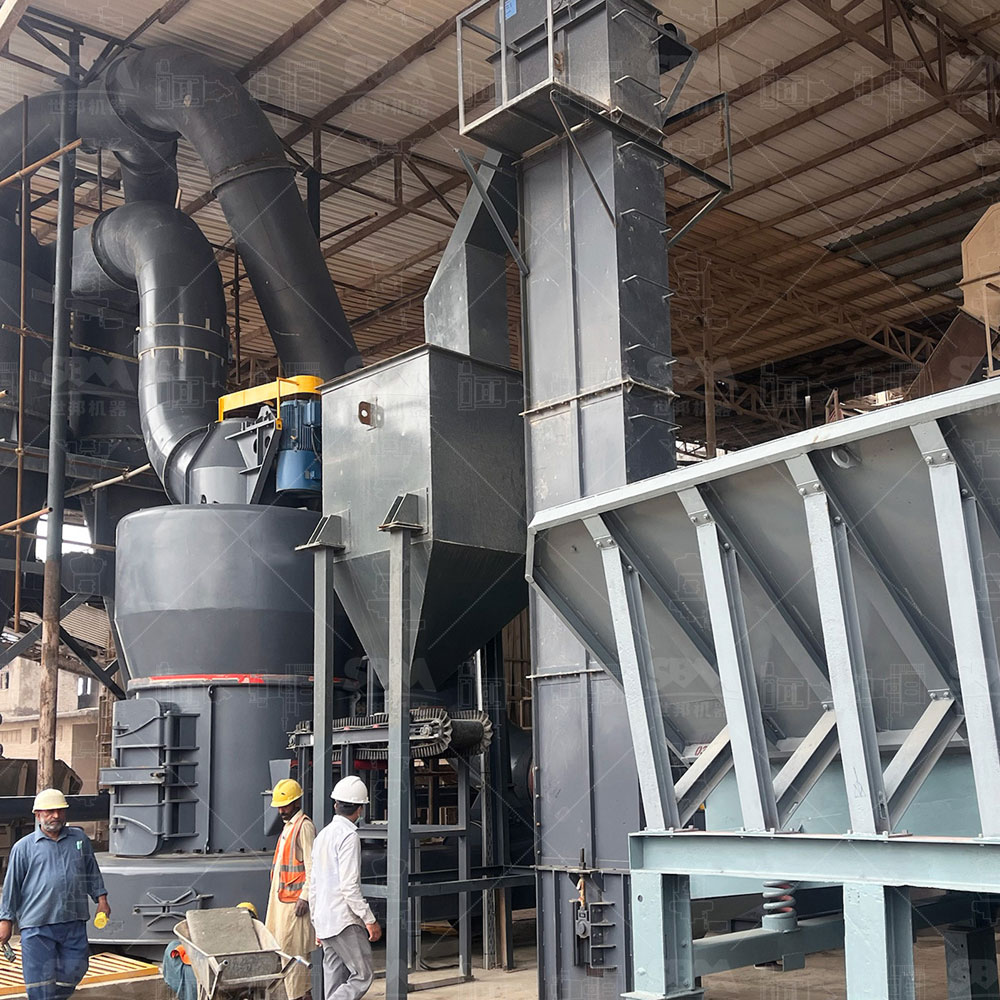
SBM offers five main mill types, each tailored to different production scales and fineness requirements. The MTW European Trapezium Mill (MTW Raymond Mill) is ideal for medium-capacity basalt grinding (3-40 tph, 30-400 mesh). Its cone gear whole transmission reduces space and investment costs, while the arc air duct design ensures efficient material transport. For larger operations (up to 400 tph), the LM Vertical Roller Mill integrates crushing, drying, and grinding in one system, cutting energy consumption by 30-40% compared to ball mills. When ultra-fine powder (325-2500 mesh) is needed, the SCM Ultrafine Mill delivers D97≤5μm with 30% lower energy use than jet mills. The LUM Ultrafine Vertical Mill specializes in medium-to-high capacity ultra-fine grinding (10-70 tph) for non-metallic minerals, featuring intelligent PLC control and multi-rotor classifiers. Finally, the Ball Mill remains a cost-effective solution for standard applications (0.074-0.2 mm), with optimized wear parts to reduce downtime.
Overcoming client pain points
Clients in the powder processing industry often face issues like high operating costs, low equipment lifespan, and environmental compliance. SBM’s mills address these directly. For instance, the unique wear-proof perching knife design in the MTW mill reduces replacement costs by allowing blade-only changes, while the LM mill’s autogenous grinding principle minimizes roller and ring wear. Energy inefficiency is tackled through the cone gear transmission and intelligent control systems, which optimize power use. Dust pollution and noise are controlled via sealed negative-pressure systems and soundproof enclosures, meeting strict international environmental standards. Additionally, the ability to process materials with up to 12% moisture (inball mills for wet grinding) ensures flexibility in basalt handling.
_1781626649977.jpg)
Applications and results
Basalt powder produced by SBM equipment is used in high-growth sectors. For example, ultra-fine basalt powder (325-2500 mesh) enhances the strength and fire resistance of plastics and cables. Coarser grades (30-400 mesh) serve as fillers in asphalt and concrete. In environmental desulfurization, limestone powder preparation with similar mills achieves over 90% sulfur capture. Over 180 countries have adopted SBM machinery, with feedback citing up to 50% floor space savings and 30% lower energy bills.
Frequently Asked Questions (FAQ)
1. My current mill produces inconsistent fineness for basalt powder. How can SBM help?
SBM mills like the SCM Ultrafine Mill use frequency-converted turbine classifiers with accurate cutting sizes, ensuring D97≤5μm with no coarse powder spillover. For larger batches, the LM Vertical Roller Mill’s automatic control system adjusts grinding pressure and disc speed in real time.
2. We have high energy bills from our existing grinding system. What is the most efficient option?
The LM Vertical Roller Mill lowers energy consumption by 30-40% compared to ball mills through direct roller-to-plate grinding. The LUM Ultrafine Vertical Mill further reduces power use with optimized roller shell curves that enhance material bed formation.
3. How do I reduce maintenance downtime for basalt grinding equipment?
Choose the MTW Mill, which features combined-type shovel blades that allow replacing only the blade tip. For ball mills, SBM’s improved wear materials extend component life. All models have heavy-duty rotors and balance treatments to minimize vibration and part failure.
4. Can basalt be ground to ultra-fine grades without clogging or overheating?
Yes. The LUM Ultrafine Vertical Mill adopts multi-rotor classifiers and PLC-controlled pressure adjustments to prevent clogging. Its sealed negative-pressure system and sound insulation maintain stable temperatures and dust-free operation.
5. I need a system that meets strict environmental regulations. What features are available?
All SBM mills operate under negative pressure with efficient double dust collection (cyclones and pulse filters). Noise is contained through optimized enclosures, and the LM model can be arranged outdoors to save space. Emissions comply with international standards.


