

What is double-fly powder? can vertical roller mill process it?
Published on October 5, 2023
Summary: Double-fly powder, often referred to in industrial mineral processing as a fine powder product derived from materials like limestone, calcite, or marble after two-stage grinding, is not a standard industry term but is commonly used in certain regions to describe a product with a fineness around 200–400 mesh. It is typically produced through a two-step grinding process to achieve a consistent, high-purity powder suitable for applications in building materials, coatings, and plastics. The vertical roller mill (VRM), such as the LM series from SBM Machinery, is fully capable of processing double-fly powder due to its integrated drying, grinding, and classifying functions, high efficiency, and ability to produce consistent fineness with low energy consumption. This article explores the definition of double-fly powder, the suitability of vertical roller mills for its production, and addresses common customer concerns through detailed technical insights and FAQs.
Understanding Double-Fly Powder
Double-fly powder is a term predominantly used in Asian markets, especially in China and India, to denote a fine powder that has undergone two grinding stages or passes through a mill to achieve a specific particle size distribution. The name "double-fly" originates from the traditional process where material is ground once, classified, and then the coarse fraction is returned for a second grinding pass. The final product typically has a fineness of 200–400 mesh (74–38 microns), making it suitable for industries such as:
- Building materials: As a filler in cement, concrete, and dry mortar.
- Plastics and rubber: Enhancing stiffness and reducing production costs.
- Coatings and paints: Improving opacity and texture.
- Paper manufacturing: Increasing brightness and smoothness.
Customers often confuse double-fly powder with other grades like single-fly or triple-fly powder. The key differentiator is the target fineness and the number of grinding cycles required to achieve it. For example, single-fly powder is coarser (100–200 mesh), while triple-fly powder is finer (400–600 mesh).
Can Vertical Roller Mill Process Double-Fly Powder?
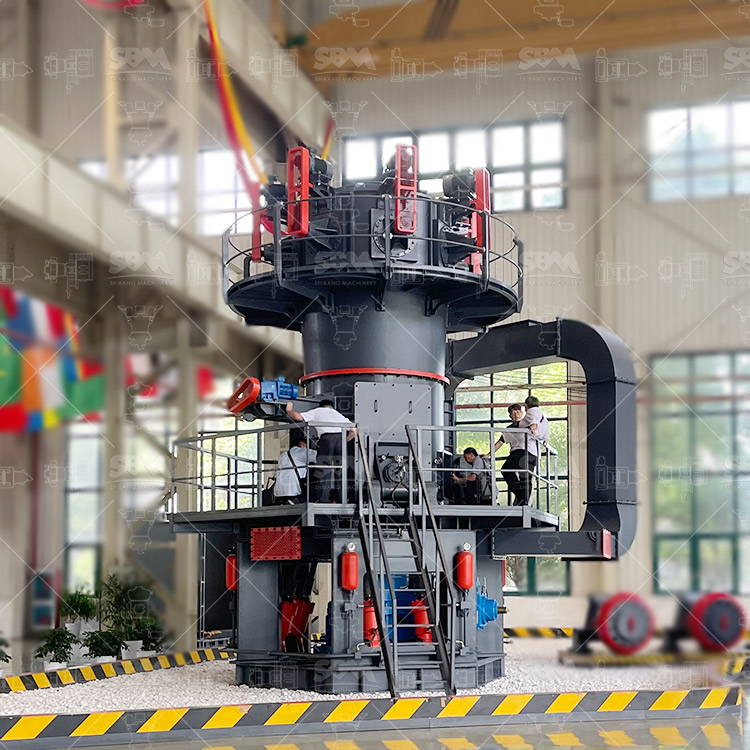
Absolutely. SBM's LM Series Vertical Roller Mill is an ideal solution for producing double-fly powder. Here’s why:
1. Integrated Grinding and Classification
The vertical roller mill combines crushing, grinding, drying, and powder selection in a single unit. This eliminates the need for separate equipment, reducing capital investment and floor space by up to 50% compared to traditional ball mill systems. For double-fly powder production, the mill's classifier can be adjusted to cut precisely at 200–400 mesh, ensuring the product meets quality specifications.
2. Low Energy Consumption
Traditional ball mills consume significant energy due to metal ball wear and friction. In contrast, the LM vertical roller mill uses grinding rollers that do not contact the grinding table directly, reducing wear and energy consumption by 30–40%. This directly lowers operating costs for double-fly powder production.
3. High Environmental Compliance
Double-fly powder production often raises dust and noise concerns. The LM mill operates under negative pressure with a fully sealed system, preventing dust spillage. Its low vibration design keeps noise levels minimal, helping you meet national environmental standards.
4. Versatility in Feed Materials
Whether you are processing limestone, calcite, dolomite, or marble, the LM mill can handle feed sizes up to 50mm and produce fineness from 30 to 400 mesh. This flexibility makes it suitable for both single-fly and double-fly powder applications.
Comparison with Other Grinding Mills
While the vertical roller mill excels in large-scale production (capacities from 3 to 400 t/h), other SBM mills may be better suited for specific double-fly powder scenarios:
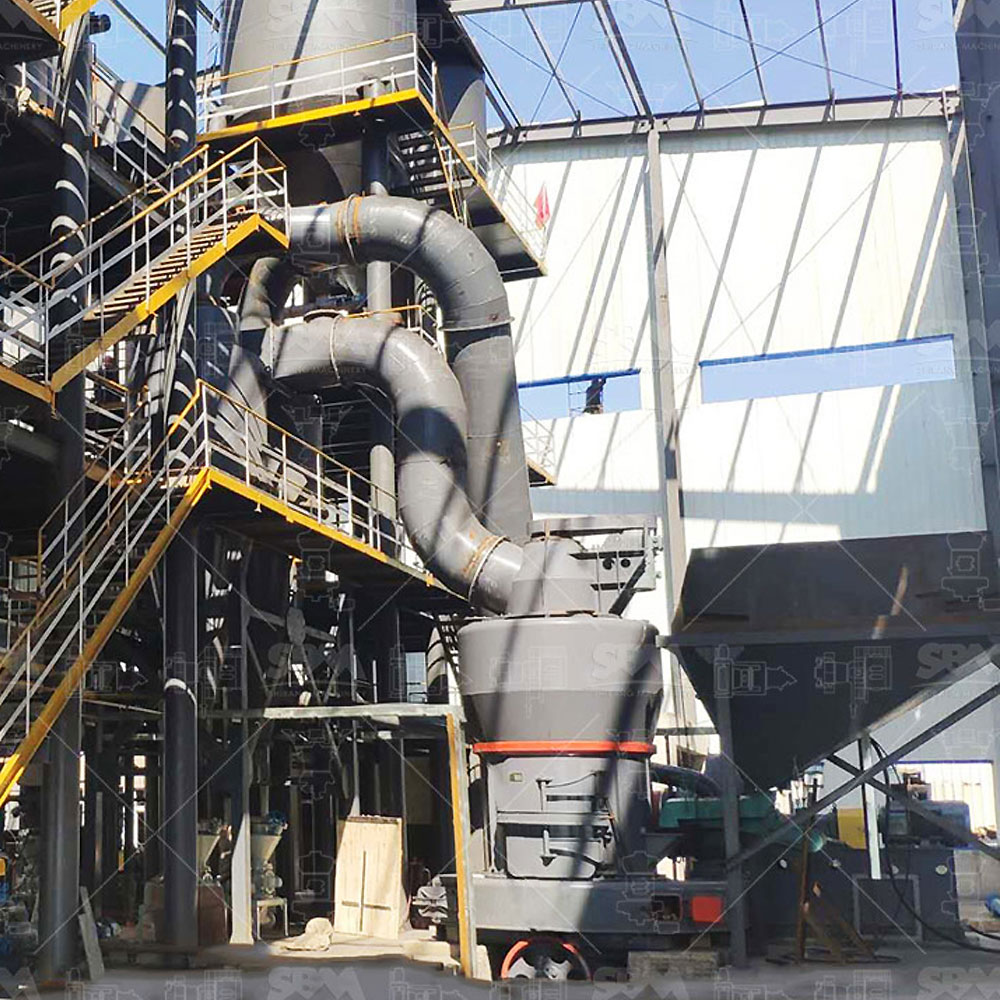
- MTW European Trapezium Mill: Ideal for medium-scale double-fly powder production (3–40 t/h). Its bevel gear transmission and arc air duct ensure high efficiency for 30–400 mesh output.
- SCM Ultrafine Mill: Perfect for finer grades like triple-fly powder (325–2500 mesh). Not recommended for standard double-fly powder unless you need a very narrow particle distribution.
- Ball Mill: Traditional option but with higher energy and maintenance costs. Suitable for wet grinding in mineral dressing but less efficient for dry double-fly powder production.
Customer Pain Points and Solutions
From our 20+ years serving over 180 countries, here are the most common challenges customers face when producing double-fly powder:
- High wear and tear on grinding parts: Our LM mill uses high-quality alloy steel for rollers and table, extending service life significantly. The unique curved shovel blade design in the MTW mill also reduces replacement costs.
- Inconsistent product fineness: The LM mill's expert automatic control system allows fine-tuning of grinding pressure, table speed, and classifier speed online, ensuring repeatable results.
- Dust pollution and environmental fines: All SBM mills feature negative-pressure operation, pulse dust collectors, and sound insulation. The LM mill's enclosed design guarantees zero dust emissions.
- High energy bills eating profits: By switching from ball mill to LM vertical roller mill, customers report 30–40% reduction in energy costs per ton of double-fly powder.
- Frequent maintenance downtime: The LM mill's modular design and easy-to-replace wear parts (only the blade tip needs changing in the MTW mill) reduce maintenance time by up to 50%.
Frequently Asked Questions (FAQs)
Q1: My double-fly powder often has lumps and inconsistent fineness. How can the vertical roller mill help?
Lumps usually indicate improper drying or classifier malfunction. The LM mill integrates a hot air generator for drying feed materials with up to 15% moisture. Its high-efficiency classifier uses frequency control to cut particles accurately, ensuring no coarse powder spills into the final product. We recommend checking your feed moisture content and classifier speed settings.
Q2: I’m worried about the initial investment for a vertical roller mill. Is it worth it for double-fly powder production?
Although the upfront cost of a VRM is higher than a ball mill, the total cost of ownership is lower. Our LM mill reduces energy consumption by 30–40%, floor space by 50%, and maintenance costs significantly. For a typical 20 t/h double-fly powder line, payback period is often under 18 months.
Q3: Can I use the same vertical roller mill for both single-fly and double-fly powder?
Yes. The LM mill’s classifier speed can be adjusted between 30 and 400 mesh. For single-fly powder (100–200 mesh), set a higher air flow and lower classifier RPM. For double-fly powder (200–400 mesh), increase the classifier speed and recirculation rate. The control system stores recipes for easy switching.
Q4: How do I stop dust from escaping during double-fly powder production?
All SBM vertical roller mills are under negative pressure generated by a powerful fan. The system is fully sealed with gaskets and welded joints. Additionally, we install pulse-jet dust collectors at the outlet. If dust persists, check for leaks in the ductwork or seals—our team can provide remote diagnostic support.
Q5: What’s the maximum feed size I can use, and do I need a pre-crusher?
The LM mill accepts feed sizes up to 50mm directly. For larger lumps, a jaw crusher or hammer crusher is recommended before the mill to protect the grinding table. Our engineers can design a complete pre-crushing and feeding system as part of the turnkey solution.


