

Working principle of ring roller mill: the core tech for fine powder
The ring roller mill operates on a fundamental principle that has been refined over decades to become the backbone of fine and ultrafine powder processing across multiple industries. At its core, the machine uses a rotating grinding ring and stationary or rotating rollers to crush, shear, and grind materials into particles ranging from 30 mesh to 4000 mesh. The material is fed into the grinding chamber, where centrifugal force pushes it outward against the ring. Rollers then apply compressive and shearing forces, reducing particle size. A stream of air or gas lifts the fine powder upward to a classifier, which separates particles by size; oversize material falls back for further grinding. This closed-loop system ensures consistent output, high efficiency, and low energy consumption. Whether for limestone desulfurization, coal powder preparation, or ultrafine calcium carbonate, the ring roller mill's robust design—featuring wear-resistant components, intelligent controls, and integrated drying—makes it the preferred choice for operators in over 180 countries. Below, we break down the working principles of five key models offered by Shanghai SBM Machinery Equipment Co., Ltd., highlighting how each addresses common customer pain points such as high operating costs, inconsistent fineness, and environmental compliance.
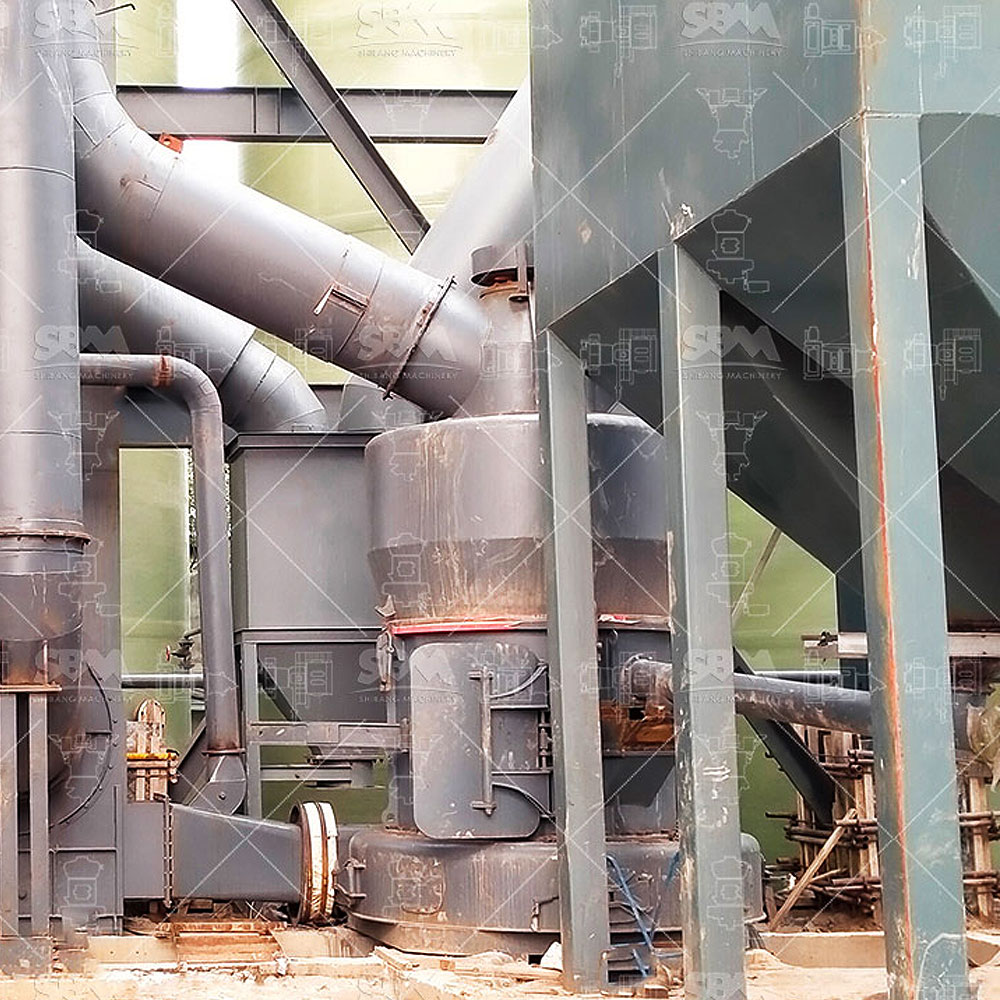
MTW Series European Trapezium Grinding Mill
The MTW mill, also known as the European trapezium mill, embodies the classic ring roller principle with several patented innovations. Material enters the mill through a feeder and is distributed evenly by the rotating shovel blade onto the grinding ring. The cone gear whole transmission system drives the main shaft smoothly, reducing vibration and energy loss. The arc air duct design minimizes air resistance, ensuring efficient pneumatic transport of fine particles to the classifier. A key feature is the unique wear-proof perching knife design: the combined-type shovel blade only requires replacement of the blade itself during maintenance, not the entire assembly, cutting downtime and parts cost. The curved blade shape also optimizes the feeding angle, extending roller and ring life. This mill handles input up to 50mm and produces 30-400 mesh powder at 3-40 tph. It is ideal for medium-scale operations like petroleum coke grinding or slag micro-powder production where reliability and low wear costs are critical.
LM Vertical Roller Mill
The LM vertical roller mill applies a different mechanical layout but retains the ring-and-roller grinding principle. Here, the grinding table rotates, and the rollers are stationary, pressing down via hydraulic cylinders. The material bed is formed on the rotating table, and rollers crush it against the table rim. Compared to traditional ball mills, this design cuts energy consumption by 30-40% and reduces floor space by about 50%. The entire system—crushing, drying, grinding, and powder selection—is integrated into one compact unit that can be installed outdoors. An expert automatic control system allows remote or local operation, minimizing labor costs. The sealed, negative-pressure operation prevents dust spillover, meeting strict environmental standards. With an input size up to 50mm and output range 30-400 mesh at 3-400 tph, the LM mill is suited for large-scale cement, coal, and chemical applications. A frequent customer pain point—high wear from abrasive materials—is addressed by using high-quality alloys for the roller and table, which do not contact each other directly during idle, extending service life.
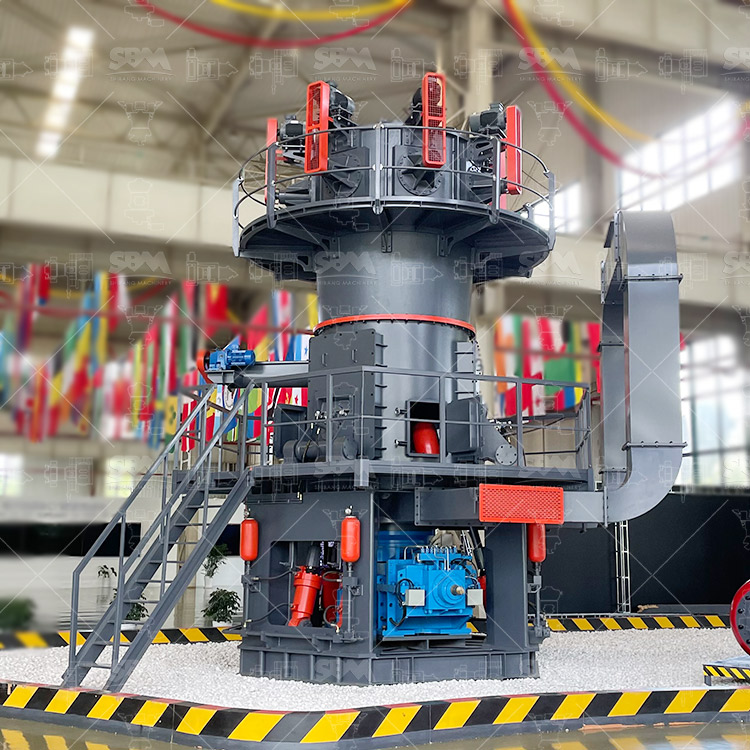
SCM Series Ultrafine Mill
When customers require ultrafine powders below 325 mesh, the SCM series ring roller mill delivers. The core principle remains: material is crushed between a rotating grinding ring and multiple rollers. However, the SCM mill incorporates a heavy rotor design and patented tight test methods to handle the high stresses of fine grinding. The grinding chamber has no bearing screws, reducing vibration. A high-efficiency vertical turbine powder classifier cuts particles precisely at the desired size, preventing coarse powder overflow. The frequency-conversion drive allows real-time adjustment of fineness from 325 to 2500 mesh (D97≤5μm). Energy consumption is 30% lower than jet mills, yet output can be more than double. The dual dust collection system—combining powder collectors and pulse dust filters—ensures emissions far below international standards. For applications such as heavy calcium carbonate (GCC) processing or new energy materials, where purity and consistency are paramount, the SCM mill is the go-to solution. Intelligent control saves labor costs directly by automating feedback loops.
LUM Ultrafine Vertical Mill
The LUM series represents the latest evolution of ring roller technology, merging vertical mill mechanics with German powder separation and Taiwanese roller technology. In this mill, the grinding roller shell and lining plate are engineered with unique curves to facilitate material bed formation and improve primary grinding yield. The multi-rotor powder classifier allows customers to customize finished product fineness within a wide range, ensuring no low-grade material contaminates the output. The PLC/DCS automatic control system adjusts grinding pressure, disc speed, and classifier speed in real time, guaranteeing stable operation even for materials like talc, barite, or kaolin. The entire unit operates with minimal vibration and low noise thanks to its balanced rotor design. Negative-pressure sealing prevents dust leaks. With input up to 20mm, output from 325 to 4000 mesh, and capacity from 10 to 70 tph, the LUM mill is ideal for industrial minerals used in plastics, artificial stone, and non-woven fabrics. Customers often cite inconsistent fineness as a top frustration; here, the intelligent classifier eliminates that issue.
Ball Mill
Though not a ring roller mill, the ball mill remains relevant for coarse grinding applications. Its working principle is simpler: a rotating cylinder filled with steel balls lifts and drops the balls, crushing material via impact and attrition. SBM optimized the traditional design by using wear-resistant liners and high-hardness grinding balls, reducing spare part costs. The wet ball mill version is widely used in mineral dressing, while the dry ball mill suits common powder production. Input size is 0-25mm, output size 0.074-0.2mm, capacity 3-65 tph. For customers who need a low-capital, mature technology for coarse grinding and are less concerned about energy efficiency, the ball mill remains a viable option.
Conclusion
The working principle of the ring roller mill—centrifugal force, compression, shearing, and pneumatic classification—has been perfected through decades of innovation. By choosing the right model (MTW, LM, SCM, LUM, or ball mill), operators can address specific pain points: high energy bills, frequent part replacement, inconsistent fineness, environmental fines, and large floor space requirements. SBM's commitment to international advanced technology, supported by experience across 180+ countries, ensures that every mill delivers reliable, cost-effective fine powder.
Frequently Asked Questions (FAQ)
- Why does my current grinding mill have such high energy consumption compared to stated specifications?
Many older mills or poorly maintained systems lose efficiency due to worn rollers, incorrect classifier settings, or air duct blockages. SBM's LM and LUM mills use intelligent control to optimize pressure and speed, reducing energy use by up to 40% versus traditional ball mills. - How can I achieve consistent fineness below 400 mesh without frequent screen changes?
Ring roller mills like SCM and LUM use dynamic turbine classifiers that adjust automatically via frequency conversion. This eliminates the need for mechanical screens and ensures stable particle size distribution, even for ultrafine products up to 2500 mesh. - My material is very abrasive and wears out grinding parts quickly—what can I do?
SBM mills feature heavy-duty rollers and rings made from special alloys, plus the MTW's curved shovel blade design reduces wear by optimizing the feeding angle. For extremely abrasive materials, the LM vertical mill's non-contact roller design (during idle) further extends part life. - Is it possible to operate the mill outdoors to save building costs?
Yes. The LM vertical roller mill is designed for outdoor installation due to its sealed housing and weather-resistant structure. Its compact layout reduces floor space by about half compared to ball mill systems. - How does the system prevent dust from escaping and meet environmental regulations?
All SBM mills operate under negative pressure with fully sealed housings. The SCM and LUM series additionally employ dual-stage dust collection using pulse jet filters, far exceeding international emission standards. Noise is controlled with sound insulation rooms and mufflers.


