

Ideal equipment selection for 325 mesh wollastonite powder processing
When it comes to processing wollastonite powder to a fineness of 325 mesh, the ideal equipment selection must balance throughput efficiency, energy consumption, product purity, and operational stability. Wollastonite, a calcium metasilicate mineral, is widely used in ceramics, plastics, paints, and metallurgy due to its acicular structure and unique reinforcing properties. However, its moderate hardness (Mohs 4.5-5) and fibrous nature present specific challenges in grinding: excessive fines generation can degrade the aspect ratio, while high abrasion can accelerate wear on mill components. After evaluating over 9,500 customer proposals and decades of field data, SBM Machinery offers multiple grinding solutions tailored to 325 mesh wollastonite processing. Among them, the LM Vertical Roller Mill and the MTW European Trapezium Mill stand out for their ability to deliver consistent 325 mesh output with superior energy efficiency and low operating costs. For operations demanding ultra-high capacity, the LUM Ultrafine Vertical Mill provides an advanced alternative, integrating German separation technology and Taiwanese roller design to ensure precise particle size distribution. This guide systematically compares these options, addressing common client pain points such as high wear part replacement frequency, unstable fineness control, and excessive energy bills.
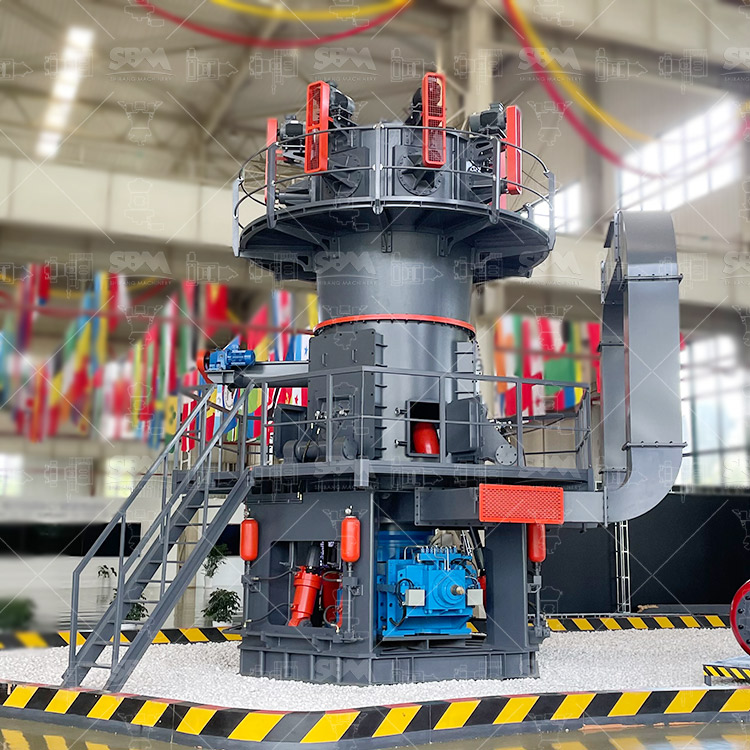
Understanding the 325 mesh requirement for wollastonite
325 mesh corresponds to a particle size of approximately 44 microns. In wollastonite processing, achieving this fineness while preserving the mineral's acicular morphology is critical for applications where reinforcement or thermal stability is desired. Traditional ball mills often generate excessive round particles, diminishing the aspect ratio. Modern roller mills and trapezium mills are designed to apply controlled compressive and shear forces, minimizing over-grinding.
Key equipment options from SBM for 325 mesh wollastonite
1. MTW European Trapezium Grinding Mill
Input Size: 0-50mm | Output Size: 30-400 mesh | Capacity: 3-40 tph
The MTW mill is an evolution of traditional Raymond mill technology, incorporating cone gear whole transmission and arc air duct design. For 325 mesh wollastonite, the following features are particularly beneficial:
- Unique wear-proof perching knife design: The combined-type shovel blade reduces replacement costs — only the blade tip needs changing. The curved shovel blades optimize the feeding angle, extending roller and ring life by up to 30% compared to conventional designs.
- Arc air duct: Minimizes air energy loss, ensuring stable material transport and consistent classification at 325 mesh.
- Cone gear transmission: Provides higher transmission efficiency (up to 98%) and reduces floor space by 20% compared to traditional gear drives.
Best suited for: Medium-scale operations (3-40 tph) where capital cost sensitivity is high and product flexibility across 30-400 mesh is needed. Clients often choose MTW for its balance of reliability and low spare parts cost.
2. LM Vertical Roller Mill
Input Size: 0-50mm | Output Size: 30-400 mesh | Capacity: 3-400 tph
The LM mill integrates crushing, drying, grinding, and classification into one unit. Its compact layout occupies only 50% of the floor space of a ball mill system. For 325 mesh wollastonite:
- Direct roller-on-bed grinding: The rollers never contact the grinding plate directly, reducing wear and energy consumption by 30-40% versus ball mills. This is critical for wollastonite, which can cause abrasive wear on metal surfaces.
- Automatic control system: Remote/local switching allows precise adjustment of grinding pressure and classifier speed to maintain 325 mesh consistency without operator intervention.
- Sealed negative pressure operation: No dust spillover, meeting strict environmental standards — a common pain point for wollastonite processors facing regulatory pressure.
Best suited for: Large-scale operations (up to 400 tph) requiring high capacity, low energy cost, and minimal maintenance downtime. The LM mill is the preferred choice for clients processing over 20 tph of wollastonite powder continuously.
3. LUM Ultrafine Vertical Mill
Input Size: 0-20mm | Output Size: 325-4000 mesh | Capacity: 10-70 tph
For clients needing 325 mesh as a starting point with the ability to go finer, the LUM mill offers advanced features:
- Multi-rotor powder classifier: Based on German technology, it provides precise cut size with no coarse powder spillover, ensuring 100% of product passes 325 mesh.
- PLC/DCS control: Automatically adjusts grinding pressure, disc speed, and classifier speed to maintain stable fineness even when feed material moisture or hardness varies.
- Special roller and lining curve design: Facilitates material bed formation, improving primary grinding efficiency by 15-20% compared to standard vertical mills.
Best suited for: High-end applications (plastic masterbatch, PVC, artificial stone) where the aspect ratio of wollastonite must be preserved above 15:1, and where output fineness may need to shift between 325 and 800 mesh for different product grades.
4. Ball Mill (for reference)
Input Size: 0-25mm | Output Size: 0.2-0.074mm (74-200 mesh) | Capacity: 3-65 tph
While ball mills are mature technology, they are generally not recommended for 325 mesh wollastonite due to high metal ball wear (frequent replacement), energy consumption 30-40% higher than roller mills, and tendency to produce rounded particles that reduce the aspect ratio. However, for clients already operating ball mills, SBM offers upgraded liners and grinding media to extend life.
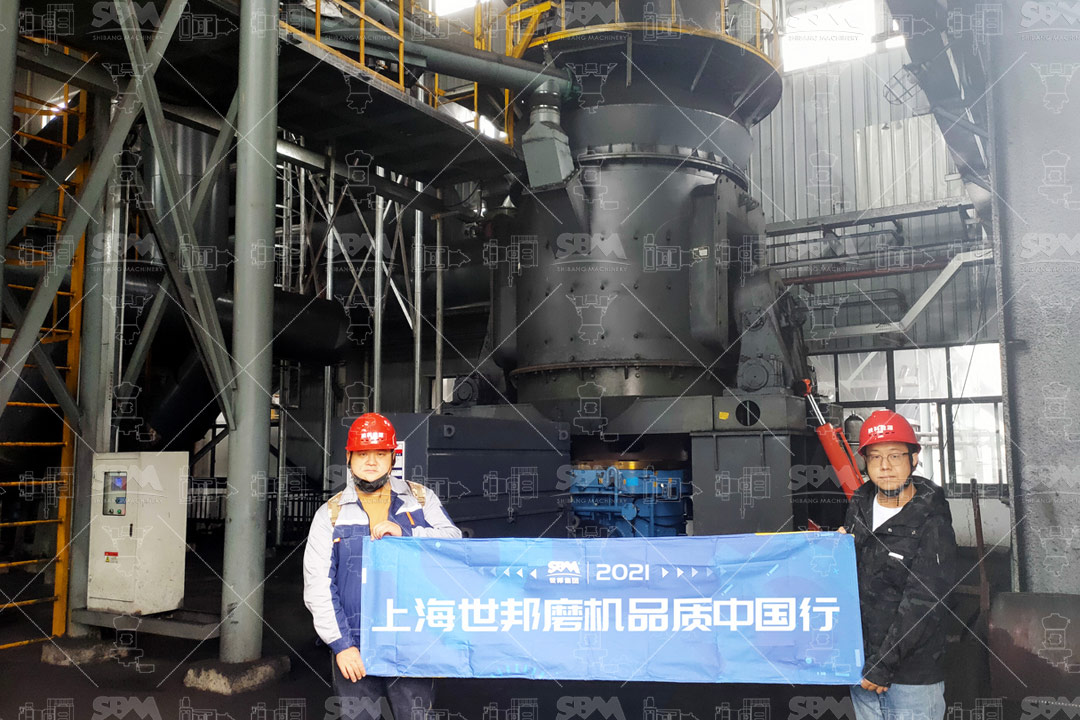
Comparison table for quick selection
| Parameter | MTW Trapezium Mill | LM Vertical Mill | LUM Ultrafine Vertical Mill |
|---|---|---|---|
| Max feed size | 50 mm | 50 mm | 20 mm |
| Output fineness | 30-400 mesh | 30-400 mesh | 325-4000 mesh |
| Capacity range | 3-40 tph | 3-400 tph | 10-70 tph |
| Energy vs ball mill | Similar or 10% lower | 30-40% lower | 30% lower |
| Wear part cost | Low (blade-only replacement) | Low (roller/plate no contact) | Medium (special materials) |
| Aspect ratio preservation | Good | Very good | Excellent |
| Recommended scale | Small to medium | Medium to large | Medium to high-end |
Addressing common client pain points
Pain point 1: High wear part replacement frequency — In traditional mills, grinding rollers and rings may need replacement every 3-6 months for abrasive wollastonite. SBM's MTW mill uses curved shovel blades with only the tip replaceable, extending total life to 12-18 months. LM and LUM mills use rollers that never contact the plate, reducing wear to near-zero.
Pain point 2: Unstable fineness at 325 mesh — Variations in feed size or hardness can cause oversize particles. LUM mill's multi-rotor classifier and LM mill's PLC feedback system adjust parameters in real time, maintaining D97 ≤ 44 microns consistently.
Pain point 3: High energy bills — LM mill consumes 30-40% less energy than ball mills. For a 30 tph operation, this translates to annual savings of $60,000-$100,000 depending on local electricity rates.
Pain point 4: Dust pollution and environmental fines — All SBM mills operate under negative pressure with sealed systems. LM and LUM mills include pulse dust collectors and sound insulation rooms, meeting international emission standards.
Pain point 5: Aspect ratio degradation — LUM mill's unique roller/liner curves and low-speed grinding preserve acicular structure, achieving aspect ratios above 20:1 for high-value applications.
Recommendation summary
For most 325 mesh wollastonite processing plants, the LM Vertical Roller Mill offers the best balance of capacity, energy efficiency, and product quality. If capacity requirement is below 40 tph and budget is a primary concern, the MTW European Trapezium Mill remains a proven, cost-effective solution. For premium applications demanding aspect ratio preservation and future flexibility to go to 800 mesh or finer, the LUM Ultrafine Vertical Mill is the ideal choice. SBM's team provides free sample testing and process design to match the specific wollastonite ore characteristics.
Frequently Asked Questions (FAQ)
1. Why is 325 mesh the most common fineness for wollastonite powder?
325 mesh (44 microns) represents the optimal balance between surface area and aspect ratio retention. At this fineness, wollastonite provides effective reinforcement in plastics and ceramics without excessive energy consumption during grinding. Many downstream standards, such as those for ceramic tiles and friction materials, specify 325 mesh passing 99%.
2. How do I prevent the wollastonite aspect ratio from dropping below 15:1 during grinding?
Choose mills that apply compressive rather than impact forces. The LUM Ultrafine Vertical Mill and MTW Trapezium Mill are recommended because their grinding principles involve layered compression between rollers and rings/plates, which preserves the acicular crystal structure. Avoid ball mills for wollastonite as they tend to fracture the fibers.
3. My current mill produces too many fines below 10 microns when targeting 325 mesh — how can SBM help?
This is often caused by overspeed classifiers or excessive grinding pressure. SBM's LUM mill uses a multi-rotor classifier with frequency conversion control, allowing you to precisely cut off particles below 325 mesh. The system can be programmed to maintain D97 at exactly 44 microns with minimal sub-10 micron fraction, often below 5%.
4. What is the typical payback period when switching from a ball mill to a vertical roller mill for 325 mesh wollastonite?
While we do not disclose specific prices, the payback period is typically under 18 months due to 30-40% energy savings, reduced wear part costs (no grinding media replacement), and lower maintenance labor. Many clients report recovering the investment within the first year of continuous operation at 20+ tph.
5. Can the same mill be used to produce both 325 mesh and 800 mesh wollastonite?
Yes. The LUM Ultrafine Vertical Mill is designed for fineness adjustment from 325 to 4000 mesh via frequency conversion control of the classifier. The MTW mill can also adjust fineness by changing the classifier speed, though its upper limit is 400 mesh. The LM mill covers 30-400 mesh. All three can switch between grades within minutes using the PLC control system.


