

Detailed description of the application of barite powder in coatings
Published on January 10, 2025
Barite powder, derived from the natural mineral barium sulfate (BaSO₄), has become an indispensable functional filler in the modern coatings industry. Its unique combination of high specific gravity (4.0–4.5 g/cm³), chemical inertness, low oil absorption, and excellent whiteness makes it a preferred choice for manufacturers seeking to enhance coating performance while controlling costs. In paint and coating formulations, barite powder primarily serves to increase density, improve hiding power, enhance chemical resistance, and provide a smooth, glossy finish. As a total solution provider for grinding equipment, Shanghai SBM Machinery Equipment Co., Ltd. offers advanced milling technologies—including European Trapezium Mill, Vertical Roller Mill, Ultrafine Mill, and Ultrafine Vertical Mill—that enable the production of barite powders with precisely controlled particle size distributions (from 30 mesh to 4000 mesh) to meet the stringent demands of various coating applications. This article provides a detailed exploration of how barite powder is applied in coatings, the technical advantages it brings, and how SBM's grinding solutions address common industry challenges.
Key Roles of Barite Powder in Coatings
Barite powder is primarily used in the coatings industry for the following critical functions:
- Density and Weight Control: Barite's high specific gravity allows formulators to increase the weight of coatings without significantly increasing film thickness. This is particularly valuable in marine and industrial coatings where a heavier film helps reduce pigment settling and improves application uniformity.
- Hiding Power and Opacity: Fine barite powders (325–1250 mesh) act as extenders that improve the hiding power of titanium dioxide (TiO₂) by spacing the primary pigment particles. This enables coatings manufacturers to reduce TiO₂ usage by up to 15–20% without compromising opacity, leading to substantial raw material cost savings.
- Chemical and Weather Resistance: Barite is chemically inert and insoluble in water, acids, and alkalis. When incorporated into coating binders, it enhances resistance to chemicals, UV radiation, and moisture. This makes barite-filled coatings ideal for automotive primers, anti-corrosion paints, and exterior architectural finishes.
- Gloss and Surface Smoothness: The platelet-like shape of ground barite particles (especially when milled to <10 µm) contributes to a smoother surface finish. In high-gloss paints, barite powder replaces coarser extenders to minimize surface roughness and improve light reflection.
- Reduction of Cracking and Shrinkage: By improving the internal cohesion of the coating film, barite reduces the risk of cracking during drying and curing. This is especially beneficial in thick-film applications such as powder coatings and elastomeric roof coatings.
Particle Size Requirements for Different Coating Types
The performance of barite powder in coatings is highly dependent on particle size distribution. SBM's grinding equipment allows precise control of output fineness to match specific application needs:
- Primer and Undercoats (30–200 mesh): Coarse barite powders are used in primers to fill surface irregularities and improve adhesion. The low oil absorption of barite prevents excessive binder demand, maintaining film flexibility.
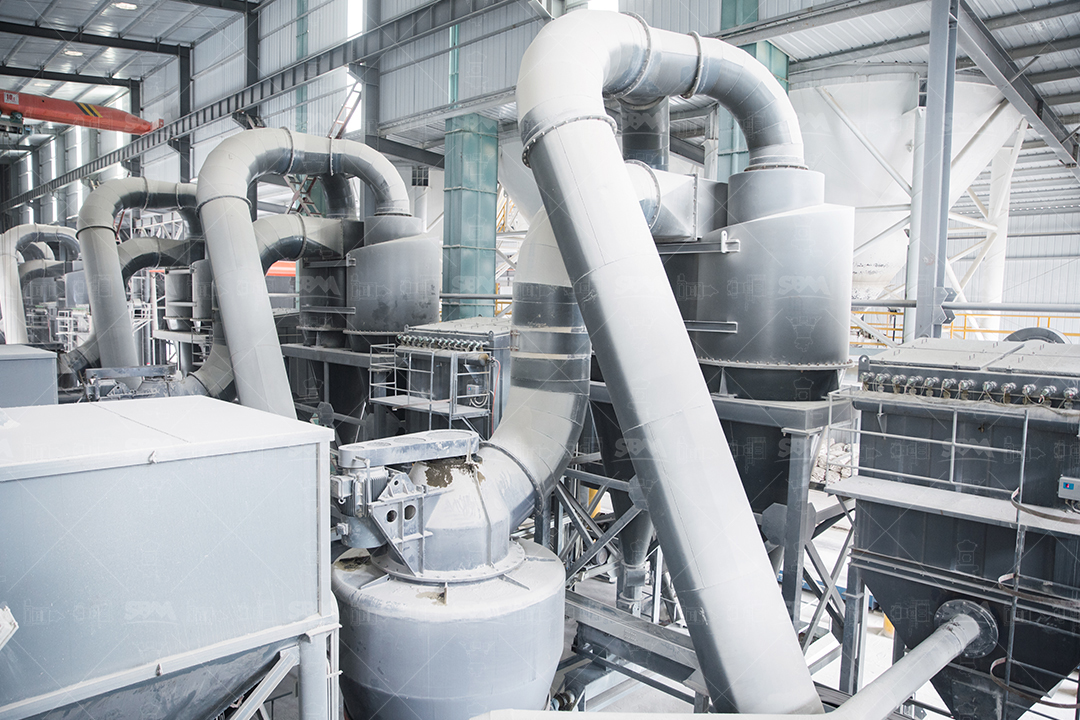
- Intermediate and Top Coats (200–800 mesh): Medium-fineness barite enhances hiding power and provides a balance between gloss and matting effect. SBM's MTW European Trapezium Mill and LM Vertical Roller Mill are ideal for this range, offering capacities from 3 to 40 t/h with consistent product quality.
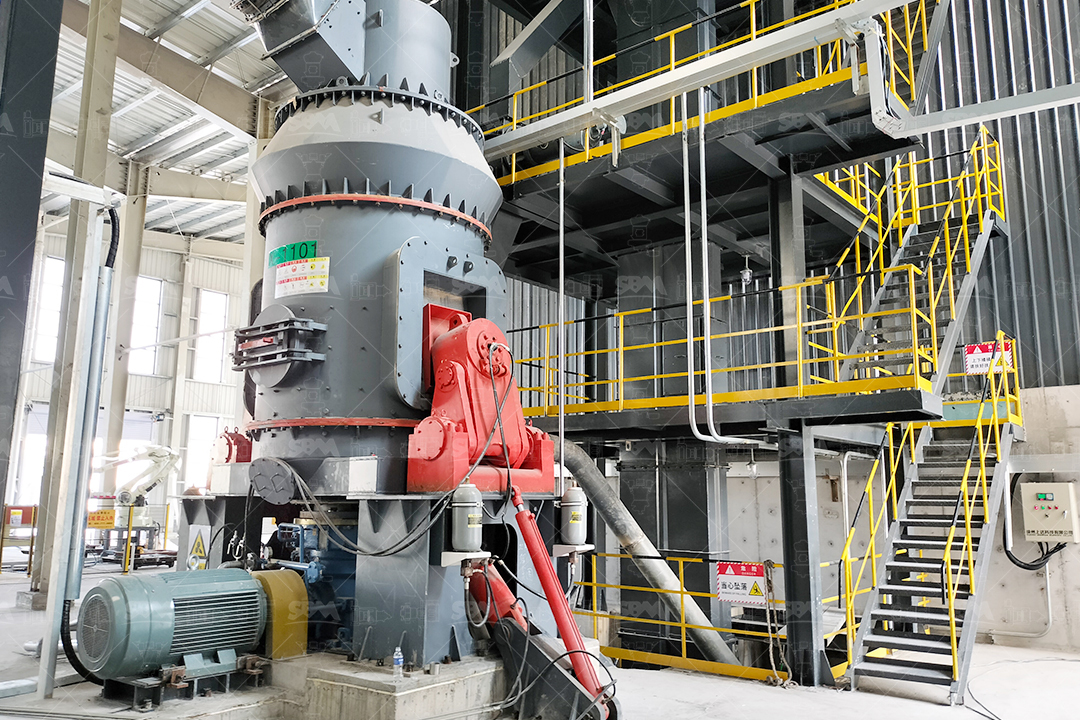
- High-Gloss and Ultrafine Coatings (800–4000 mesh): For automotive finishes, coil coatings, and high-end decorative paints, barite must be ground to D97 ≤ 5 µm. SBM's SCM Ultrafine Mill and LUM Ultrafine Vertical Mill achieve this with energy consumption 30% lower than jet mills, while maintaining throughputs up to 70 t/h.
Overcoming Common Customer Pain Points with SBM Grinding Technology
Coating manufacturers frequently encounter several technical and economic challenges when processing barite powder. SBM's equipment directly addresses these:
1. High Energy Consumption and Low Throughput
Traditional ball mills consume significant power (up to 40% more than modern grinding systems) and produce inconsistent particle shapes. SBM's LM Vertical Roller Mill integrates crushing, drying, grinding, and classifying in a single unit, reducing energy consumption by 30–40% compared to ball mills. Its grinding rollers never contact the grinding plate directly, minimizing wear and ensuring long-term stable operation. For capacities up to 400 t/h, this mill is the industry benchmark.
2. Poor Particle Size Control and Spillover of Coarse Particles
Inconsistent fineness leads to poor hiding power and gloss variation. SBM's SCM Ultrafine Mill employs a high-efficiency vertical turbine powder classifier with frequency conversion control, enabling precise cut size adjustment without coarse particle spillover. The result is a one-time finished product with D97 ≤ 5 µm, guaranteeing uniform dispersion in coating formulations.
3. Excessive Wear of Grinding Parts and High Maintenance Costs
Barite's hardness (3–3.5 Mohs) can accelerate wear on mill components. SBM's MTW European Trapezium Mill features a unique combined-type shovel blade and curved blade design that changes the feeding angle, extending roller and ring service life by up to 50%. The cone gear integral transmission reduces space requirements and eliminates power losses common in traditional gearboxes.
4. Environmental Compliance and Dust Emissions
Stringent environmental regulations require zero dust spillover and low noise operation. Both the LUM Ultrafine Vertical Mill and the LM Vertical Roller Mill operate under negative pressure with fully sealed systems. The LUM mill's efficient double powder collection (combining powder collectors and pulse dust collectors) achieves emission levels far exceeding international standards, while its optimized sound insulation room reduces equipment noise below 75 dB.
5. Low Production Efficiency for Ultrafine Grades
Producing barite powder below 10 µm typically requires multiple milling passes or high-cost jet mills. SBM's LUM Ultrafine Vertical Mill solves this using Taiwan's grinding roller technology paired with Germany's multi-rotor powder classifier. The specially designed grinding curves on the roller shell and lining plate improve material bed formation, increasing primary grinding yield by 30% and reducing total production time.
Case Study: Optimizing Barite Powder for Marine Antifouling Paints
A major coatings manufacturer faced challenges with poor settling resistance and high binder consumption when using conventional barite (1250 mesh) in their antifouling paint line. By switching to barite processed through SBM's MTW European Trapezium Mill (output fineness 600–800 mesh), they achieved the following improvements:
- Reduced TiO₂ usage by 12% due to enhanced pigment spacing
- Improved sag resistance and film thickness uniformity
- Lower total production cost by 18% per liter of paint
- Eliminated pre-dispersion step as the barite powder had consistent particle shape and low moisture content
Equipment Selection Guide for Barite Processing
| Equipment Model | Input Size | Output Fineness | Capacity | Best Suited For |
|---|---|---|---|---|
| MTW European Trapezium Mill | 0–50 mm | 30–400 mesh | 3–40 t/h | Medium-fineness barite for industrial primers and intermediate coats |
| LM Vertical Roller Mill | 0–50 mm | 30–400 mesh | 3–400 t/h | High-capacity production of barite for construction and heavy-duty coatings |
| SCM Ultrafine Mill | 0–20 mm | 325–4000 mesh | 0.5–25 t/h | Ultrafine barite (D97≤5µm) for high-gloss and automotive coatings |
| LUM Ultrafine Vertical Mill | 0–20 mm | 325–4000 mesh | 10–70 t/h | Bulk ultrafine processing with low energy consumption for premium applications |
| Ball Mill | 0–25 mm | 0.074–0.2 mm | 3–65 t/h | Standard barite powder for general-purpose coatings where cost is primary |
Conclusion
Barite powder remains an irreplaceable functional additive in the coatings industry, offering density control, opacity enhancement, and chemical resistance at a competitive cost. However, achieving consistent, high-quality barite requires advanced milling technology that addresses common pain points: energy waste, wear, poor classification, and environmental non-compliance. SBM's portfolio of grinding mills—from the robust MTW European Trapezium Mill to the cutting-edge LUM Ultrafine Vertical Mill—provides coating manufacturers with tailored solutions that improve product performance while reducing operational headaches. With over 180 countries served and decades of application expertise, SBM Machinery continues to set the standard for barite powder processing.
Frequently Asked Questions (FAQ)
Q1: Why does my barite powder cause poor hiding power in the final coating when using standard ball mills?
A: Inconsistent particle size distribution is often the culprit. Ball mills can produce a wide range of particle sizes, including oversized grains that fail to space TiO₂ effectively. Switching to SBM's MTW or LM mill with integrated classifiers ensures a tight particle size distribution (e.g., 95% passing 800 mesh), directly improving hiding power by up to 20%.
Q2: We are experiencing rapid wear on our grinding mill's rollers when processing barite. How can we reduce maintenance downtime?
A: Barite's moderate abrasiveness accelerates wear on traditional mills. SBM's MTW European Trapezium Mill features patented perching knife and curved shovel blade designs that change the feeding angle, distributing wear evenly. Combined with high-alloy roller materials, this extends parts life by 50% compared to conventional Raymond mills. Plus, only the blade needs replacement during maintenance—not the entire shovel—cutting downtime by 40%.
Q3: Is it possible to produce barite powder with D97 below 5 µm without using a jet mill?
A: Absolutely. SBM's SCM Ultrafine Mill and LUM Ultrafine Vertical Mill achieve D97 ≤ 5 µm in a single pass using a multi-rotor classifier and optimized grinding curve. Energy consumption is 30% lower than a jet mill, and capacity reaches up to 70 t/h (LUM model). No secondary milling is required.
Q4: Our coating process is sensitive to moisture. Does barite processed by SBM mills have low moisture content?
A: Yes. SBM's LM Vertical Roller Mill has an integrated drying function that can handle feed materials with up to 10% moisture. For barite, the hot air flow during milling reduces moisture to less than 0.5% in the final powder, meeting strict coating formulation requirements.
Q5: How can we reduce dust emissions during barite unloading and mixing in our paint plant?
A: SBM's LUM Ultrafine Vertical Mill and LM Vertical Roller Mill operate under negative pressure with sealed systems, so the powder output is already dust-free. For downstream handling, we recommend combining these mills with a pulse dust collector (efficiency >99.9%) and a pneumatic conveying system that maintains negative pressure. Our engineering team can design a complete turnkey solution that meets local emission standards.


